How to Fine-Tune Your Gears (Indexing for Beginners)
Bike gears skipping or not shifting cleanly? Learn how to index your rear derailleur in a few simple steps with just a screwdriver.
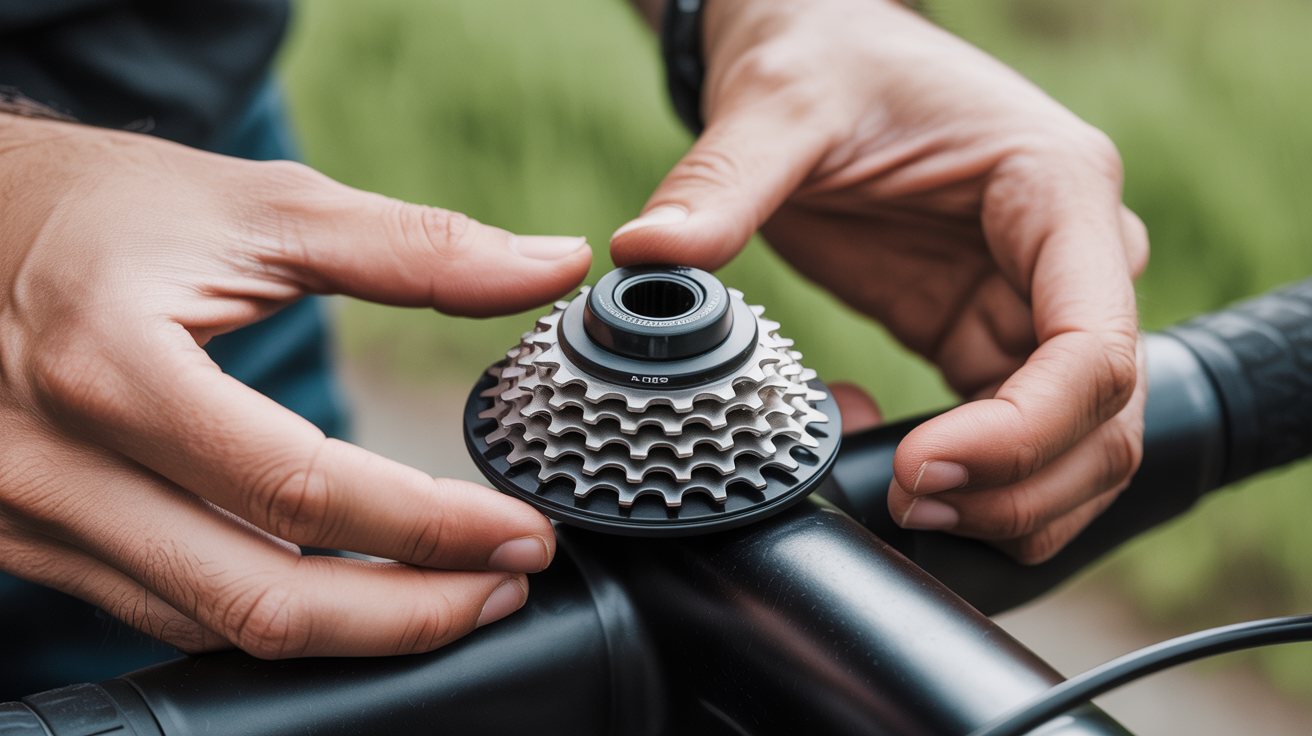
If your bike gears are skipping, hesitating, or landing on the wrong sprocket, the fix is usually a quick cable tension adjustment. This is called indexing, and it takes about five minutes once you know what to look for. No special tools required for most adjustments.
At a Glance
- Most shifting problems are cable tension, not a broken part. Fix it with a barrel adjuster and a screwdriver.
- Start every adjustment from the smallest rear sprocket, where cable tension is lowest.
- Turn the barrel adjuster counterclockwise to add tension (helps upshifts to bigger sprockets); clockwise to release it.
- If the chain tries to jump off the cassette entirely, that's the limit screws (H/L), not cable tension.
- A chain that skips only under load, not while coasting, usually means a worn chain or cassette, not a bad adjustment.
- Cables stretch and settle over the first few weeks on a new bike or after a cable swap. A follow-up tweak a month in is normal, not a sign something's wrong.
What Gear Indexing Actually Does
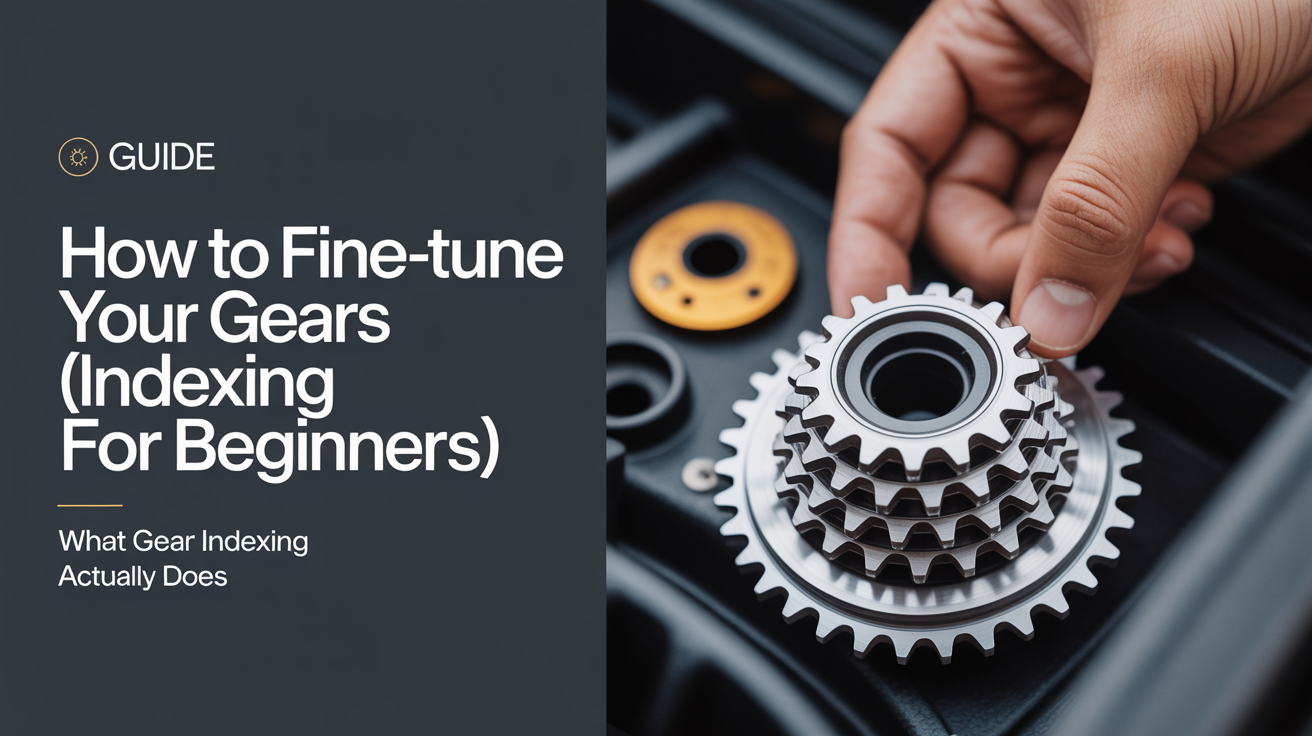
Your rear derailleur moves the chain across the cassette (the cluster of sprockets on your rear wheel) by pulling or releasing a cable. That cable connects to your shifter. When the cable tension is set correctly, each click of the shifter moves the derailleur exactly one sprocket. When it's off, the chain hesitates between sprockets or skips past the one you wanted.
Indexing is the process of dialing in that cable tension so the derailleur and shifter stay in sync. It's one of the first maintenance tasks worth learning because cable tension drifts over time, especially in the first few months after a bike is new or after a cable replacement. New cable housing compresses slightly as it seats in, and new inner wires settle at the pinch bolt, so a bike that shifted perfectly at the shop can need a small tweak two or three weeks later. That's expected wear-in, not a defect.
Tools You Need
You need very little:
- A Phillips or flathead screwdriver (check which fits your barrel adjuster)
- A stand or something to lean the bike against so the rear wheel can spin freely
- About ten minutes
A repair stand makes this easier, but propping the bike upside down on its handlebars and seat also works. You just need the rear wheel to spin without touching the ground.
How to Index Your Rear Derailleur
Work through these steps in order. Most shifting problems are solved by step three alone.
Step 1: Shift to the smallest sprocket
Click down to your highest gear so the chain sits on the smallest sprocket at the rear. This puts the derailleur cable at its loosest, which is the right starting point.
Step 2: Find the barrel adjuster
The barrel adjuster is a small threaded cylinder where the cable enters the derailleur (or sometimes at the shifter). Turning it counterclockwise increases cable tension and pushes the derailleur toward larger sprockets. Turning it clockwise reduces tension and lets the derailleur move toward smaller sprockets. Small turns, typically a quarter rotation at a time, make a noticeable difference.
Step 3: Shift up one sprocket and test
Click the shifter once to move to the next larger sprocket. The chain should move cleanly and settle without noise. If it hesitates or won't climb up, turn the barrel adjuster counterclockwise a quarter turn and try again. If it shifts fine but then makes a ticking noise against the next sprocket, turn the barrel adjuster clockwise slightly.
Step 4: Work through the range
Shift up through all the gears slowly, listening for hesitation or noise at each sprocket. Then shift back down. The chain should move in both directions without hunting or rattling. If one end of the range is fine but the other isn't, adjust cable tension in small increments until the whole range feels clean.
Step 5: Check the limit screws if the chain overshoots
If the chain tries to fall off the cassette entirely, into the wheel spokes or beyond the smallest sprocket, that's a limit screw problem rather than a cable tension problem. The two small screws marked H (high) and L (low) on the derailleur body control how far the derailleur can travel. The H screw stops it from going too far toward the wheel; the L screw stops it from going too far outward. According to Sheldon Brown's derailer adjustment guide, the low-gear limit screw is the one to watch most closely: set too loose, the derailleur can overshift past the largest sprocket and throw the chain into the spokes, which can bend or break the derailleur, the hanger, or even the frame's dropout. Turn these screws in tiny increments, a partial turn at a time. If adjusting the limit screws doesn't feel intuitive, this is a good task to hand to a shop for a first look.
When Cable Tension Isn't the Problem
Indexing fixes most shifting issues, but a few problems need a different approach:
| Symptom | Likely cause | What to do |
|---|---|---|
| Chain skips under load but not while coasting | Worn chain or cassette | Measure chain wear (see table below); replace before sprockets wear too |
| Cable won't hold adjustment | Frayed or kinked cable, needs replacement | Replace cable and housing, then re-index |
| Derailleur bent or won't track straight | Bent derailleur hanger (the small tab the derailleur mounts to) | Straighten or replace the hanger, then re-index |
| Shifting works at rest but not while pedaling hard | Cable housing cracked or compressed | Add a touch of tension; replace housing if it recurs |
A bent derailleur hanger is common after a fall. The hanger is designed to bend before the derailleur does, so replacing a $10 hanger is much better than replacing a full derailleur. Hanger straightening is also a quick shop task, usually done with a dedicated gauge tool in a couple of minutes.
How to Tell If Your Chain Is Actually Worn Out
A chain that skips specifically under load is often a wear problem rather than an adjustment problem, and no amount of barrel adjuster turning fixes it. Sheldon Brown's chain wear reference gives a simple ruler test: measure 10 full links (pin to pin) on a brand-new chain and you get exactly 25.4 cm. As the chain wears, that measurement grows.
| Measurement over 10 links | What it means |
|---|---|
| Up to 25.4 cm | New or like-new. No action needed. |
| Just past 25.4 cm, approaching 25.5 cm | Chain is wearing. Replace it soon; sprockets are probably still fine. |
| Around 25.5 to 25.7 cm | Chain is overdue. Sprockets are likely wearing too, and a new chain may not run cleanly on them. |
| Past 25.7 cm | Chain has been left too long. Expect skipping on a fresh chain until the worn sprockets are also replaced. |
Keeping your drivetrain clean also matters. Grit buildup on the chain and cassette accelerates wear and can make indexing feel inconsistent even when the cable tension is right. Cleaning and lubing your chain regularly takes ten minutes and makes a real difference in how smoothly the gears shift, and it slows the wear that eventually causes the skipping in the table above. See our guide on how to clean and lube your bike chain for the full process.
A Few Habits That Keep Shifting Smooth
- Shift before you need to, not mid-climb under heavy pressure. Derailleur systems shift best when you ease off the pedaling force for a moment.
- Avoid cross-chaining (big front ring with the biggest rear sprocket, or small front ring with smallest rear sprocket). It angles the chain awkwardly and adds wear to both the chain and the sprocket teeth.
- After rides in wet or muddy conditions, wipe the chain down and add a drop of lube before storing the bike.
- Check cable tension every few months. Cables stretch slightly over time, and a small barrel adjuster turn is all it usually takes to restore clean shifting.
- Carry a small screwdriver on longer rides. A barrel adjuster tweak roadside can rescue a ride that starts skipping halfway through.
Frequently Asked Questions
Why do my gears work fine at home but skip when I'm actually riding?
Cable housing can compress slightly under load, which changes the effective tension. If shifts feel fine when the wheel spins freely but hesitate when you're pedaling hard, add a small amount of cable tension (counterclockwise on the barrel adjuster) and test on an actual ride.
My derailleur looks fine but the bike won't shift into the large sprockets at all.
This usually points to cable tension being too low, a frayed or stuck cable, or a dirty cable housing. Check that the cable is properly seated in the shifter housing and try increasing tension with the barrel adjuster first.
How do I know if I have a bent derailleur hanger?
Stand behind the bike and look at the derailleur from directly behind. The derailleur body should hang straight down and sit parallel to the wheel. If it angles inward or outward, the hanger is likely bent. Most bike shops can straighten or replace one quickly for a few dollars.
Can I index gears without a repair stand?
Yes. Lean the bike against a wall with the drivetrain side facing you, prop it upside down, or ask someone to hold the bike while you spin the pedals. You just need the wheel moving freely so you can test shifts as you adjust.
My front derailleur is making noise. Is that the same fix?
Front derailleur adjustment follows similar logic, but the barrel adjusters are usually at the shifter rather than the derailleur, and the limit screws matter more because there are only two chainrings to shift between. The process is the same in principle: adjust cable tension, check limit screws if the chain goes too far. Front derailleur problems are less common than rear, but the repair is just as learnable.
How often should I expect to re-index my gears?
For most riders, a quick check every two to three months is plenty, plus a spot-check after any new cable installation or a hard crash. Riders who put in heavy weekly mileage or ride in a lot of grit and rain may need a small tweak monthly. If you find yourself adjusting the same derailleur every week, that usually points to a bigger issue, like a stretched cable overdue for replacement or a hanger that needs straightening, rather than normal drift.
Is it normal for a brand-new bike to need indexing soon after purchase?
Yes. New cables and housing settle in during the first few weeks of riding, so a shift that was crisp on day one can drift slightly by week three. Most shops mention this at pickup and some offer a free follow-up adjustment within the first month or two. If yours didn't, doing the five-minute barrel adjuster check yourself covers the same ground.