How to Stretch After a Bike Ride (and Why It Matters)
A five-minute post-ride stretching routine for cyclists, with hold times and form cues targeting hips, hamstrings, and calves.
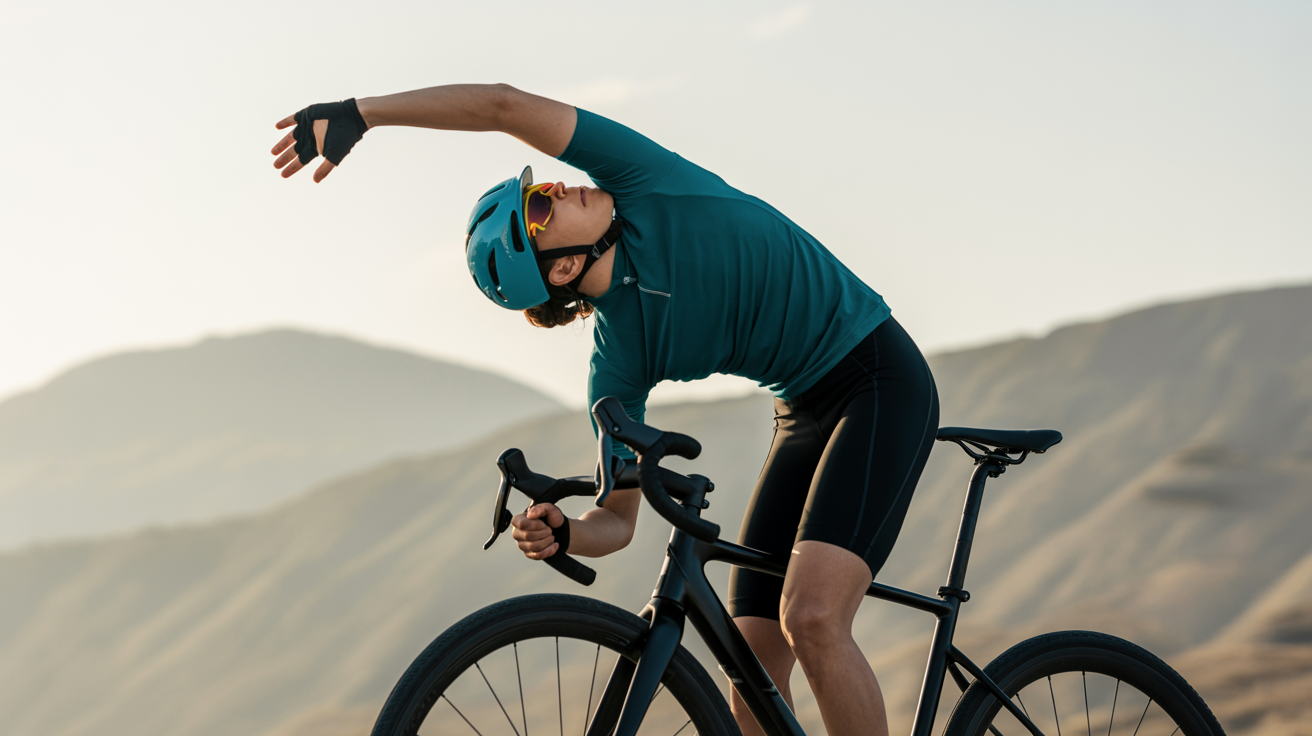
Most new cyclists notice the same thing after their first few rides: their legs feel stiff and heavy the next morning. The hips are tight, the hamstrings are tugging, and the calves feel like clay. This is not a fitness problem. It is a position problem. Cycling holds your legs in a shortened range for the entire ride, and without some deliberate stretching afterward, those muscles stay contracted long after you have put the bike away.
The good news is that five minutes of targeted stretching is enough to make a real difference to how your legs feel, even if the science on exactly how much it speeds physical recovery is less settled than you might expect (more on that below). This guide walks through a simple routine that addresses the areas cyclists neglect most. Nothing elaborate is required. You need a floor, a mat or towel if you prefer, and a wall or chair for one of the movements.
Pedal Primer is an independent resource and is not affiliated with any brand. This is general information, not medical advice. Stop any stretch immediately if you feel sharp or shooting pain, and consult a healthcare professional if discomfort persists.
At a Glance
- Cycling holds your hips, hamstrings, and calves in a shortened range for the whole ride, which is why those spots get tight, not a fitness failing.
- Stretch warm, ideally within 10 to 15 minutes of finishing, while muscle tissue is still pliable.
- Five stretches, 30 to 45 seconds per side each, cover the routine in about five minutes total.
- Hold times matter: under 20 seconds gives little benefit, and going much past 60 seconds in one hold has diminishing returns.
- Stretching before a cold ride can temporarily reduce power output; save static holds for after.
- Current research is genuinely mixed on whether stretching speeds next-day soreness recovery, but it reliably improves how mobile and comfortable your legs feel, which is reason enough to keep doing it.
Why Cyclists Get Tight in Those Specific Places
The cycling position puts your body in a forward hinge for the whole ride. Your hips flex with every pedal stroke but never reach full extension. Your hamstrings are slightly shortened at the hip while also working as knee stabilizers. Your calves fire to transfer power through the pedal, but they rarely get to stretch out the way they would during walking or running.
The result is predictable. Hip flexors, hamstrings, and calves accumulate tension faster than almost any other muscle group on the bike. For beginners who are still building saddle time, that tension can translate into soreness that makes the next ride feel harder than it should be. Consistent post-ride stretching reduces that carry-over so your legs feel recovered rather than leftover, even if the underlying muscle-repair timeline (discussed further down) isn't dramatically sped up by stretching alone.
If you are working on how to build cycling endurance from scratch, keeping your muscles loose is part of the process. Tight hips limit your pedal stroke efficiency and can create compensating movements that lead to knee or lower back discomfort over time.
When to Stretch After a Ride
Stretch while your muscles are still warm, ideally within ten to fifteen minutes of finishing. Warm muscle tissue is more pliable and responds better to lengthening. If you wait an hour and your legs have cooled down, the same stretches will feel noticeably stiffer. A classic review of warm-up and stretching research by Shellock and Prentice describes why: raising muscle temperature improves tissue extensibility and reduces stiffness, which is exactly the window you want to catch right after a ride, not an hour later on cold legs.
Do not rush through the cool-down phase. Spend two to three minutes spinning easy at the end of your ride before stopping completely. This brings your heart rate down gradually and keeps blood moving through the legs so the muscles stay warm while you transition to stretching.
The Five-Minute Post-Ride Routine
Work through these stretches in order. Each one flows naturally into the next, so you are not hopping up and down between the floor and standing positions.
Hip Flexor Lunge Stretch
Target: Psoas and iliacus (the muscles that flex your hip and shorten with every pedal stroke)
How to do it: Drop into a lunge position with your right foot forward and your left knee on the floor. Keep your torso upright rather than leaning forward. Shift your weight forward slightly until you feel a stretch in the front of your left hip. For more intensity, raise your left arm overhead and lean gently to the right.
Hold: 30 to 45 seconds per side.
What to feel: Pulling sensation in the front of the hip and upper thigh on the kneeling leg. Not pressure in the knee itself.
Standing Hamstring Stretch
Target: The hamstrings running from the back of your pelvis to behind your knee
How to do it: Stand near a chair or wall for balance. Step one foot forward a few inches and flex it so just the heel is on the floor and your toes point up. Hinge forward at the hips, keeping your back flat rather than rounding, until you feel the stretch in the back of the raised leg. Bending your front knee slightly can help if you feel any pull behind the knee joint.
Hold: 30 to 45 seconds per side.
What to feel: Length along the back of the thigh. If you feel it behind the knee rather than in the belly of the muscle, soften the knee bend more.
Figure-Four Glute Stretch
Target: Piriformis and the outer glutes that stabilize your pelvis on the saddle
How to do it: Lie on your back with both knees bent and feet flat on the floor. Cross your right ankle over your left thigh, just above the knee. Flex your right foot. Either stay here or lift your left foot off the floor and draw both legs toward your chest, threading your hands around your left thigh.
Hold: 30 to 45 seconds per side.
What to feel: Deep stretch in the outer hip and buttock of the crossed leg. This one can feel intense at first. Stay relaxed and breathe.
Seated Calf Stretch
Target: Gastrocnemius and soleus
How to do it: Sit on the floor with your legs extended. Loop a towel, resistance band, or bike tube around the ball of one foot. Gently pull the toes toward you while keeping the leg straight. To stretch the deeper soleus muscle as well, soften the knee slightly and maintain the pull.
Hold: 30 seconds with the straight leg, then 20 seconds with the knee softened. Repeat on the other side.
What to feel: Pulling along the back of the lower leg. Not a sharp sensation in the Achilles.
Doorway or Wall Chest Opener
Target: Pectorals and the front of the shoulders, which round forward over the handlebars
How to do it: Stand in a doorway and place both forearms on the door frame at shoulder height, elbows bent to roughly ninety degrees. Step one foot through and lean your weight gently forward until you feel the chest and shoulders open. Alternatively, interlace your hands behind your back, roll the shoulders back, and lift gently.
Hold: 30 seconds.
What to feel: Opening across the chest and mild stretch in the front of the shoulders. Not pressure in the shoulder joints.
Quick Reference
| Stretch | Target Area | Hold Time |
|---|---|---|
| Hip flexor lunge | Hip flexors | 30-45 sec each side |
| Standing hamstring | Hamstrings | 30-45 sec each side |
| Figure-four glute | Glutes, piriformis | 30-45 sec each side |
| Seated calf | Calves (both layers) | 50 sec each side |
| Chest opener | Chest, shoulders | 30 sec |
Total time with transitions: approximately five minutes.
What Happens If You Skip Stretching
One skipped session is not going to cause injury. The problem is the pattern. Riders who skip the cool-down consistently tend to accumulate tightness over weeks of riding, and that tightness starts to show up as nagging discomfort rather than simple fatigue.
Some of the aches that new cyclists attribute to saddle height, pedal position, or bike fit actually come from chronically shortened hip flexors and hamstrings creating compensating movement patterns. If you are experiencing recurring soreness, the guide on how to avoid common cycling aches and pains covers both stretching and positioning factors together.
It's worth being straightforward about what the research does and doesn't show. A 2021 systematic review and meta-analysis of post-exercise stretching found no statistically significant benefit of static stretching over simply resting when it came to reducing delayed-onset muscle soreness or speeding the recovery of strength and range of motion, though the authors noted the available trials were small and inconsistent, so the evidence base is thin rather than conclusive either way. That doesn't mean the routine above is pointless. Most cyclists who stretch consistently report feeling looser and more mobile day to day, hip and hamstring flexibility genuinely improves with regular stretching, and staying mobile matters for pedal stroke efficiency and comfort in the saddle, independent of whether it measurably shortens next-day soreness. Treat this routine as a mobility and comfort habit first, and a possible recovery aid second.
For context on how much riding you should actually be doing at this stage, see how often you should ride as a beginner. Recovery time between rides matters as much as what you do on the bike.
Frequently Asked Questions
How long should I hold each stretch?
30 to 45 seconds is the practical target for most of these. Going shorter than 20 seconds does not give the muscle enough time to release its initial tension. Going much longer than 60 seconds in a single static hold has diminishing returns for most people. Two shorter holds with a brief break in between can feel more effective than one long one.
Is it okay to stretch before a ride instead?
Static stretching before a ride on cold muscles can reduce power output temporarily and does not prevent injury the way it was once thought to. Save these stretches for after. Before a ride, do a short warm-up spin at low intensity instead.
My hips are especially tight. Should I stretch every day?
Yes, if hip flexor tightness is an issue. The hip flexor lunge and figure-four can be done daily without concern. Many cyclists do them morning and evening when they are in a heavy training week.
What if a stretch makes my knee hurt?
Stop it. Stretching should pull on muscle tissue, not create pressure or pain in a joint. Adjust the position, reduce range of motion, or skip that stretch and mention it to a physiotherapist if the issue persists. Sharp knee pain during any stretch is a signal to stop, not push through.
Do I need to foam roll as well?
Foam rolling and stretching target slightly different things. Rolling can help break up surface-level muscular tension before stretching. If you have a roller and enjoy using it, adding two to three minutes of rolling before these stretches can make them feel more effective. It is not required, though. The stretching routine on its own delivers most of the benefit.
Does stretching actually prevent injury?
The picture is mixed. Static stretching's main proven benefit is improved flexibility and range of motion, not a clear reduction in injury rates, and some research on pre-exercise stretching specifically has found little protective effect. Where stretching does help most cyclists is comfort: looser hips and hamstrings mean less compensating movement in your pedal stroke, and less compensation generally means fewer of the nagging overuse aches that come from riding in a slightly wrong position for months at a time.
Should I stretch differently on days I don't ride?
Rest-day stretching is optional but can help if you're consistently tight. A shorter version of this routine, hip flexors and hamstrings only, two or three times a week on non-riding days keeps mobility from backsliding between rides, particularly if you spend a lot of the rest of your day sitting.