Bike Lights: How to Choose and Use Them
A plain guide to picking front and rear bike lights for commuting, including brightness, battery type, and how to mount them correctly.
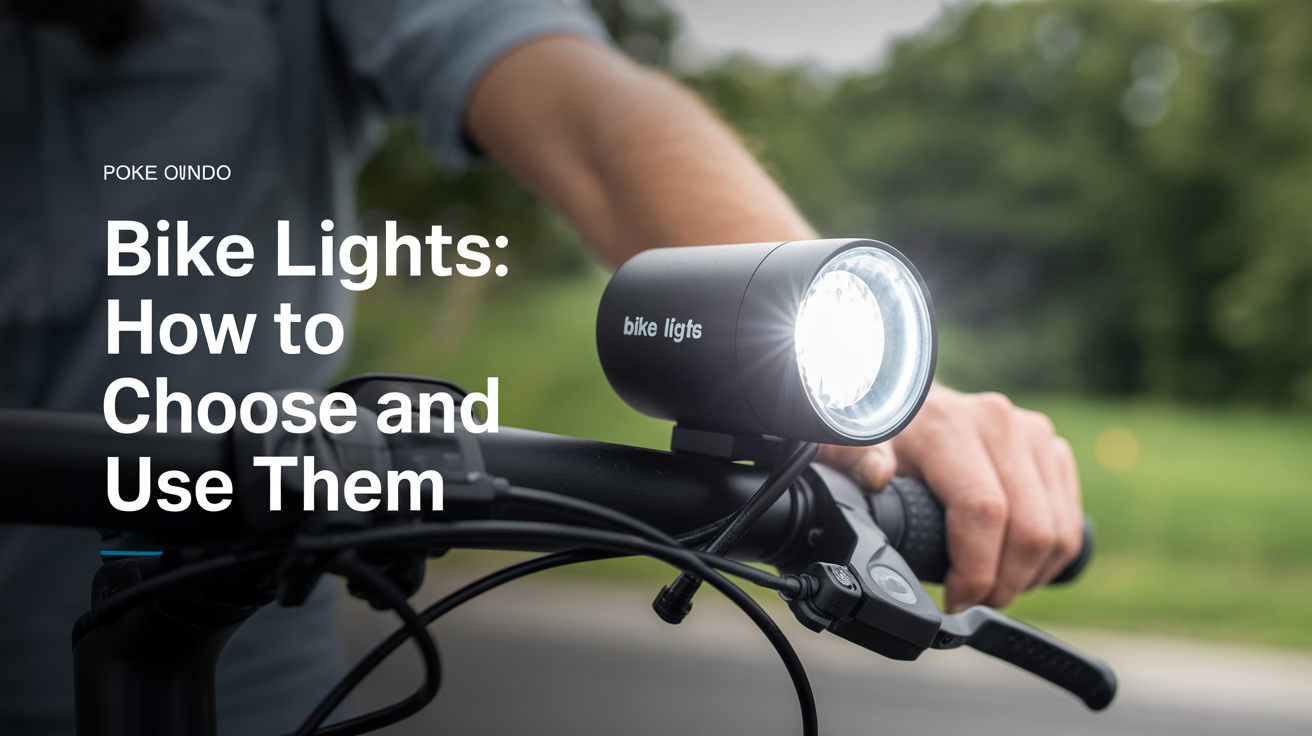
If you ride after dark or in low-light conditions, lights are not optional. In most places they are a legal requirement, and even where the law is vague, riding without them puts you at serious risk. The good news is that a decent set of front and rear bike lights costs less than a tank of gas and takes five minutes to understand.
Here is what you actually need to know.
Front and Rear: You Need Both
A front light helps you see the road ahead. A rear light makes you visible to drivers approaching from behind. Neither substitutes for the other.
Front lights are typically brighter, measured in lumens. Rear lights are smaller, use less power, and are optimized for visibility rather than illumination. They often run for many hours on a single charge because they are flashing rather than running a constant beam.
Buy them as a pair if you can. Many brands sell matched front-and-rear sets that share the same charging cable and have similar battery life, which makes it easier to remember to charge both at once.
How Bright Should Your Bike Lights Be
Brightness is measured in lumens. The right amount depends on where you ride.
| Riding environment | Front light | Rear light |
|---|---|---|
| Well-lit urban streets | 200-400 lumens | 20-50 lumens |
| Suburban roads with some lighting | 400-800 lumens | 50-100 lumens |
| Dark rural roads or paths | 800+ lumens | 100+ lumens |
For most commuters on lit city streets, a 400-lumen front light in flashing mode and a 50-lumen rear light in flash mode is plenty. Flashing draws attention more effectively than a steady beam in urban traffic, and it extends battery life considerably.
If you ride on unlit paths or country roads, you need a steady beam bright enough to actually illuminate the surface in front of you. In that case, look for a 600-1000 lumen light with a focused beam pattern designed for road use rather than a wide flood designed for city riding.
One practical note: a very powerful light pointed at eye level can dazzle oncoming riders and pedestrians. Good lights have a defined beam cutoff, similar to car headlights. If yours does not, aim it slightly downward so the hotspot hits the road 15-20 feet ahead of you rather than straight into the eyes of people walking toward you.
Battery Type: USB Rechargeable vs. AA
Most lights sold today are USB rechargeable, and for commuting that works well. Charge them at your desk or overnight, and they are ready the next morning. Runtime on a single charge ranges from 2-3 hours at maximum brightness to 10 hours or more in economy flash mode.
AA or AAA battery lights are worth considering if your commute is unpredictable or if you regularly forget to charge things. You can grab fresh batteries at a convenience store anywhere. The downside is that disposable batteries add up in cost and batteries can drain faster than expected in cold weather.
Some lights support both: they have an internal rechargeable battery but also accept AAA batteries as a backup. These tend to cost more, but the flexibility is useful if you commute year-round in variable conditions.
Mounting: Where to Put Your Lights
Front light: Mount on the handlebars or fork, centered if possible. Avoid positions where the light can spin or droop under vibration. Tighten the mount firmly. Some lights clip onto the stem instead, which keeps the bar cleaner and is often more stable.
Rear light: The seat post is the most common location. Some people prefer the seatstay or the saddle rails, which keeps the light lower and more visible to drivers behind you. If you use a rack or pannier bags, make sure the rear light is not hidden behind your luggage.
A few commuter-specific tips:
- If you use the same lights on multiple bikes, buy a second set of mounts rather than pulling the lights off and remounting them constantly. Repeated mounting wears down the rubber straps.
- If your bag covers your seat post light, get a secondary blinkie for your helmet or jacket.
- Check that the light is actually on and blinking before you roll. This sounds obvious, but it is easy to hit the wrong button and set it to a mode you did not intend.
What to Look for When Buying
You do not need to spend a lot to get reliable lights. Focus on these factors:
Runtime on the mode you will actually use. Manufacturers advertise maximum brightness runtime, which is often the shortest setting. Check the runtime at eco or flash mode, because that is what most commuters use every day.
Ease of charging. USB-C is now common and easier than older micro-USB connectors. Some lights charge via a port hidden under a rubber flap; make sure the flap stays watertight.
Mounting compatibility. Most lights use rubber-strap mounts that fit a range of handlebar diameters. If you have an unusual setup (aero bars, carbon handlebars, a very fat bar), double-check before buying.
Flashing modes. A steady beam, a fast flash, and a slower pulse are the three most useful modes. More than that is usually unnecessary and adds complexity.
Daytime running mode. Some lights have a high-visibility pulse designed for use in daylight. Research suggests daytime running lights reduce collision risk, and many commuters run them year-round in front and rear.
For context on what else to consider alongside lights, see Essential Cycling Gear for Beginners and What Can Wait.
Legal Requirements
Laws vary by country, state, and even city. In general:
- Most places require a white front light visible from a set distance (200 feet is common in the US) after dark.
- Most places require a red rear reflector or light. Some require a light rather than just a reflector.
- Some jurisdictions require the front light to produce a steady beam, not just flash. Check local rules.
- Reflectors are often required in addition to lights, not instead of them. Many bikes ship with wheel and pedal reflectors already installed; keep them on.
If you are not sure about your local rules, a quick search for your city or state name plus "bike light law" will usually turn up the relevant code.
Frequently Asked Questions
Do I need lights even if I only ride during the day? For pure daytime riding, lights are not legally required in most places, but many commuters run them anyway. A flashing front and rear light makes you substantially more visible in traffic and in low-contrast conditions like overcast skies, tunnels, or shaded roads. Daytime running mode draws less power, so battery life is not a concern.
How often should I charge my lights? Charge them before they are fully dead rather than waiting for a warning flash. Many lights warn you with a color change or a faster blink when the battery is low. A good habit: plug them in every two or three days if you commute daily, or check the charge level each Sunday.
Can I use a single very bright light in front instead of front and rear? No. A front light and a rear light serve different purposes and you need both. Drivers approaching from behind cannot see your front light. A rear light is not optional.
My lights came with a reflector clip. Should I keep it? Yes. Reflectors work without batteries and are often legally required in addition to lights. They are also a backup if your light fails mid-ride.
How do I stop my lights from being stolen when I lock my bike outside? Most lights are designed to be removed quickly. Take them off the bike whenever you lock up in a public space. This also means you remember to bring them inside and charge them.
For more on setting yourself up for commuting safely, see What to Wear Cycling in Any Weather. And if you are still sorting out the rest of your kit, the overview at Essential Cycling Gear for Beginners and What Can Wait covers what actually matters versus what can come later.