Essential Cycling Gear for Beginners (and What Can Wait)
Know exactly what cycling gear you actually need on day one, and what's worth skipping until you're riding regularly.
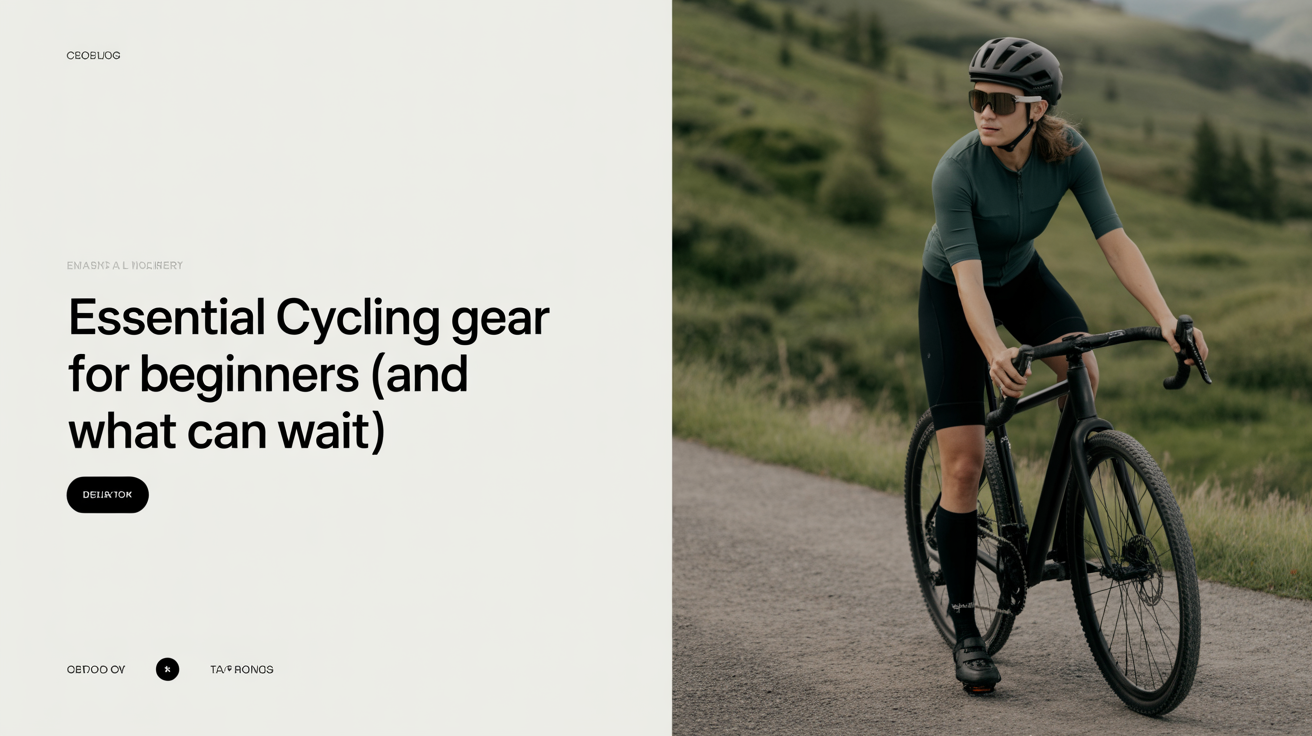
You don't need a lot to start cycling. A safe, well-fitted bike and a helmet get you 90% of the way there. The rest of a beginner cycling kit is about comfort and convenience, not survival, and most of it can wait until you know whether you'll be riding twice a week or twice a year.
Here's what's genuinely worth buying now, what's nice to add later, and what you can skip entirely for a long time.
The Non-Negotiables: Buy These Before You Ride
A Properly Fitted Helmet
This is the one item that's not optional. A helmet only works if it fits correctly. It should sit level on your head, covering your forehead to about one inch above your eyebrows. The straps should form a V just below each ear, and the chin strap should allow only two fingers between the strap and your chin.
Don't buy a helmet online unless you can try it on first, or you know the exact model fits your head shape. Helmets come in round and oval fits, and buying the wrong shape means it will rock forward or sideways instead of staying put.
A perfectly good helmet costs $40-70. Spending $150+ on your first one doesn't make it safer, just lighter. For a full breakdown on fit, check out our guide to choosing a helmet that actually fits.
Replace a helmet after any crash where your head hits the ground, even if it looks fine. The foam inside is designed to compress once. After that it no longer protects you.
Front and Rear Lights
If there's any chance you'll ride near dusk, or through any shaded path or tunnel, you need lights. Legally and practically. A basic USB-rechargeable front light (at least 200 lumens) and a rear blinker can be had for under $25 combined.
Don't rely on the little reflectors that come on most new bikes. They work in ideal conditions; lights work in all conditions.
A Pump and a Basic Flat Kit
Flat tires happen, usually a long way from home. Carry these at minimum:
- A hand pump or CO2 inflator (CO2 is faster; a pump works anywhere)
- Two spare inner tubes in the right size for your wheel (the size is printed on your tire sidewall, e.g. 700x28c or 27.5x2.0)
- Tire levers (two plastic ones; the cheap ones work fine)
Learning to change a tube before you need to on the roadside is worth 20 minutes of practice at home.
A Cable Lock
A $15 cable lock won't stop a determined thief, but it adds enough friction to make them move on to an easier target. For most everyday rides, a mid-weight combination or key lock from a hardware store does the job. If you're leaving your bike in a city for more than a few minutes, a proper U-lock is worth the investment.
Clothing: What Actually Makes a Difference
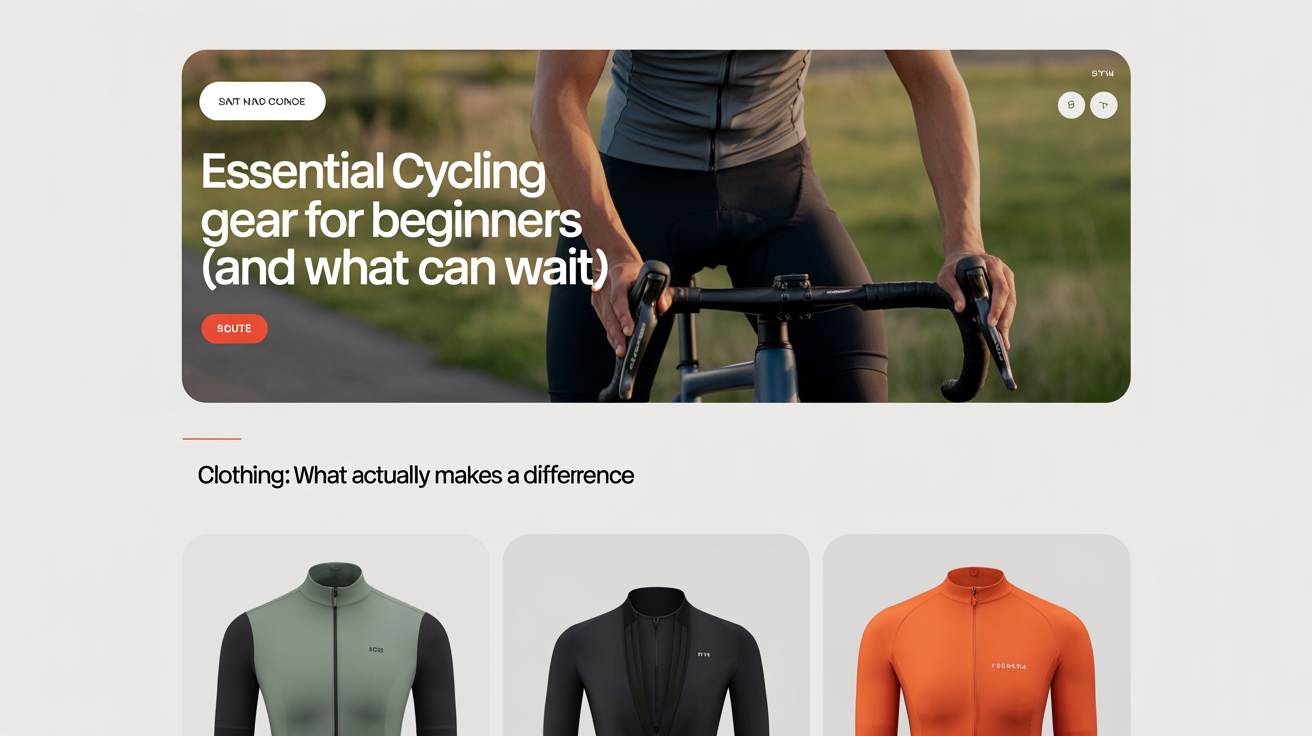
You don't need cycling kit to ride a bike. Plenty of people commute daily in jeans and sneakers, and that's fine. But if you're riding more than 45 minutes at a stretch, a couple of clothing choices will make you noticeably more comfortable.
Padded Shorts (or Liner Shorts Under Regular Clothes)
Saddle soreness is the most common reason new cyclists stop riding. A padded chamois sits between you and the saddle and reduces pressure on soft tissue. You'll notice the difference on any ride over 30 minutes.
You don't have to go full lycra. Padded liner shorts can be worn under regular shorts or loose-fit cycling shorts that look like athletic wear. We go into the full case in our guide on whether you really need padded bike shorts.
One thing to know: chamois are worn without underwear. The padding is designed to sit directly against your skin. Wearing underwear underneath creates friction and defeats the purpose.
Clothing That Won't Catch in the Chain
Loose trouser legs are a genuine hazard. They can get caught in the chain and either shred the fabric or lock the wheel. Roll up your right pant leg, use a trouser clip ($3 at most bike shops), or wear shorts. This isn't about aesthetics; it's about not going over the bars.
For riding in different conditions, our guide on what to wear cycling in any weather covers layering, rain gear, and what actually keeps you warm on cold mornings.
Gloves (Optional but Useful)
Cycling gloves serve two purposes: they protect your palms if you fall, and they reduce pressure on your ulnar nerve, which runs through the heel of your hand and can cause numbness on longer rides. If your rides are under an hour, skip them for now. If you're planning longer distances, a pair of fingerless gloves is worth trying.
Gear That Can Wait Until You Know You're Riding Regularly
These are all legitimate cycling products. They're just not things you need to figure out in your first month.
| Item | When It Makes Sense |
|---|---|
| Cycling shoes and clipless pedals | After 2-3 months of regular riding, if you want more efficiency |
| GPS cycling computer | Once you're tracking routes and want data beyond a phone |
| Hydration pack or frame bags | For rides over 90 minutes or bikepacking |
| High-visibility vest or jersey | Useful for road cycling in traffic; less critical for trails |
| Heart rate monitor | Once you're training with intent, not just riding for fun |
| Saddle bag (frame or seat) | Nice when you've sorted out what you carry regularly |
A phone in your pocket replaces a GPS computer. A water bottle fits in a jersey pocket or a cheap cage bolted to your frame. Build your kit around what you're actually doing.
Bike Maintenance Basics: What You Need at Home
You don't need a workshop. You need four things:
- A floor pump with a pressure gauge. Properly inflated tires are the biggest single improvement you can make to how a bike rides and handles. Check tire pressure before every ride. Your tire sidewall shows the recommended PSI range.
- Chain lube. A dry chain wears out components faster and makes that grinding noise. Apply lube to a clean chain after every wet ride or every 100 miles or so of dry riding.
- A rag. For wiping down the frame and chain after rides.
- A multi-tool with hex keys. Most adjustments on a bike need a 4mm or 5mm hex key. A compact multi-tool lives in your bag and handles 90% of roadside adjustments.
Anything beyond that, such as wheel truing, cable replacement, or brake adjustment, is worth having a qualified mechanic handle until you've built confidence. Brakes in particular should be checked by a professional if you have any doubt about how they're performing.
Your Starter Kit Summary
Here's a practical shopping list for a first-time rider, with rough budget guidance:
Must-have (buy before you ride):
- Helmet: $40-80
- Front and rear lights: $20-30
- Pump: $20-35
- Two spare inner tubes + tire levers: $10-15
- Lock: $15-40
First-month additions:
- Padded shorts or liner shorts: $25-50
- Chain lube and rags: $8-12
- Basic multi-tool: $12-20
Total to get rolling properly: roughly $125-230
That's for gear only. The bike itself is a separate question and depends heavily on what kind of riding you're planning.
FAQ
Do I need special shoes to start cycling?
No. Regular athletic shoes work fine on flat pedals. Cycling shoes that clip into pedals offer a real efficiency advantage at higher mileages, but they also require learning to clip in and out, which has a learning curve. Start on flat pedals and move to clipless when you're riding consistently and want more power transfer.
Can I use a regular backpack instead of a cycling-specific bag?
Yes, especially for shorter rides. A regular backpack is fine for commuting or casual riding. On longer rides or warm days, a backpack traps heat against your back and can shift around uncomfortably. Frame bags or seat bags distribute weight lower and don't affect ventilation, but they're not worth the investment until you know you need them.
How important is the brand of helmet I buy?
In most markets, any helmet sold must meet a safety standard (CPSC in the US, EN 1078 in Europe, AS/NZS in Australia). Meeting that standard matters; the brand name largely doesn't for basic protection. More expensive helmets tend to be lighter and better ventilated, which you'll appreciate on longer hot rides, but they don't protect your head better than a standard helmet that fits correctly.
Do I need cycling-specific gloves or can I use regular workout gloves?
Regular workout gloves work fine for most cycling. Cycling gloves are cut slightly differently to reduce bunching and often have padding in the palm rather than the fingers, but they're not a requirement. If you have gloves already, try them and see how they feel.
What's the one piece of gear most beginners wish they'd bought sooner?
Consistently, it's a good floor pump with a gauge. Riding on tires at half the correct pressure is like driving a car with flat tires. Once you start checking and correcting pressure before rides, handling improves noticeably, rolling resistance drops, and you get fewer pinch flats. It's the least glamorous purchase and one of the most impactful.