Bikepacking for Beginners: Planning Your First Overnighter
A practical guide to planning your first bikepacking trip: gear, route, packing, and what to expect on an overnight bike adventure.
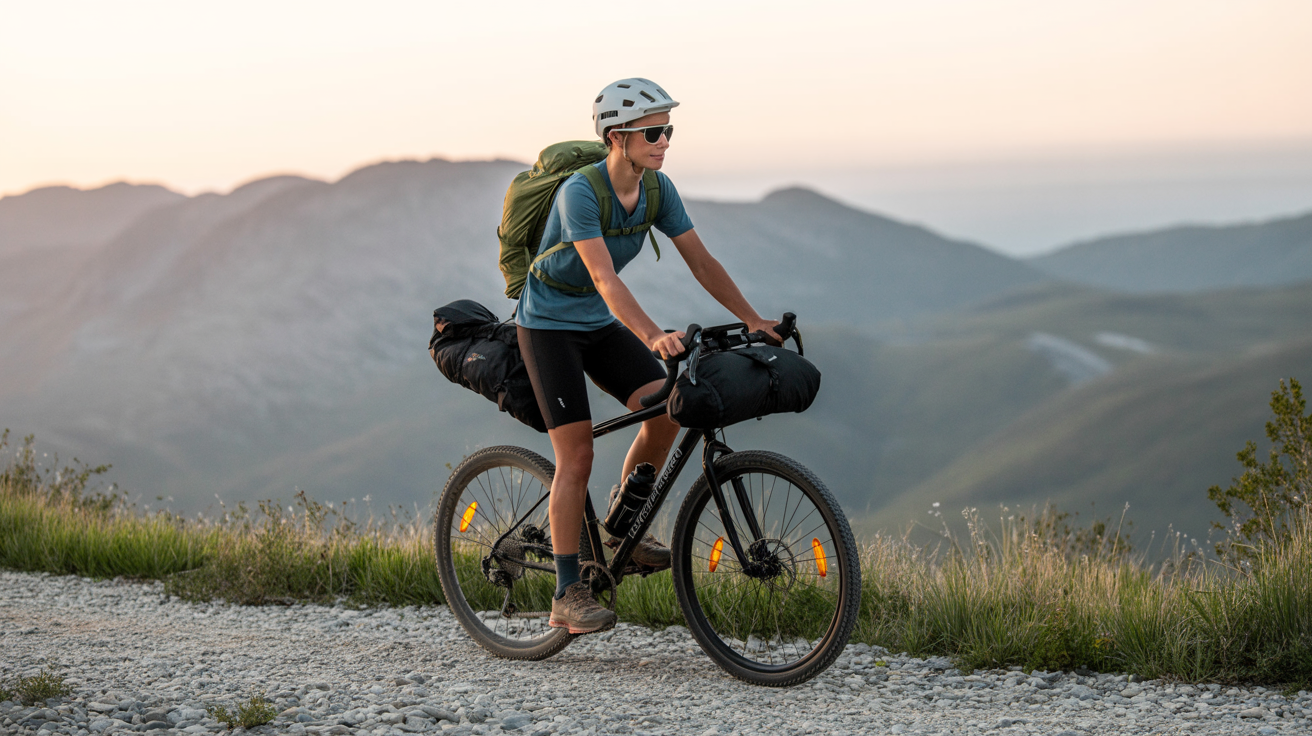
Bikepacking is simply bike touring stripped down to the essentials: you load your gear onto your bike and sleep somewhere along the route. A first overnighter can be as simple as riding 20 miles to a campground, pitching a tent, and riding home the next morning. You don't need a special bike, exotic gear, or months of prep. You need a workable plan and a willingness to figure things out as you go.
What Bikepacking Actually Is (and Isn't)
Bikepacking sits somewhere between traditional touring and ultralight backpacking. Classic touring loads panniers onto a rack and can handle heavy loads comfortably. Bikepacking typically uses frame bags, handlebar rolls, and seat packs that hug the bike's frame, keeping weight low and centered.
For a beginner overnighter, the distinction matters less than you'd think. If you already have a rear rack, panniers work fine for a short trip. If you don't, a large seat pack and a handlebar roll can carry everything you need for one night. The point is to sleep away from home on your bike, not to have the most optimized setup on the trail.
What bikepacking is not: a gear-acquisition project. Many people first-time bikepacked with a stuff sack strapped to their handlebars and a tarp. Gear helps, but it doesn't replace planning and reasonable expectations about distance and terrain.
Choosing Your Route
This is the most important decision you'll make for a first overnighter. Get it wrong and the trip becomes a grind. Get it right and you'll be planning the next one before you're home.
Distance and Elevation
A reasonable first overnighter covers 25 to 50 miles over two days. On pavement or packed gravel, most casual cyclists can manage 20 to 30 miles a day with loaded bags. Off-road singletrack cuts that in half or more.
Elevation matters as much as distance. A 25-mile ride with 3,000 feet of climbing on loose gravel will take far longer and feel far harder than a 40-mile flat rail trail. When you're starting out, favor gentler terrain.
Finding a Destination
Look for campgrounds within your target distance that accept cyclists. Many state and provincial parks have hiker-biker sites for small groups arriving without vehicles. These are often cheap, first-come-first-served, and perfectly suited to an overnighter.
Planning a cycling route beforehand on a mapping app like Komoot or Ride with GPS lets you preview elevation, surface type, and points of interest. Download the route offline before you leave home.
Call or check the campground's website to confirm availability and any reservation requirements. Nothing deflates a trip like arriving to find the site full.
Building Your Bikepacking Gear List
You're packing for one night, not a month. Resist the urge to cover every contingency. Aim for a total loaded bike weight under 35 pounds if possible.
Shelter and Sleep
| Item | What to Look For |
|---|---|
| Tent or bivy | A one-person ultralight tent or bivy saves weight; a two-person tent gives more room to spread out damp gear |
| Sleeping bag | Rated to expected overnight low; a quilt saves weight if you're warm at night |
| Sleeping pad | Inflatable pads pack small; foam pads are lighter but bulkier |
For a summer overnighter, a basic sleeping bag rated to 40°F and a cheap foam pad will do. You can upgrade later once you know what bothers you.
Clothing
Pack for the forecast, not for every possibility. A minimal kit for a summer overnighter:
- Riding clothes you're already wearing
- One set of off-bike clothes (shorts, t-shirt, light layer)
- Rain jacket
- Spare socks and base layer
- Sandals or camp shoes (optional, saves your feet after a day in cycling shoes)
Food and Water
Simple food is better food on a bikepacking trip. Sandwiches, wraps, and trail mix for the ride. Freeze-dried meals or a camp stove setup for dinner. Oatmeal packets or energy bars for breakfast.
Know your water sources. If there's reliable water at the campground, you may only need to carry enough to reach it. If the route is remote, carry more and bring a filter or purification tablets.
Tools and Spares
You're your own roadside assistance. Carry:
- Spare inner tube (two is better)
- Tire levers and patch kit
- Mini pump or CO2 inflator
- Multi-tool with chain breaker
- Quick-link for your chain size
- Small amount of cash
Knowing how to use these matters as much as having them. If you haven't fixed a flat on the road yet, learning to carry stuff on your bike and practicing basic repairs before you leave will save you a long walk.
Packing Your Bike
Loaded bikes handle differently. A heavy rear load makes the front wheel feel light and squirrelly. A handlebar roll that's too wide catches crosswinds on descents. Before your trip, take a test ride with your loaded bags around the neighborhood and get used to how the bike corners, brakes, and climbs.
General packing principles:
- Heavy items low and centered (frame bag is ideal for dense gear)
- Sleeping gear in the handlebar roll or seat pack (light and compressible)
- Quick-access items in a top tube bag or jersey pockets: snacks, phone, sunscreen, lip balm
Waterproof everything you care about. Pack bags dry, or use dry bags inside your packs. Rain happens, and even a light mist turns an unpacked sleeping bag into a wet problem.
On the Road: What to Expect
Loaded bikes are slower than unloaded ones. Add 20 to 30 percent more time to your estimate, especially on climbs. Starting early in the day gives you buffer and means you reach camp before dark.
Eat and drink more than you think you need. Fatigue on a bikepacking trip is usually a hydration or fueling problem before it's a fitness problem. Aim to eat something every 60 to 90 minutes on the bike.
If something goes mechanically wrong, stay calm and assess. A flat is a 10-minute fix with practice. A broken chain is manageable with a quick-link. Most problems that aren't a frame failure can be handled roadside or walked to the nearest town.
For longer adventures that start as daily commutes and build into multi-day trips, starting with bike commuting builds the confidence and practical skills that make bikepacking feel like a natural next step.
After Your First Overnighter
You'll finish your first bikepacking trip with a clear list in your head: what worked, what didn't, what you wished you'd brought, and what you never touched. That list is more valuable than any gear guide. Use it to shape trip two.
Most people who complete a first overnighter find they want to go farther next time. The physical side usually turns out easier than expected. The planning side becomes second nature quickly. The biggest barrier is simply deciding to go.
Frequently Asked Questions
What bike do I need for bikepacking?
Almost any bike can work for a beginner overnighter. Gravel bikes and mountain bikes handle mixed surfaces well, but a road bike or hybrid will manage fine on paved and packed-gravel routes. The key is that your bike fits you properly and is mechanically sound before you load it up.
How much does bikepacking gear cost to get started?
You don't need to spend much for a first trip. A basic seat pack runs $40 to $80. A budget sleeping bag and foam pad under $60 total. If you're camping somewhere with access to a shelter or cabin, you can skip tent weight entirely. Many people complete first overnighters with gear they already own or borrow from friends.
Is bikepacking safe for beginners?
A well-planned short overnighter on a low-traffic route or rail trail is very manageable for beginners. The main risks are physical overexertion from taking on too much distance or climbing, and mechanical problems without the skills or tools to address them. Starting with a modest route, carrying basic repair gear, and telling someone your plan and expected return time covers most of the safety bases.
Do I need to book a campsite in advance?
It depends on the campground and time of year. Hiker-biker sites at many state parks are first-come-first-served and often available even when drive-in sites are full. Popular campgrounds on summer weekends may require a reservation. Check before you go rather than assuming availability.
How do I carry a sleeping bag on my bike?
A sleeping bag or quilt compresses into a stuff sack and fits well in a handlebar roll or the bottom of a large seat pack. Wrap it in a dry bag before stuffing it in. Sleeping bags are vulnerable to moisture and a damp one loses insulation quickly, so keep it protected even if rain seems unlikely.