How to Start Bike Commuting (Without the Stress)
A practical guide to starting bike commuting for beginners — gear, route planning, traffic tips, and building the habit confidently.
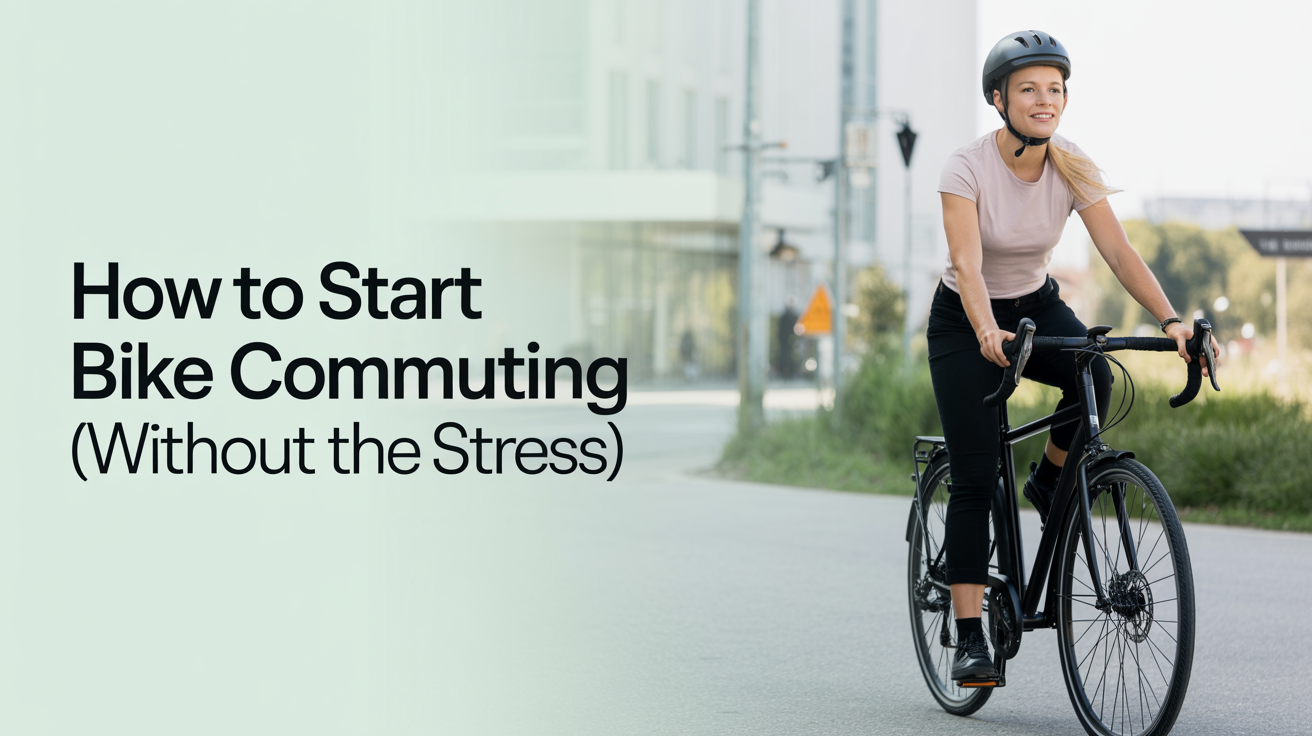
Bike commuting sounds great until you picture yourself sweaty and lost on a busy road with a flat tire. The good news is that most beginners overthink the hard parts and underthink the easy ones. This guide will walk you through exactly what to do first, what gear actually matters, and how to turn a nervous experiment into a reliable daily routine.
Is Your Bike Ready for the Job?
You don't need a new bike to start commuting. Most bikes people already own, road or hybrid or mountain, will work fine. What actually matters is that the bike is safe to ride.
Before your first commute, run through these checks:
- Tires: Squeeze them. Both should feel firm, not squishy. Check the sidewall for a pressure range (usually printed in PSI) and use a floor pump to hit the middle of that range.
- Brakes: Lift each wheel and spin it. Squeeze the matching brake lever. The wheel should stop within about half a rotation. If the lever pulls all the way to the handlebar, the brakes need adjusting or new pads. Don't ride until this is fixed — have a qualified mechanic take a look if you're unsure.
- Chain: It should be lubricated (a dull gray or shiny, not rusty orange). A dry chain skips gears and wears faster.
- Seat height: Stand next to the bike. The saddle should reach roughly your hip bone. When seated and pedaling, your leg should have a slight bend at the bottom of each stroke, not fully extended and not cramped.
That's the whole checklist. Anything else can wait.
Plan a Route Before You Ride It
The single biggest mistake first-time bike commuters make is following the same roads they drive. Car routes are designed for cars: fast, wide, sometimes hostile. A bike route is almost always different, and usually better once you find it.
Spend 20 minutes on a mapping tool that has cycling directions. Most will show dedicated bike paths, lanes, and low-traffic streets. Look for a route that trades a little extra distance for calmer roads. Three extra minutes of riding is worth not sharing a lane with trucks.
Check out this guide to planning a cycling route for a deeper look at choosing the right roads and what to look for on the map versus in real life.
Do a Dry Run on the Weekend
If your commute is longer than a mile or two, ride the route on a relaxed weekend morning before you commit to it on a Monday. You'll notice things a map won't tell you: the rough patch of road at the train crossing, the traffic light with no bike signal, the shortcut through the park. You'll also know roughly how long it takes, so you can leave the house with confidence instead of anxiety.
Know Where You'll Park
Check whether your workplace has bike storage, a rack, or a covered shelter. If you're locking outside, identify a solid fixed object (a metal rack bolted to the ground, not a sign post) near the entrance. A good U-lock or a folding lock rated at least ART 2 is worth the investment. Thread it through the frame and the rear wheel, not just the wheel.
What to Wear (and What to Skip)
You don't need to show up in cycling kit to commute by bike. Plenty of people ride to work in regular clothes, especially on shorter trips under 3-4 miles. Here's what actually matters:
Always wear a properly fitted helmet. This is non-negotiable. A helmet should sit level on your head (not tilted back), and the straps should form a V shape just below each ear with one finger of space under your chin. A helmet that fits badly protects less than one that fits well.
Comfortable shoes that won't catch in the drivetrain. Loose laces and wide flares can wrap around the chainring. Roll up wide-leg pants, tuck in laces, or use a trouser clip.
Layers for the weather. A windproof jacket makes cold mornings manageable. In rain, a decent waterproof layer keeps you dry enough. You'll sweat either way on longer rides, so breathable fabric matters more than waterproofing alone.
Managing Sweat on Longer Commutes
If your ride is 20 minutes or more, you'll probably arrive damp on warm days. A few practical approaches:
- Ride at a conversational pace rather than racing. You'll arrive far less sweaty.
- Pack a change of shirt or the clothes you'll wear at work.
- Use a cycling cap or headband under the helmet to keep sweat off your face.
- If your workplace has showers, use them. If it doesn't, a washcloth and a small towel in your bag do the job.
Carrying Your Stuff
A backpack works fine for short commutes, but if you're carrying a laptop, lunch, and a change of clothes, a rear rack with panniers is a genuine quality-of-life upgrade. Panniers keep weight off your back, improve bike handling, and don't make you sweat through your bag.
Take a look at the full breakdown on carrying things on your bike for bag options, weight limits, and what fits where.
If you're not ready to buy a rack, a backpack with a chest strap is the next best option. Chest straps stop the bag from swaying and keep weight centered. Pack heaviest items low and close to your back.
Riding in Traffic Safely
Traffic is the part beginners worry about most. The reality is that riding in traffic is a skill, and it's learnable. A few principles make a big difference.
Take the lane when you need to. On narrow roads or when approaching turns, riding in the center of the lane prevents drivers from squeezing past dangerously. You'll be moving with traffic, not slowing it as much as you might think.
Make yourself predictable. Signal turns, don't weave between parked cars, and hold a consistent line. Drivers can share the road with a cyclist they can predict. A cyclist who darts around is harder to give space to.
Be careful at intersections. Most bike-car incidents happen at junctions. Slow down, make eye contact when you can, and never assume a turning vehicle has seen you.
Watch for car doors. On streets with parallel parking, ride about a meter from parked cars, which keeps you out of the door zone. A door swinging open at 15 mph is a serious hazard.
If you ride home after dark or before dawn, read up on staying safe cycling at night. Front and rear lights are not optional in low-light conditions.
Building the Habit
Bike commuting becomes easy once it becomes routine. The first few rides feel awkward. By the tenth, you'll wonder why you were anxious.
A realistic way to start: commit to two or three days a week for the first month rather than every day. This gives you a rest day if you're tired, a buffer if the weather is bad, and a realistic baseline to build from. Once those two days feel normal, adding a third is easy.
A simple commuter kit to keep at work or in your bag:
| Item | Why it matters |
|---|---|
| Mini pump or CO2 inflator | Flat tires happen; this gets you home |
| Spare inner tube | Faster than patching on the roadside |
| Tire levers (2) | You won't get the tire off without them |
| Multi-tool with hex keys | Adjusts saddle, handlebars, stem |
| Wet wipes or small towel | Quick cleanup on arrival |
| Snack (bar or gel) | Prevents bonking on longer rides |
You don't need all of this on day one. Start with the pump and a spare tube. Add the rest as you get comfortable.
FAQ
How long should my commute be to make bike commuting practical?
Most people find that commutes up to about 10 miles each way are very manageable. Under 5 miles is a great starting distance for new commuters. Beyond 10-15 miles one way, you might consider a combination approach: ride part of the route and take transit for the rest, or only bike commute on certain days.
What do I do if it rains on my commute day?
Check the forecast the night before and dress accordingly. A waterproof jacket and trousers (or at minimum a jacket and waterproof overshoes) will keep you comfortable. Some commuters keep a rain jacket in their bag year-round. If a storm rolls in unexpectedly, it's fine to wait it out somewhere or take public transit. You don't have to ride through everything.
Do I need a special commuter bike, or will my mountain bike work?
Your mountain bike will work. You might add slicker tires (less rolling resistance on pavement) and fenders if you plan to ride in wet conditions, but neither is required to start. Ride what you have. If you find yourself commuting regularly and wanting to upgrade, that's the right time to shop.
How do I handle hills on my commute?
Shift to a low gear before the hill, not while you're already grinding uphill. Keep your cadence higher rather than pushing harder in a big gear. If a hill is genuinely brutal, there's no shame in walking it while you build fitness. Hills that feel hard in week one feel manageable by week four.
Is bike commuting safe in a city with no bike lanes?
Many cities with few dedicated lanes are still very bikeable. Streets with lower speed limits (20-30 mph), lower volumes of traffic, and on-street parking are often calmer than they look. Explore parallel routes to the main roads, which are often quieter. Your dry run on the weekend will reveal what the traffic is actually like versus what you imagine from driving it.