Your First Café Ride or Group Ride: What to Expect
New to riding with others? Here's what actually happens on a café ride or beginner group ride, and how to show up prepared.
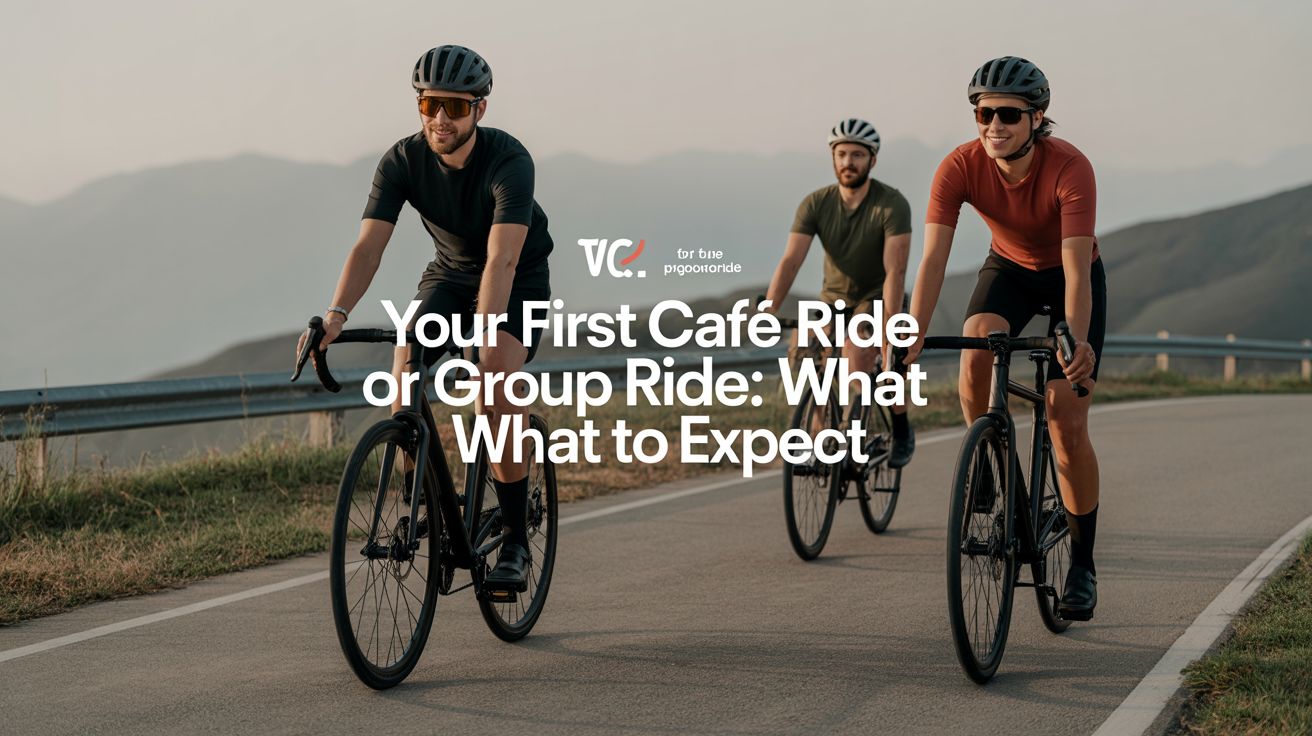
Riding alone is fine. Riding with a group is a different thing entirely, and the first time you do it, the unknowns can feel bigger than the ride itself. This guide covers what to expect, how to prepare, and what the unwritten rules actually are, so you can show up confident rather than anxious.
What a Café Ride Actually Is
A café ride is exactly what it sounds like: a group ride with a stop at a café or coffee shop partway through or at the end. The pace is usually conversational, meaning you can hold a sentence without gasping, and the goal is the company as much as the miles.
Most cycling clubs run a café ride on weekend mornings as their "no-drop" or beginner option. No-drop means the group waits at junctions or regathers at the top of climbs so no one gets left behind. It is the right format for a first group ride.
Not all group rides are café rides. Some clubs also run chaingang rides, fast chain-of-riders pace lines, or training rides at a hard tempo. Ask before you show up. A beginner on a chaingang is a safety hazard for themselves and others.
How to Find a Group Ride
A few places to look:
- Local bike shops. Many shops host their own rides or post a list on the door. The staff can usually tell you which one suits your current fitness.
- Cycling clubs. Search for your town or city plus "cycling club" or "cycling club beginner ride." Most clubs publish their ride calendar publicly.
- Strava and Komoot groups. Local groups often list rides here.
- Facebook groups. Regional cycling communities on Facebook are active in most areas.
Once you find one, email or message the organiser before the first time. Ask the average speed, distance, and whether it is truly no-drop. A 20 mph average is a hard ride; 12 to 14 mph is a sociable pace. Knowing which one you are signing up for matters.
What to Bring
Group rides have a rhythm, and the quickest way to slow it down is to be the person who needs to borrow everything at the start. Bring the basics yourself.
| Item | Why it matters |
|---|---|
| Helmet, properly fitted | Required on almost all club rides |
| Spare inner tube (correct size) | Flats happen; others shouldn't have to supply your spares |
| Tyre levers and a pump or CO2 inflator | Same reason |
| Enough water for the distance | Aim for at least 500 ml per 30 miles |
| A snack or some cash for the café | You will be hungry |
| Front and rear lights if there is any chance of low light | The law in most countries; club rides often require them |
| A phone with the route downloaded | If you do get separated, you can still find your way |
If you are new to carrying things on a bike, this guide to carrying stuff while cycling covers the practical options without overcomplicating it.
Group Riding Basics
You do not need race-level handling skills for a café ride, but a few habits make you safer and easier to ride with.
Hold your line. Weaving or sudden sideways movements are the main cause of contact in groups. Pick a straight path and stay on it, even when you look down or reach for your bottle.
Brake smoothly. In a line of riders, sudden hard braking ripples back and can cause a pile-up. Feather the brakes gradually when the group slows.
Signal hazards. Point at potholes, drain covers, and gravel. Call out "slowing," "stopping," or "car back" when relevant. You will pick up the local signals quickly by watching others.
Overlap wheels carefully. If your front wheel touches the rear wheel of the rider ahead, you will almost certainly fall. Leave a gap you are comfortable with, and close it gradually rather than surging.
Communicate if you need to stop. If you get a flat or feel unwell, call out to the riders around you and pull off to the side safely. Do not just brake suddenly in the middle of the group.
If you are working on reading roads and planning routes, planning a cycling route covers some of that groundwork before you add the complexity of riding with others.
What Happens at the Café
This is the part that trips up first-timers because there is no instruction manual for it. Here is roughly what happens:
The group arrives, locks or leans bikes against a wall or fence, and heads inside. Some people order coffee, some order food, most do both. The stop is usually 20 to 40 minutes. Conversation is about bikes, routes, local racing, and whatever else comes up.
You are not expected to know everyone or say much. Introduce yourself if someone asks, mention it is your first time with the group, and let the conversation happen around you. Most cycling groups are genuinely welcoming to newcomers, especially in café-ride format.
Pay for your own order. Do not assume someone else is picking it up.
Joining a Cycling Club vs. Just Going on Rides
Going on a club ride does not commit you to joining. Most groups welcome non-members on a first ride or for a short trial period before asking you to pay annual dues.
If you enjoy it, membership usually gets you:
- Access to the full ride calendar, including longer or more varied routes
- Third-party liability insurance (check what is included)
- A community to ride with regularly, which is the main reason people stay
If the first group does not feel right, try another. Club culture varies a lot. Some are relaxed and social; others are more competitive. Neither is wrong, but you want the one that fits where you are now.
Frequently Asked Questions
Do I need a road bike to join a group ride? Not for most café rides. Hybrids and flat-bar bikes are welcome at social-pace rides. Gravel bikes work well too. Where you might struggle is on faster training rides where aerodynamics and gearing matter more. Ask the organiser if you are unsure.
What if I get dropped? On a true no-drop ride, someone will wait for you or circle back. If you find yourself separated, stop, look at the downloaded route on your phone, and continue at your own pace to the next gathering point or to the café. It is not a failure, and it happens to people at every level.
Is there an etiquette rule about what bike gear I should wear? Padded shorts and a helmet are expected. Beyond that, do not overthink it. You will see everything from full kit to jeans at a café ride. Club jerseys are common but not required.
How far do café rides usually go? Typically 20 to 50 miles, depending on the club and the day. The listing or organiser will tell you the distance in advance. If you are building up your distance, starting bike commuting gradually covers some of the same principles for building mileage without overdoing it.
What if I need to leave early? Tell the ride leader at the start. They can show you where on the route you can peel off, and you avoid the awkward mid-ride disappearance that leaves people wondering if something went wrong.