9 Beginner Cycling Mistakes (and How to Avoid Them)
New to cycling? Avoid these 9 common beginner mistakes—from saddle height to nutrition—so every ride is safer and more enjoyable.
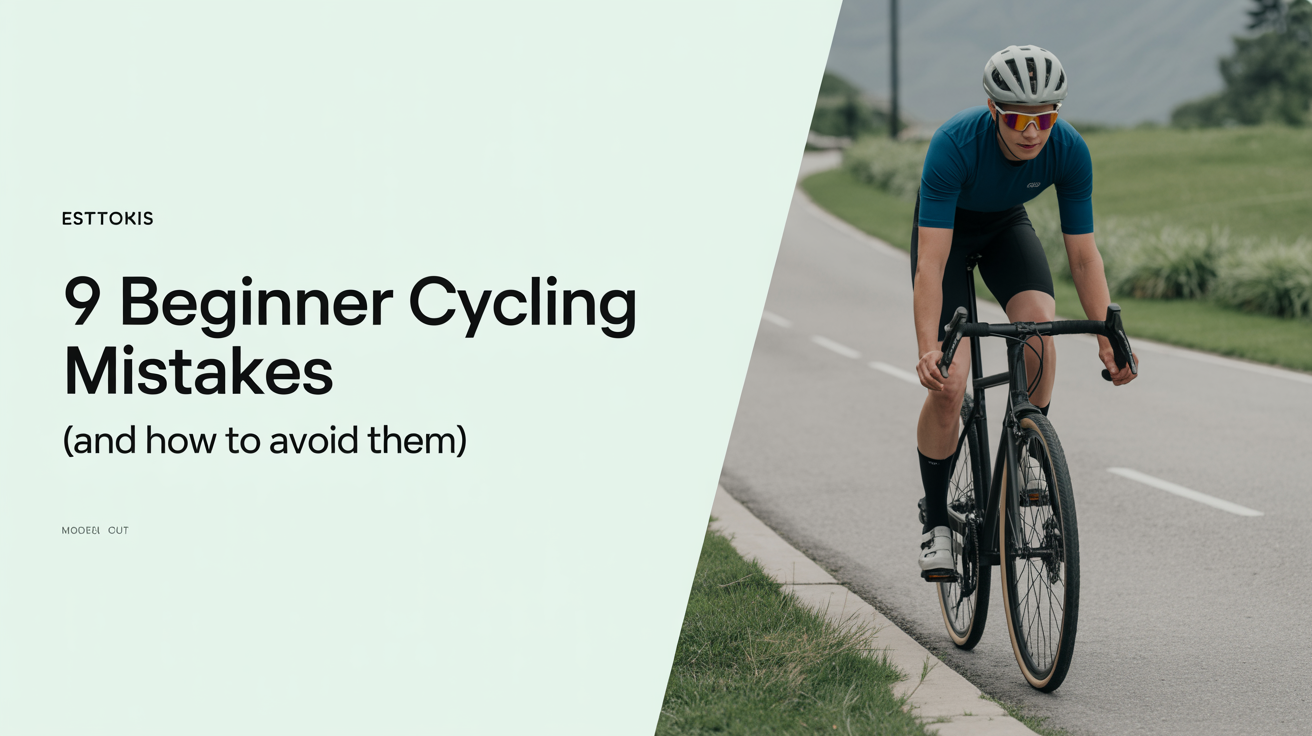
Most beginner cycling mistakes don't happen from bad intentions, they happen because no one told you. A saddle set too low, gears ignored on a hill, or a skipped pre-ride check can turn a fun outing into sore knees and a frustrating walk home. Here are nine mistakes new cyclists make most often, and exactly what to do instead.
1. Riding with the Saddle Too Low
This is probably the single most common mistake. A saddle that's too low feels "safer" because your feet can rest flat on the ground, but it forces your knees to bend at a sharp angle on every pedal stroke. After 20 minutes, your quads ache. After an hour, your knees protest loudly.
The fix is straightforward. Sit on the saddle and place your heel on the pedal at its lowest point, your leg should be almost fully straight. When you move your foot to the proper pedaling position (ball of the foot over the axle), you'll have a slight bend at the knee, roughly 25–35 degrees. That's the sweet spot.
If you're unsure where to start, a simple bike fit guide can walk you through saddle height and reach adjustments before your first real ride.
2. Ignoring the Gears
New cyclists often pick one gear and stay there, either grinding a massive gear uphill or spinning wildly downhill with zero resistance. Neither feels great, and both waste energy.
Gears exist to keep your cadence, the speed at which your legs turn, in a comfortable range. Most cyclists aim for 70–90 rpm on flat ground. A general rule:
- Approaching a hill: shift to an easier gear before you need it, not after your speed has already dropped
- On flat ground: use a mid-range gear that lets you pedal smoothly without bouncing in the saddle
- Downhill: add resistance so you're still contributing to the motion rather than freewheeling the whole way
Practice shifting on a quiet road. You'll quickly feel the difference between laboring and flowing.
3. Skipping the Pre-Ride Check
It takes about 90 seconds and it's worth every one of them. Before you head out, run through this quick checklist:
- Tires: Squeeze them firmly. They should feel hard, not squishy. Check the recommended PSI on the tire sidewall and use a pump with a gauge if you have one.
- Brakes: Squeeze each lever. The brake should engage well before the lever hits the handlebar. If a lever pulls all the way to the bar, the cables need adjusting, take it to a shop.
- Quick releases / thru-axles: Give each wheel a firm sideways shake. No movement means it's secure.
- Chain: It should be lubed and clean, not orange with rust or bone dry.
Safety-critical issues, especially anything with the brakes or wheels, should be checked by a qualified mechanic before you ride.
4. Wearing the Wrong Clothing (or No Helmet)
You don't need to spend a fortune on cycling kit to ride comfortably, but a few basics make a real difference.
A properly fitted helmet is non-negotiable. It should sit level on your head (not tilted back), with the front edge about two finger-widths above your eyebrows. The chin strap should fit snugly, you should barely fit two fingers under it.
Beyond safety, padded cycling shorts are the single biggest comfort upgrade for longer rides. Seams in regular shorts press directly into sensitive areas after 20 minutes. You don't need the most expensive pair; a mid-range option with a basic chamois pad will transform rides over 30 minutes.
Avoid loose, flappy trousers. The right leg can catch in the chain, which is both destructive and dangerous.
5. Choosing the Wrong Bike for Your Riding
Buying a mountain bike because "it looks tough" and then riding exclusively on pavement is a very common beginner move. Wide, knobby tires create significant rolling resistance on smooth roads. You'll pedal harder and cover less ground compared to a hybrid or road bike.
Conversely, a drop-bar road bike with 25mm tires is a poor choice for gravel paths or light trails.
Take a few minutes to think about where you'll actually ride 80% of the time. Paved paths and roads? A hybrid or road bike will serve you much better. Mixed surfaces with some dirt? A gravel bike or a hybrid with slightly wider tires. Proper singletrack trails? Then a mountain bike makes sense.
If you're still in the research phase, choosing your first bike covers the key questions to ask before you buy.
6. Not Eating or Drinking Enough on the Ride
Cycling burns more calories than most people expect. A moderately paced 60-minute ride can use 400–600 calories depending on your weight and terrain. New cyclists often head out on a one-hour ride with no water and no snacks, then wonder why they bonk (hit a wall of fatigue) in the last 15 minutes.
A few practical rules:
- Water: Aim for roughly 500ml (about 17 oz) per hour in mild weather. More when it's hot.
- Food: For rides under an hour, a pre-ride meal is usually enough. For anything over 75–90 minutes, carry something, a banana, an energy bar, or even a handful of dates works fine.
- Timing: Don't wait until you're thirsty to drink. Sip regularly from the start of the ride.
A basic water bottle cage and a bottle are the best value add-on you can put on a bike.
7. Braking Too Hard on Corners
The front brake provides most of your stopping power, it's physically more effective than the rear. But grabbing it hard while leaning into a corner is how bikes go down fast.
Brake before the corner, not during it. Slow to a comfortable speed on the straight approach, release most of the brake pressure as you enter the curve, and let the bike flow through. If you're going too fast and need to slow in a corner, use gentle pressure on the rear brake only.
This takes practice. Spend time on a quiet car park or empty road braking from speed so you understand how quickly the bike responds. Knowing your brakes builds confidence faster than anything else.
8. Riding in Traffic Without Planning Your Line
New cyclists often hug the very edge of the road, thinking it's safer to stay out of traffic's way. In reality, riding too close to the gutter puts you over debris, gravel, and drain covers, and drivers may try to pass you with less clearance than they should give.
A few basics for riding on roads:
- Ride about 0.5–1 metre from the gutter (or parked cars, to avoid being doored)
- Look ahead, not just at the road directly in front of your wheel
- Signal clearly and early before turning
- Make eye contact with drivers at junctions when possible, don't assume they've seen you
- Follow local traffic laws; in most places, cyclists have the same rights and responsibilities as other vehicles
Bright clothing during the day and lights (front and rear) at dawn, dusk, or night make you significantly more visible.
9. Going Too Hard, Too Soon
Cycling fitness builds surprisingly quickly, but it still takes time. A common pattern: new cyclist goes out, feels great for the first 20 minutes, hammers a big hill, and comes home wrecked. The next ride feels hard before it even starts. A week later, motivation drops.
Start with a pace where you can hold a conversation. If you can't get a sentence out without gasping, slow down. Build your ride length gradually, adding roughly 10–15% per week is a sustainable pace. Your cardiovascular system adapts faster than your tendons and ligaments, so the muscles might feel fine while your knees quietly accumulate stress.
Rest days matter. Two or three rides per week is a solid starting point. Add a fourth when the existing rides feel comfortable and recovered.
FAQ
How do I know if my saddle height is right?
At the bottom of the pedal stroke, with the ball of your foot on the pedal, your knee should have a slight bend, around 25–35 degrees. If your hips rock side to side as you pedal, the saddle is too high. If your knees ache after short rides, it's likely too low. Small adjustments (3–5mm at a time) make a noticeable difference.
Do I really need cycling shorts for a beginner?
Not for very short rides (under 20 minutes). But once you start riding 30–60 minutes regularly, padded shorts are one of the most impactful comfort upgrades you can make. The chamois pad reduces friction and pressure in exactly the right places. You wear them directly against the skin, no underwear underneath.
What should I eat before a bike ride?
For a morning ride of an hour or less, a small snack 30–60 minutes beforehand works well, toast with peanut butter, a banana, or yoghurt with oats. For longer rides, a fuller meal 2–3 hours before is better. Avoid anything heavy or high-fat right before you set off, as digestion and hard exercise don't mix well.
Is it safe to ride on the road as a beginner?
Yes, with preparation. Start on quieter roads or dedicated cycling paths to build confidence before moving to busier routes. Learn to signal, scan junctions, and hold a predictable line. A helmet, front and rear lights, and bright clothing are practical safety measures rather than optional extras.
How often should a beginner cycle?
Two to three times a week is a good starting point, with at least one rest day between rides. Consistency matters more than frequency early on. Once those rides feel comfortable and you're recovering well, add a fourth session. There's no prize for going every day if your body is telling you to rest.