Road, Hybrid, Gravel, or Mountain: Bike Types Explained
Not sure which bike to buy? This plain-English guide breaks down road, hybrid, gravel, and mountain bikes so you can pick the right one.
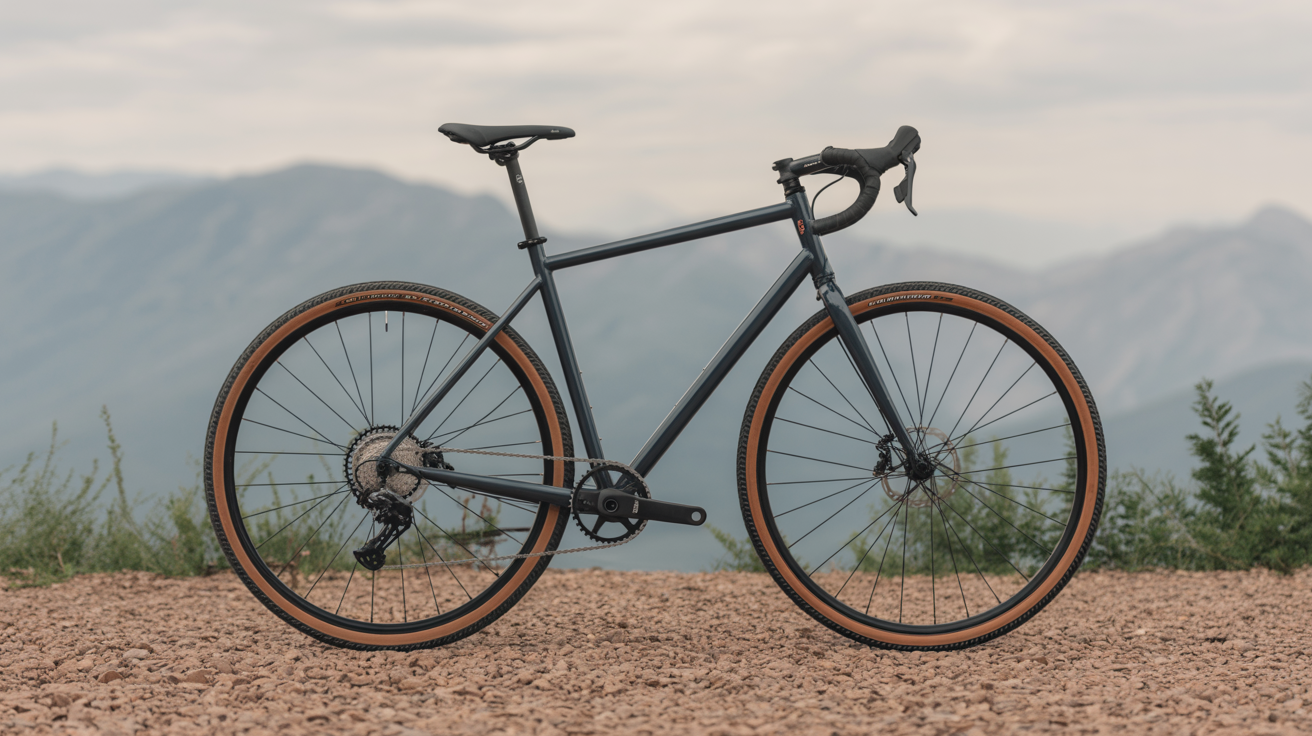
The most common question new riders ask is some version of: "Which type of bike should I get?" The short answer is that it depends almost entirely on where you plan to ride, not on what looks coolest or what your neighbor has. Once you understand what each category is built for, the choice usually becomes obvious.
There are four main types you'll encounter as a beginner: road bikes, hybrid bikes, gravel bikes, and mountain bikes. Each is genuinely good at something and genuinely bad at something else. Here's how to read the differences.
At a Glance
- Road bikes trade comfort for pavement speed: narrow tires, drop bars, a forward-leaning position.
- Hybrids are the flexible default for commuting, errands, and light paths, upright, comfortable, and rack-ready.
- Gravel bikes look like road bikes but accept much wider tires (often 40–50mm), trading a little pavement speed for real off-road capability.
- Mountain bikes are built for dirt and technical terrain; on pavement, their knobby tires and weight work against you.
- For most beginners, a mediocre full-suspension bike underperforms a good hardtail at the same price point.
- Match the bike to where you'll actually ride 80% of the time, not to where you might someday ride.
Road Bikes: Built for Pavement Speed
Road bikes have drop handlebars (the curved ones that let you lean forward), narrow tires (usually 23-32mm wide), and a stiff frame designed to transfer pedaling energy directly into forward motion. They are fast and efficient on smooth pavement.
The trade-off is that they're not particularly comfortable on rough roads, and the aggressive riding position takes some getting used to. You'll also find that narrow tires are less forgiving on gravel, drainage grates, or any surface with debris.
Who road bikes make sense for
- You want to cover long paved distances (think 30+ miles on weekends)
- You're interested in group rides or cycling events
- You're commuting on smooth urban roads and speed matters
- You're okay spending time in a forward-leaning position
Road bikes start around $600-800 for a decent aluminum frame and go well into the thousands. At the beginner end, an aluminum frame with Shimano Claris or Sora groupset is perfectly capable.
Hybrid Bikes: The Versatile Middle Ground
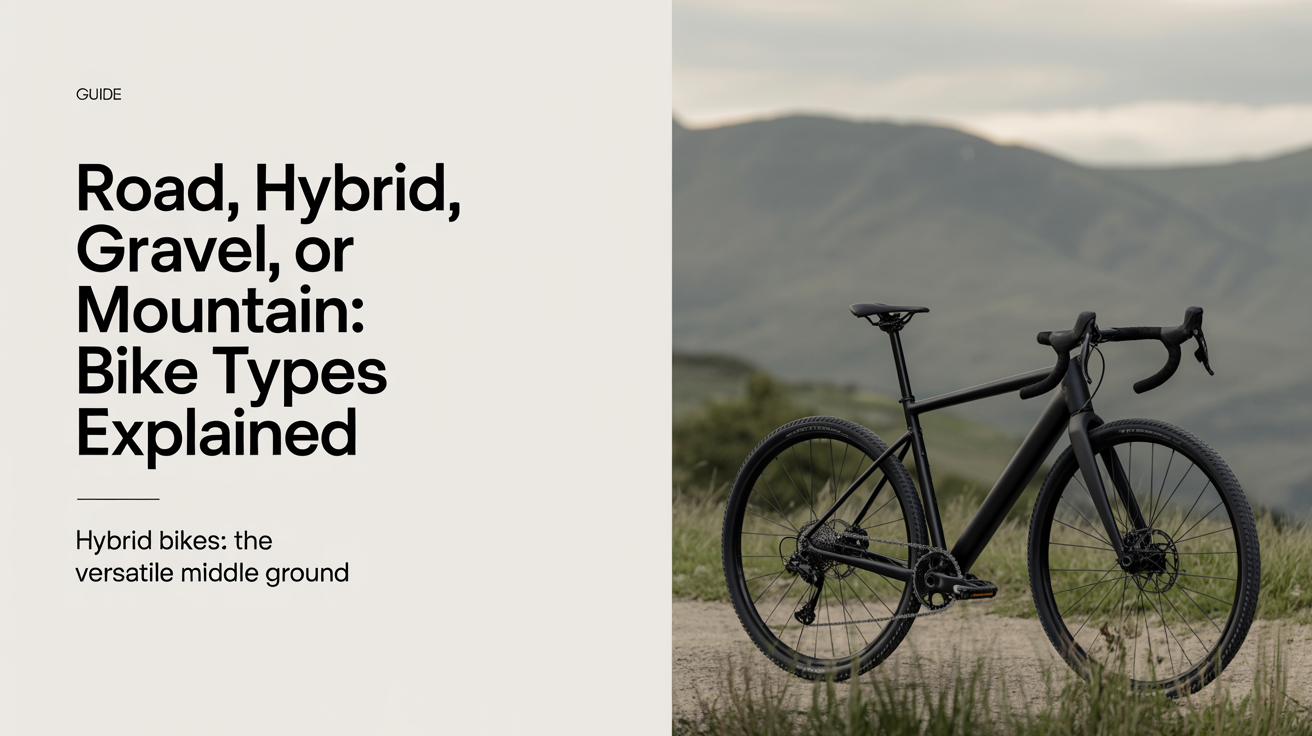
A hybrid bike blends elements of a road bike and a mountain bike. You get a flat handlebar (upright position), tires that are wider than a road bike (35-45mm typically), and a frame geometry that prioritizes comfort over aerodynamics. Most hybrids also have mounting points for racks and fenders, which makes them practical for commuting.
Hybrids are slower than road bikes on pavement, but not dramatically so, typically a mile or two per hour at the same effort level. The real advantage is that they handle light gravel paths, bike lanes, and city streets without complaint, and the upright position makes it easier to watch traffic.
Road vs hybrid bike: the key differences
| Feature | Road Bike | Hybrid Bike |
|---|---|---|
| Handlebar style | Drop bars (leaned forward) | Flat bars (upright) |
| Tire width | 23-32mm | 35-45mm |
| Best surface | Smooth pavement | Pavement + light gravel |
| Comfort | Moderate | High |
| Top speed | Higher | Moderate |
| Rack/fender mounts | Rare | Common |
For most beginners who want one bike that can commute, do a rail trail on weekends, and handle errands, a hybrid is often the most sensible purchase. You'll spend less time adapting to it and more time actually riding.
If you're still working through the basics of what to look for, the guide to choosing your first bike covers budget, new vs used, and what to inspect before you buy.
Gravel Bikes: Pavement and Dirt Without Compromise
Gravel bikes have exploded in popularity over the last decade, and for good reason. They look like road bikes with drop bars, but the geometry is more relaxed, the tire clearance is much wider (often 40-50mm or more), and the gearing is lower to handle climbs on loose terrain. As Wikipedia's overview of the category puts it, gravel bikes sit on frame geometry "intermediate between a road bike and a cross-country mountain bike," borrowing tire clearance and handling traits from cyclocross and mountain bikes while keeping the drop-bar riding position of a road bike.
The result is a bike that is genuinely fast on pavement but also handles dirt roads, gravel paths, and packed trails. If you live somewhere with mixed surfaces or want to explore beyond the asphalt, a gravel bike makes a strong case.
Gravel bike vs road bike: where they diverge
A road bike is optimized for one surface. A gravel bike makes a deliberate compromise: slightly slower on pavement in exchange for genuine off-road capability. You won't be taking a gravel bike through deep mud or technical singletrack, but fire roads, gravel county roads, and canal towpaths are exactly what it's designed for.
Gravel bikes also tend to have more mounting points than road bikes, so you can fit bags for bikepacking or a rack for commuting. Prices are similar to road bikes in the same tier.
One note for beginners: gravel bikes have drop bars, which some new riders find less intuitive than flat bars. There's a short learning curve in learning to use the drops confidently, especially when braking. That's worth factoring in, and it's worth an hour or two of practice in an empty parking lot before you take a gravel bike into traffic.
Mountain Bikes: Dirt, Trails, and Technical Terrain
Mountain bikes are built for off-road riding. They have wide, knobby tires (2.1 inches or more), flat handlebars, lower gearing, and either front suspension only (hardtail) or front and rear suspension (full-suspension). The geometry is upright and stable, designed to help you manage rough terrain at lower speeds rather than covering ground quickly.
If your riding will be on dirt trails, forest paths, or anything with rocks, roots, or significant incline, a mountain bike is the right tool. On pavement, though, they're noticeably slower and heavier than the alternatives. Rolling resistance from knobby tires adds up over distance, often costing you 3-5 mph compared to a hybrid at the same effort.
Hardtail vs full-suspension for beginners
For most beginners, a hardtail is the better starting point. It's lighter, cheaper, and requires less maintenance than a full-suspension bike. This tracks with the general tradeoff described for mountain bike suspension types: hardtails offer lower cost, less maintenance, and better pedaling efficiency, while full-suspension bikes are considerably more expensive, heavier, and less efficient to pedal, but noticeably faster and more controlled on downhill and technical, rough terrain.
A full-suspension bike makes rough terrain significantly more manageable, but entry-level full-sus bikes often have lower-quality suspension components that don't perform as well as the marketing suggests. A good hardtail at $700-900 will outperform a mediocre full-sus at the same price on most trails, because the money that would go into suspension quality instead goes into the frame and drivetrain.
Which Type Should You Buy?
Here's a practical way to narrow it down. Answer these honestly:
- Where will you ride 80% of the time? Pavement only, mixed surfaces, or trails?
- What distances are you planning? Short errands and rides under 10 miles, or longer weekend outings?
- Do you want to commute or carry gear? Rack and fender mounts matter.
- How much does riding position matter to you? Upright is more comfortable; forward-lean is more efficient.
If you answered pavement + short to medium distances + maybe commuting: hybrid.
If you answered pavement + longer distances + efficiency: road bike.
If you answered mixed surfaces (paved and unpaved) without serious trails: gravel bike.
If you answered trails, dirt, off-road: mountain bike.
| Type | Handlebar | Typical tire width | Best surface | Weakest surface |
|---|---|---|---|---|
| Road | Drop | 23-32mm | Smooth pavement | Gravel, rough roads |
| Hybrid | Flat | 35-45mm | Pavement + light gravel | Technical trails |
| Gravel | Drop | 40-50mm+ | Mixed paved/unpaved | Deep mud, technical singletrack |
| Mountain | Flat | 2.1in+ (knobby) | Dirt trails, technical terrain | Long paved distances |
A common mistake is buying a mountain bike "because it can do everything." It can, technically, but so can a truck. If you're mostly riding on paved paths and roads, you'll be fighting the bike on every pedal stroke. Get the bike that suits where you actually ride, not where you might someday ride.
A worked example: someone who commutes 4 miles each way on city streets, runs errands on weekends, and takes the occasional rail-trail ride is a near-perfect hybrid buyer, even if they also fantasize about a multi-day mountain trip they'll take twice a year. Renting or borrowing a mountain bike for that occasional trip almost always costs less over a few years than owning a bike that's wrong for 95% of the riding you actually do.
Getting the right size matters just as much as picking the right type. The guide on what size bike you need walks through frame sizing for each category.
A Few Things That Apply to Every Bike Type
Regardless of which type you choose, a few things are non-negotiable for safe, enjoyable riding:
- Helmet. A properly fitted helmet is the most important piece of equipment you own. It should sit level on your head, about two finger-widths above your eyebrows, with the straps snug enough that you can only fit one or two fingers under the chin strap.
- Brake check before every ride. Squeeze each lever before you head out. The pads should engage well before the lever reaches the handlebar.
- Saddle height. An incorrect saddle height causes knee pain and inefficient pedaling. The guide to setting your saddle height correctly is worth reading before your first long ride.
- Traffic rules. On roads, you follow the same rules as motor vehicles in most jurisdictions: ride with traffic, signal turns, obey lights.
None of this is meant to be discouraging. Millions of people ride every day without incident. A few basics, handled once, make a real difference.
FAQ
Can I use a hybrid bike on trails?
Light, packed gravel trails and rail-to-trail paths are fine. A hybrid's tires handle those surfaces well. Technical mountain bike trails with rocks, roots, and steep drops are a different story; a hybrid isn't built for that kind of terrain, and you'll find the bike difficult to control and potentially damaging to your wheels. Stick to paved or hardpacked surfaces with a hybrid.
Is a gravel bike good for commuting?
Yes, actually. Gravel bikes have the tire clearance to run fenders (so you stay dry in rain) and often have rack mounts. The drop bar position is efficient for longer commutes, and the wider tires handle rough city roads and painted lane markings better than a pure road bike. The main downside is that drop bars feel less intuitive for city traffic than flat bars until you build confidence.
Do I need gears as a beginner?
Most people do. A single-speed bike is simple and low-maintenance, but it only works well in relatively flat terrain. If you have any hills in your area, gears make riding significantly more enjoyable and physically sustainable. An entry-level 7- or 8-speed drivetrain is fine for beginners and requires minimal upkeep.
How much should I spend on my first bike?
For a new bike from a reputable brand, $500-900 gets you a solid aluminum frame with reliable components that will last years with basic maintenance. Below $300-400, you're typically buying department-store bikes that are heavy, have poor brakes, and often need servicing immediately out of the box. A used bike from a local shop or a private sale can get you better components for less money, but inspect it carefully or have a mechanic look it over.
What's the difference between a cruiser and the bikes listed here?
Cruiser bikes (the wide-tired, swept-back-handlebar style often seen at the beach) are comfortable for very short, flat rides, but they're heavy, have limited gearing, and aren't well suited to covering real distance or varied terrain. They're purpose-built for casual neighborhood riding. If that's all you need, they're fine, but most riders who plan to ride regularly will outgrow a cruiser quickly.
Can I switch tires to turn one bike type into another?
To a limited degree. Swapping to slightly wider or slightly narrower tires within your frame's clearance can nudge a bike's feel, but you can't turn a road bike into a mountain bike by changing tires alone. Frame geometry, gearing range, and brake type set the real ceiling on what a bike can handle. If you're consistently frustrated by your bike on a certain surface, that's usually a sign you need a different type, not different tires.