Clipless vs Flat Pedals: Which Should Beginners Use?
Flat pedals are the smarter starting point for most beginners. Here's how to decide—and when clipless makes sense.
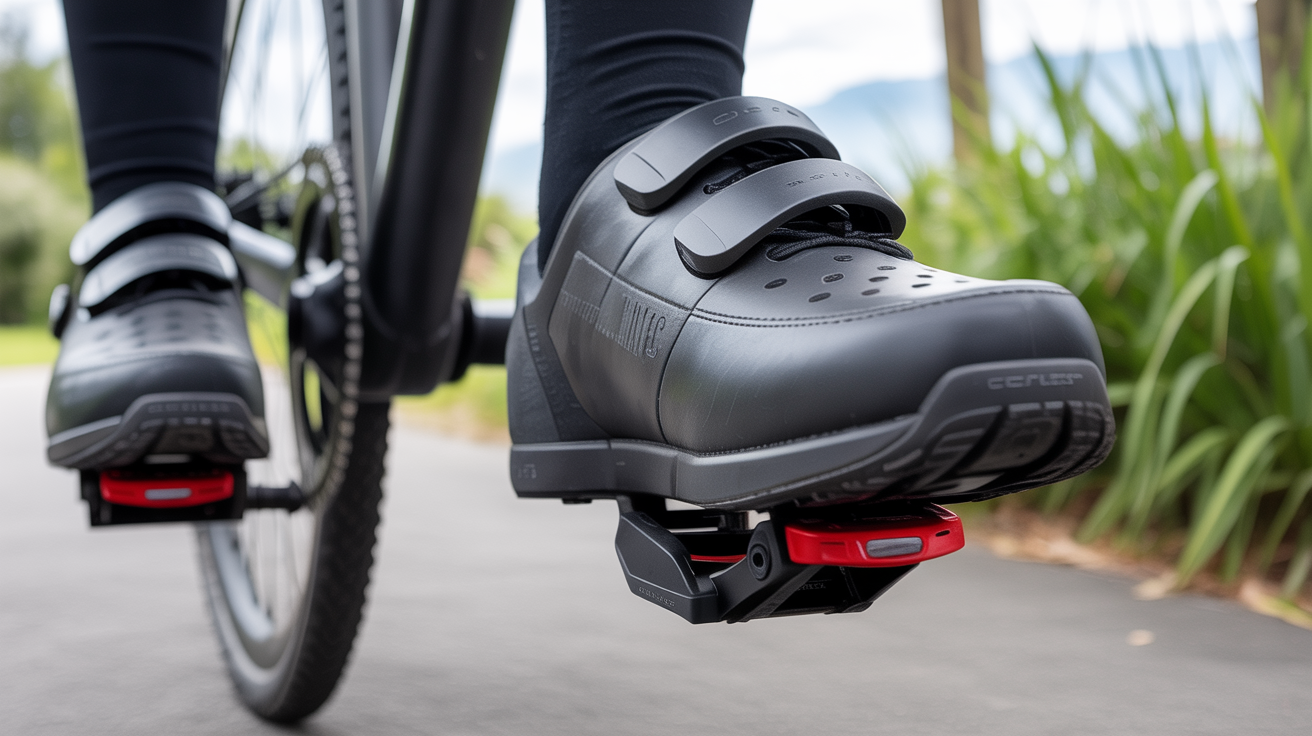
Most new cyclists can start riding confidently within minutes on flat pedals. Clipless pedals take longer to learn and carry a real risk of tip-over falls while you get the hang of releasing your foot. For the majority of beginners, flat pedals are the right call, but there are good reasons to start clipless sooner, too, depending on what kind of riding you want to do.
Here's an honest breakdown of both systems so you can make a practical choice, not a social-media one.
What "Clipless" Actually Means
The name is confusing. "Clipless" pedals are the ones your shoe clips into. The term comes from cycling history: before the current system existed, riders used toe clips (metal or plastic cages that strapped your foot to the pedal). When spring-loaded cleat systems replaced those cages in the 1980s, they were called "clipless" because they eliminated the toe clip. That usage stuck.
Today, clipless pedals work via a cleat bolted to the bottom of a compatible shoe. You step onto the pedal and press down until you hear and feel a click. To release, you twist your heel outward. The spring tension in the pedal determines how much force that takes, most pedals let you adjust it with a 3mm Allen key.
Flat pedals, by contrast, are just a platform. Any shoe works. You put your foot on, you pedal, you lift your foot off. No hardware, no skill check.
The Real Difference in Riding Feel
Clipless pedals attach your foot to the pedal through the full rotation. This means:
- Your foot can't slide around, giving you a consistent power position
- You can pull up on the backstroke as well as push down (though how much this improves efficiency is debated, casual riders benefit less than racers)
- You don't have to think about foot placement mid-ride; it's locked in automatically
Flat pedals keep your foot free. Good flat pedals have metal or composite pins that grip the sole of your shoe so your foot doesn't slip forward under load. A shoe with a stiff, grippy rubber sole (not a slick running shoe sole) pairs much better with quality flat pedals than a cheap sneaker does.
The practical difference for a beginner on a 45-minute group ride or a solo trail loop: smaller than you'd think. Most beginners can't yet generate the kind of sustained power output where pedal efficiency makes a measurable difference. What matters more is confidence, comfort, and staying upright.
The Honest Case for Starting with Flats
The biggest argument for flat pedals as a beginner comes down to one situation: stopping unexpectedly. Traffic, a pothole, a dog running across the path, anything that forces you to stop fast and put a foot down.
With clipless pedals, that foot release has to be practiced until it's muscle memory. It takes most people anywhere from a few days to a few weeks of deliberate practice before the twist-and-release becomes automatic. Until then, there's a delay between "I need to stop" and "my foot is on the ground." That delay causes falls, usually at low speed in parking lots or at stop signs, slow, embarrassing tip-overs that can still bruise your hip or crack your helmet.
Flats eliminate that problem entirely. You can put a foot down in under a second without thinking about it.
Other reasons flats make sense for beginners:
- No extra equipment cost. Clipless requires both pedals and compatible shoes. Decent entry-level clipless shoes run $70 to $150; the pedals are another $30 to $80. Quality flat pedals can be had for $25 to $50 and work with shoes you already own.
- Easier to walk when you get off. Road clipless cleats (two-bolt SPD-SL or Look style) make walking awkward and slippery. Recessed mountain-style cleats (two-bolt SPD) are better, but still not like normal shoes.
- Better for urban riding. If your commute involves frequent stops, walking your bike, or stepping in and out of shops, flat pedals are far more practical.
If you're still putting together your initial riding setup, the essential cycling gear guide covers where pedals fit in the priority order versus more safety-critical purchases.
When Clipless Makes Sense for a Beginner
That said, there are real scenarios where starting with clipless is reasonable:
You're joining a road cycling group or club. Most road club rides assume clipless. If your goal from day one is to ride with others on road bikes, learning the system sooner means you're not the person fumbling at every red light three months in. Practice in empty parking lots first, not in traffic.
You're doing longer road rides and want to protect your knees. With clipless pedals, the cleat rotates slightly ("float") to accommodate your natural foot angle, which reduces lateral stress on the knee. If you have a history of knee problems and plan to ride more than 30 miles at a time, clipless with adjustable float can help, provided your cleat position is set up properly (a bike fit is worth it here).
You're doing mountain biking and want to climb more efficiently. Mountain bike clipless (SPD style) uses recessed cleats and more forgiving spring tension than road pedals, making them easier to learn. Many mountain bikers use them from early on and find the release motion becomes natural faster than they expected.
You already have clipless experience from spin classes. Some indoor bikes use SPD or Look Delta clips. If you've been unclipping at the end of every class for months, the outdoor version will feel familiar quickly.
How to Learn Clipless Pedals Safely
If you decide to go clipless, the learning process has a clear order. Skip any step and you increase your fall risk.
- Back off the spring tension. Every clipless pedal has an adjustment screw. Turn it counterclockwise until the spring is at its lightest setting. You can increase it later once the motion is automatic.
- Practice clipping in and out while stationary. Prop your bike against a wall or fence. Click in, twist out, click in, twist out, do this 30 to 50 times until it feels simple.
- Practice in an empty parking lot. Ride slowly in a straight line, then release one foot and put it down before stopping. Practice both feet. Do this until you can release without thinking about it.
- Start with predictable routes. Avoid busy intersections and stop-and-go traffic while you're still building the habit. Give yourself space to stop gradually rather than suddenly.
- Accept that you'll probably tip over once. Most cyclists have a slow-speed clipless fall. It happens at about 3 mph when you forget to unclip. It's embarrassing but usually harmless. Knowing it might happen makes it less surprising.
A properly fitted helmet is non-negotiable whether you're running flats or clipless. Even a slow-speed tip-over can put your head close to pavement. The helmet fitting guide walks through what to look for so the helmet actually does its job.
Flat Pedals on a Road Bike: Does It Work?
Road bikes ship with either no pedals (you buy your own) or clipless pedals. But there's nothing that prevents you from running flat pedals on a road bike. The pedal threading is universal.
The adjustment is mainly aesthetic and practical: most "road" flat pedals are thinner and lighter than mountain-style flats, which look more in proportion on a road bike. A road-cycling flat pedal paired with a stiff-soled shoe (not a soft running shoe) performs well for commuting, fitness riding, and recreational rides up to medium distances.
If you're doing serious road training, intervals, long climbs, weekly mileage over 100 miles, clipless eventually pays off. But for the first year of casual or fitness road riding, flat pedals on a road bike work fine. Don't let anyone convince you otherwise.
Footwear matters more than people expect when you go this route. A shoe with a firm sole transfers power better and doesn't fold uncomfortably under load the way a soft running shoe does. Cycling-specific flat shoes or stiff-soled sneakers both work. Details on what to wear from the waist down (including footwear) are covered in the cycling clothing guide for any weather.
Quick Comparison
| Factor | Flat Pedals | Clipless Pedals |
|---|---|---|
| Learning curve | None | 1–4 weeks to automate |
| Emergency foot-down speed | Instant | Requires practiced twist |
| Shoe cost | $0 (use existing shoes) | $70–$150 for compatible shoes |
| Walking comfort | Normal | Awkward (road) / manageable (MTB SPD) |
| Power transfer | Good with stiff shoes | Better (more consistent foot position) |
| Best for | Beginners, urban, MTB casual | Road groups, long rides, competitive riding |
FAQ
Should beginners use clipless pedals?
Most beginners are better off starting with flat pedals for the first few weeks or months. The exception is if your specific goal requires clipless from the start (joining a road club, for example) and you have time to practice the unclip motion properly before riding in traffic.
Will clipless pedals make me faster?
At beginner effort levels, probably not noticeably. The efficiency gains from clipless are real but modest, and they show up most at higher power outputs and longer durations. Comfort, cadence, and bike fit have more impact on beginner performance than pedal type.
What's the easiest clipless pedal system to learn?
Two-bolt SPD pedals (commonly used for mountain biking and commuting) are generally easier to learn than road-style three-bolt systems. They use smaller, recessed cleats, have lighter spring tension, and release more easily. Many beginner road cyclists use SPD rather than road-specific systems for exactly this reason.
Can I use regular shoes with clipless pedals?
No. Clipless pedals require a cleat bolted to the shoe sole. Without the cleat, you can't engage the pedal mechanism, and you'd be trying to balance your shoe on a small metal cage, uncomfortable and potentially unsafe. You need compatible clipless shoes.
How do I stop falling over when I forget to unclip?
The short answer: repetition. The unclip motion has to become automatic, which only comes from practice. Many experienced cyclists have eventually had a slow-speed clipless fall at some point, usually when distracted. If it's happening repeatedly, lower the spring tension on your pedals and do more parking lot practice before returning to road riding.