How to Choose a Bike Helmet That Actually Fits
Learn how to choose a bike helmet that fits correctly, what features matter for beginners, and when it's time to replace yours.
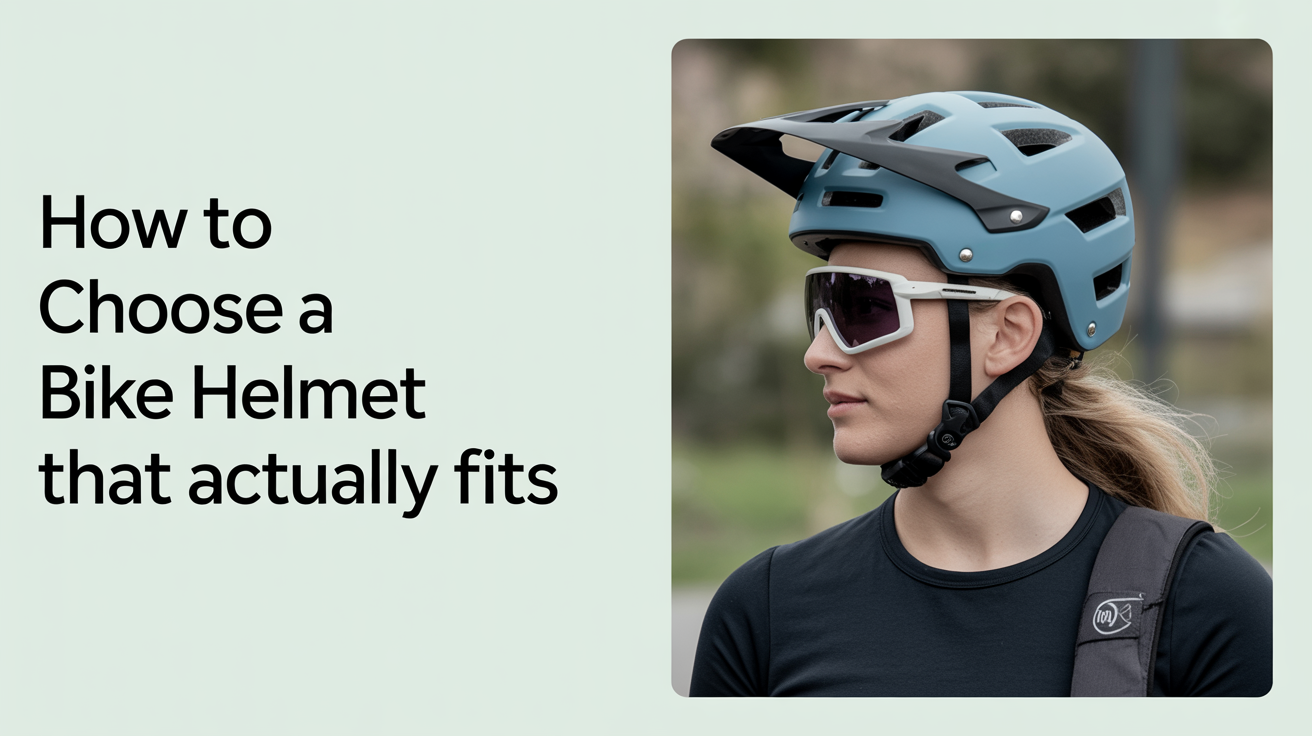
A helmet that fits badly is almost as bad as no helmet. Too loose and it shifts during a crash; too tight and you'll find reasons not to wear it. Choosing the right one comes down to three things: size, fit system, and the type of riding you plan to do. Get those right and everything else is secondary.
Start with Your Head Size
Before you look at features or price, you need your head circumference. Use a soft tape measure (or a length of string) and wrap it around your head about an inch above your eyebrows, keeping it level all the way around. That measurement in centimeters is your starting point.
Most helmets come in size ranges like S (52–56 cm), M (55–59 cm), and L (58–62 cm), though this varies by brand. If you're between sizes, size up rather than down. You can always dial in a slightly large shell with the fit system; you can't stretch one that's too small.
Write down your measurement before you shop. Helmet sizing varies enough between manufacturers that trusting a generic "medium" won't cut it.
How Bike Helmet Fit Actually Works
Helmet fit is not just about whether it goes on your head. A properly fitted helmet sits level, not tilted back like a baseball cap, and not tipped so far forward it obscures your vision. The front edge should sit one to two finger-widths above your eyebrows.
The Fit System
Almost every modern helmet includes a dial at the back, sometimes called a retention system or fit dial. Turning it tightens a plastic ring that grips the back and sides of your head. This lets you fine-tune the fit within the helmet's size range. With the dial set correctly, you should be able to shake your head vigorously side to side without the helmet moving independently.
A fit system doesn't replace choosing the right size. It handles fine adjustments, not major ones.
Strap Adjustment
Two straps run from each side of the helmet and meet at a small plastic buckle just below each ear. When buckled:
- The chin strap should be snug but not choking. You should fit one finger between strap and chin.
- The point where the two side straps join (the V-junction) should sit just below your earlobe, not behind it.
- Straps should lie flat against your jaw, not cutting across your cheeks.
Most helmets come with the straps roughly set and need adjustment out of the box. Take five minutes to sort them when you first get your helmet. Straps that are loose, twisted, or sitting in the wrong place won't hold the helmet in position during a fall.
The Shake Test
Once the chin strap is buckled, push the front of the helmet back toward the top of your head. It should barely budge. Then try tipping it forward. Same result. Now shake your head hard. The helmet should move with your head, not on its own. If it wobbles, either the fit dial needs tightening, the helmet is too large, or the strap adjustment is off.
Types of Helmets for Beginners
You don't need a race helmet or a full-face mountain bike helmet when you're just starting out. The broad categories matter because they're shaped differently and ventilate differently.
Road-Style Helmets
These are elongated front to back, with large open vents and minimal padding. They're light and airy, which makes long rides more comfortable. A road helmet is a solid choice if you'll mostly ride on paved paths, streets, or multi-use trails in warm weather.
Mountain Bike Helmets
Rounder in shape, with more coverage at the back of the head and sides, and a visor to keep sun and trail debris out of your eyes. If you're riding on gravel, unpaved paths, or trails, a mountain bike helmet makes more sense than a road helmet. The extra coverage costs a little in ventilation but offers better protection for the falls that happen off-road.
Commuter and Urban Helmets
These tend to look more like everyday headwear, often with lower-profile vents and sometimes a more rounded shape. Some include integrated lights or a built-in visor. If you're riding to work or running errands and want something that looks less athletic, these fit the bill. Checking out the broader picture of essential cycling gear for beginners can help you decide what's worth buying now and what can wait.
What Certification Labels Actually Tell You
Every helmet sold legally in most countries must meet a safety standard. In the United States, look for the CPSC (Consumer Product Safety Commission) sticker inside the helmet. In Europe, EN 1078 is the equivalent. Some helmets also carry MIPS, which is a technology (a slip-plane liner) rather than a certification.
Here's what these mean practically:
| Label | What It Means |
|---|---|
| CPSC | Meets U.S. minimum impact standards, required by law |
| EN 1078 | European equivalent; very similar test criteria |
| MIPS | Extra layer inside that rotates slightly on oblique impact to reduce rotational force on the brain |
| WaveCel / SPIN | Brand-specific technologies with similar goals to MIPS |
For a beginner, CPSC or EN 1078 certification is non-negotiable. MIPS or its alternatives are a genuine upgrade and usually add $20–40 to the price. On a $60–120 helmet, that's reasonable insurance.
Avoid any helmet without a certification label, including most novelty, fashion, or skateboard helmets not designed for cycling.
Ventilation, Weight, and Other Features Worth Knowing
Ventilation
More vents mean more airflow, which matters most in summer heat or on longer rides. Road helmets can have 20 or more vents. Commuter helmets might have six to eight. Unless you're riding in extreme heat, most beginner helmets have adequate ventilation. If you tend to overheat, go for more vents; if you ride in cooler climates, a helmet with fewer, smaller vents will keep your head warmer.
Weight
Premium helmets can weigh under 200 grams. Most entry-level models sit in the 280–350 gram range. The difference is barely noticeable on a 30-minute ride but becomes real on a two-hour one. For casual riding, weight isn't a priority.
Padding and Comfort
Removable, washable padding is something most newer helmets include and older ones sometimes don't. If your helmet has it, actually remove and wash the pads every month or two. Sweat-soaked padding smells bad and can irritate your skin. Having padding that fits snugly around your head also helps the helmet sit more stably.
Adjustable Visors
Mountain and commuter helmets often have a small visor that angles up and down. Handy for blocking sun without wearing sunglasses. Road helmets typically don't have one, on the assumption that you'll wear cycling-specific eyewear. Visors are a nice-to-have, not essential.
How Much to Spend
For a first helmet, $50–100 gets you solid CPSC or EN 1078 certification, a decent fit dial system, and adequate ventilation. MIPS starts appearing reliably around $70–80 at most retailers.
Spending more buys lighter materials, better ventilation engineering, and fancier aesthetics. There's no helmet so expensive it's dramatically safer than a mid-range model, because all of them must meet the same baseline certification. Buy what fits your budget without going below $45–50, which is where corner-cutting on materials and certification is more common.
When to Replace a Bike Helmet
Helmets don't last forever. The foam liner that absorbs impact (EPS foam) degrades with UV exposure, sweat, and age, even without any visible damage. Most manufacturers recommend replacing a helmet every three to five years from the purchase date regardless of condition.
Replace it immediately in any of these situations:
- You've been in a crash where your head hit the ground, even if the helmet looks fine. EPS foam compresses to absorb impact and won't protect you as well the second time.
- You can see cracks in the outer shell or foam liner.
- The retention system or straps no longer adjust or hold position properly.
- It was dropped hard from a significant height onto a hard surface (less critical than a crash, but worth checking the liner).
Some manufacturers offer crash replacement programs, letting you send in a damaged helmet for a discount on a new one. Check the brand's website when you buy.
If you're putting together a full beginner kit alongside your helmet, understanding what to wear cycling in any weather will help you layer properly for different conditions.
Quick Reference: Helmet Fit Checklist
Before every ride, a five-second check pays off:
- Helmet sits level, one to two finger-widths above eyebrows
- Chin strap buckled, one finger fits between strap and chin
- V-junction of straps sits just below each earlobe
- Dial tightened, helmet doesn't rock front-to-back or side-to-side
- No obvious cracks or damage visible
That's it. Ten seconds and you've confirmed your helmet is doing its job.
FAQ
How tight should a bike helmet feel?
Snug, but not squeezing. You shouldn't feel pressure points digging into your head, and the helmet shouldn't feel like it's clamping your skull. It should stay in place firmly when you shake your head. If you're getting headaches after 20 minutes, either the helmet is too small or the fit dial is over-tightened.
Can I buy a used bike helmet?
It's risky. You have no way of knowing whether a used helmet has been in a crash, and EPS foam damage is often invisible. Used helmets of unknown history are cheap for a reason. Spend the $60–80 on a new one and know what you're getting.
Is a more expensive helmet safer?
Not necessarily, since all certified helmets pass the same baseline tests. A $200 helmet isn't twice as protective as a $100 one; it's lighter, better-ventilated, and often has more refined fit engineering. Safety-wise, any certified helmet in good condition beats no helmet.
Do I need a different helmet for different types of cycling?
You can use one helmet for multiple riding styles, but purpose-built helmets work better for their intended use. A road helmet on a gravel trail leaves more of your head exposed than a mountain bike helmet would. A mountain bike helmet on a summer road ride is warmer than necessary. For general-purpose beginner riding, a do-it-all or commuter helmet works fine.
My helmet passed the shake test but still moves a little. Is that okay?
A small amount of movement (a few millimeters) with the chin strap buckled is normal. What you're checking for is the helmet moving independently of your head, like it's rotating or sliding freely. If it's moving with your head but the whole system is slightly loose, tighten the fit dial and re-check the chin strap snugness. If you can't eliminate the movement, the helmet may be too large.
If you're new to cycling and sorting out your kit, it's also worth knowing that some gear marketed as essential really isn't. The guide to whether you really need padded bike shorts is a good example of how to think about what to buy first.