Cycling Hand Signals and Road Positioning Explained
Learn the standard cycling hand signals and where to ride on the road so drivers see you, predict your moves, and give you space.
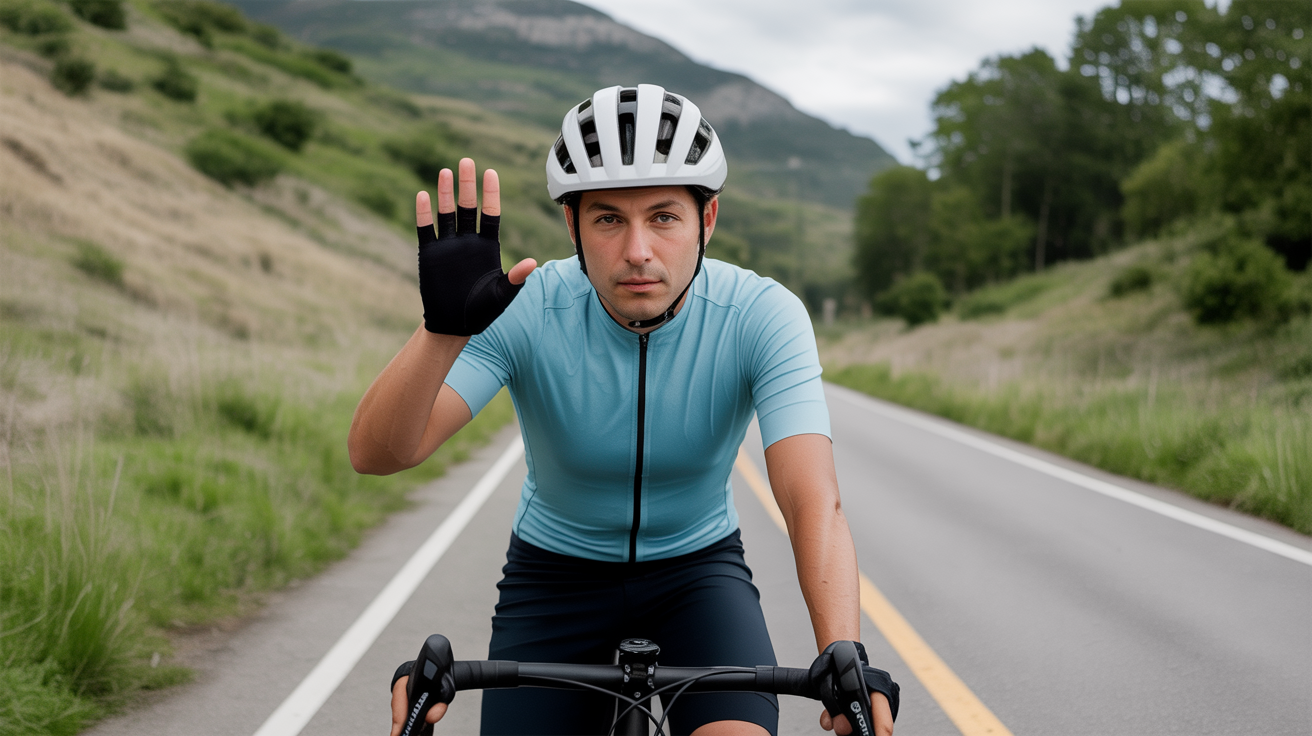
Drivers can not read your mind. Two things close that gap faster than anything else: using clear hand signals before you turn or stop, and riding in a position on the road where you are easy to see and predict. Get both right, and the traffic around you starts to feel less random.
The Standard Hand Signals
Most countries share three core signals. A few have regional variations, but these are the ones that almost every driver will recognise.
Left Turn
Extend your left arm straight out to the side, parallel to the ground. Hold it for at least two or three seconds before you turn, not just as you start to lean.
Right Turn
You have two options here. The cleaner one is to extend your right arm straight out to the right, mirroring the left-turn signal on the other side. The older alternative, still used in some regions, is to bend your left arm up at the elbow with your hand pointing skyward. Both are valid, but the direct right-arm extension is easier for drivers to read at a glance.
Slowing or Stopping
Extend one arm out to the side and angle it downward, palm facing back toward traffic. Some cyclists wave it slightly to draw attention. This one is underused, but it is genuinely useful on descents or when you need to shed speed unexpectedly.
When to Signal
Signal before you need to move, not during. The sequence is: check behind you, signal, check again, then move. Signalling while already mid-turn gives drivers almost no time to react.
Road Positioning: Where to Ride
"Stay as far left as possible" sounds like common sense, but it often puts you in the worst spots on the road. Here is how to think about it more practically.
The Primary Position
The primary position means riding roughly in the centre of the left-hand lane, about where a car's left tyre would track. Use it when:
- The lane is too narrow for a car to safely pass without changing lanes
- You are approaching a junction or roundabout
- Road surface near the gutter is poor (drain covers, potholes, broken tarmac)
- You want to prevent a squeeze-past on a bend
Riding here is not aggression. It forces a driver to make a deliberate overtake rather than squeezing past with inches to spare. Most drivers handle it fine once they realise you are not going to drift unpredictably.
The Secondary Position
The secondary position is roughly a metre from the kerb or gutter. Use it on wider roads with a clear surface where drivers have room to pass comfortably without crossing into oncoming traffic. A good default for open roads in light traffic.
The Door Zone
On roads with parked cars, stay at least a metre from the car doors. A door opening into your path at low speed will knock you off. At higher speed it can be genuinely dangerous. This often means riding further out than feels natural, but it is the right call.
Junctions and Roundabouts
Take the primary position well before a junction, not at the last moment. This makes you visible to drivers waiting to pull out, and it signals that you are going straight (or turning) rather than leaving space on your left for them to turn across you.
At roundabouts, if you are going straight or turning right, position yourself in the centre of the lane from the start. Moving out mid-roundabout is hard for other drivers to anticipate.
Signalling and Positioning Together
The two skills work best as a pair. A clear signal from a predictable road position is easy for drivers to parse. A signal from an unexpected position, or no signal from a good position, both leave gaps.
A practical sequence for turning left at a junction:
- Move to secondary position (or primary if the lane is narrow)
- Look behind you
- Signal left clearly
- Look behind again
- Move toward the kerb if needed and turn
For turning right, the process is similar but you will be moving across traffic, so the timing and the second look behind matter even more. Pair your right-turn signal with a clear check for oncoming vehicles, and do not start moving right until you have a proper gap. This is one of the points where braking safely also becomes relevant, since you may need to slow more than expected if the gap closes.
A Quick Reference Table
| Situation | Signal | Position |
|---|---|---|
| Turning left | Left arm out, horizontal | Secondary, then kerb-side |
| Turning right | Right arm out, horizontal | Primary, centre of lane |
| Slowing or stopping | Arm angled down, palm back | Hold your current line |
| Narrow lane, any direction | None needed | Primary |
| Parked cars | None needed | 1 m from doors (secondary or wider) |
| Roundabout, going straight | Signal left as you exit | Primary from entry |
Practical Habits Worth Building Early
Look before you signal. The shoulder check is not optional. Signalling while drifting without checking is how cyclists get hit from behind.
Keep both hands available where possible. Signal clearly, then return your hand to the bar before the manoeuvre. Turning one-handed through a tight junction is harder than it sounds, especially if you are still learning to corner confidently.
Ride consistently. The biggest source of driver frustration with cyclists is unpredictability. If you hold your line, signal clearly, and move deliberately, most drivers will give you reasonable space.
Gears play a role too. If you are slowing for a junction, shifting into an easier gear before you stop means you can pull away cleanly. Getting caught in a hard gear while signalling and tracking traffic is a lot to manage at once. More on that in the guide on how to shift gears without the crunch.
Frequently Asked Questions
Do I have to signal by law? This varies by country and region. In many places there is no strict legal requirement to signal every turn, but failing to signal can affect liability if there is a collision. Beyond the legal angle, signalling is simply the clearest way to communicate your intentions, so it is worth doing regardless of the rules.
What if I need both hands to control the bike? Then prioritise control. On a descent, in poor conditions, or through a technical corner, keeping both hands on the bars is the right call. Signal where you safely can and drop the signal when you can not. Nobody expects you to signal while fighting a crosswind or a rough road surface.
Should I signal on bike paths and shared trails? A verbal heads-up ("passing on your left") often works better than a hand signal on mixed-use paths, since pedestrians may not know what the signal means. On busier paths with other cyclists, a brief signal can still help.
How do I signal without swerving? Swerving when you lift one hand usually means you are gripping the bar too tightly or tensing your shoulder. Relax your grip on the remaining hand and keep your core steady. Practice in an empty car park: ride in a straight line and lift each hand alternately until it feels neutral. It takes an hour or two of practice to feel automatic.
Does riding in the middle of the lane make drivers angry? Some drivers will be impatient, yes. Taking the primary position is legal and often the safest choice, but it does occasionally provoke a horn. Staying calm and holding your line is usually the best response. Drifting left because of pressure from behind puts you in a worse position, not a better one.