How to Shift Gears on a Bike (Without the Crunch)
Learn how to shift gears on a bike smoothly and confidently — timing, technique, and what those numbers actually mean.
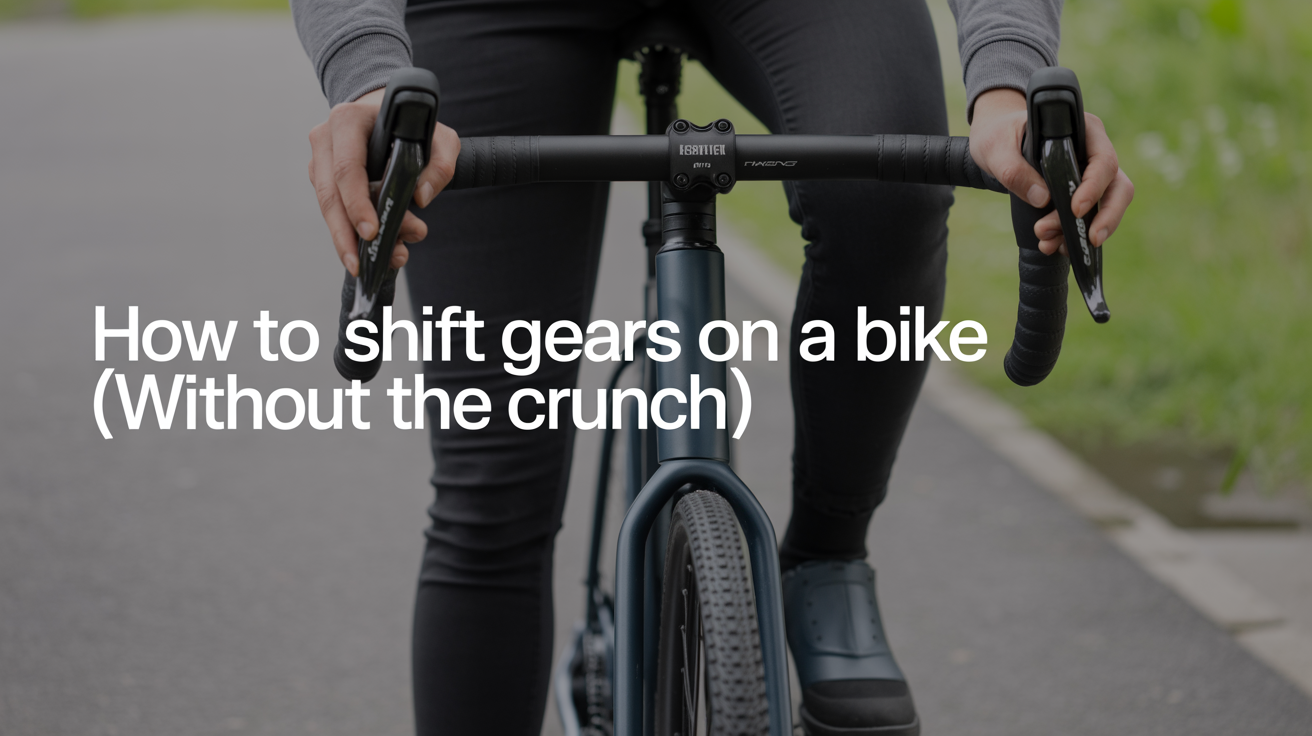
Shifting gears on a bike feels mysterious at first, but the core idea is simple: easier gears help you spin up hills without destroying your legs, and harder gears let you pick up speed on flat ground. Once you understand the basic logic and practice shifting while pedaling lightly, the crunch and clunk disappear almost entirely.
Here's everything a beginner needs to know about bike gears, from how to use the shifters in your hands to exactly when to change gears mid-ride.
Bike Gears Explained for Beginners
Most bikes have gears because human legs produce power most efficiently in a narrow range of pedaling speeds, typically 70–100 pedal strokes per minute (called cadence). Gears let you match the bike's resistance to the terrain, so your legs can keep spinning at that comfortable rate whether you're going uphill or downhill.
The Two Sides of Your Drivetrain
A geared bike has two sets of sprockets:
- Chainrings, the large toothed rings attached to your pedal cranks at the front. More chainrings (1, 2, or 3) give you a wider gear range.
- Cassette, the cluster of smaller sprockets on your rear wheel. A typical beginner bike has 7–11 sprockets in the cassette.
Your chain runs between them. A large chainring paired with a small rear sprocket = hard gear (fast, needs more effort). A small chainring paired with a large rear sprocket = easy gear (slow, needs less effort). Everything in between is somewhere on that spectrum.
Shifters and What the Numbers Mean
Most modern bikes use trigger shifters (small levers behind the brake levers) or twist shifters (rotate the grip). Pressing one paddle shifts to an easier gear; pressing the other shifts harder.
The numbers on your shifter display, 1, 2, 3, and so on, simply count through your available sprockets. Low numbers = easier gears (big rear sprocket). High numbers = harder gears (small rear sprocket). Forget about the exact number; focus on how the pedaling feels.
When to Change Gears While Cycling
Timing is everything with gear shifts. Shift at the wrong moment and you get that grinding crunch. Shift at the right moment and it's nearly silent.
Shift before you need to, not after. The most common beginner mistake is waiting until legs are already burning on a hill before reaching for an easier gear. By then you're mashing the pedals with too much force, the chain is under heavy load, and it slips or crunches rather than gliding across.
As a general guide:
- Approaching a hill: drop to an easier gear before the incline starts, while you're still pedaling smoothly on flat ground.
- Descending: shift to a harder gear once you're rolling fast enough that you're spinning out (legs feel like they're going nowhere).
- Stopping: shift back down to an easy gear before you come to a halt so you can pull away comfortably. Pair this habit with good braking technique so you're slowing and downshifting together.
- Headwind: treat a stiff headwind like a gentle uphill, drop a gear or two to keep your cadence steady.
How to Shift Smoothly (No Crunch)
Smooth shifting comes down to one principle: keep pedaling, but ease off the pressure on the pedals for a split second as you shift.
Step-by-Step Technique
- Decide you want to shift, easier for an upcoming climb, harder to accelerate.
- Keep pedaling. You must be moving to shift a derailleur bike; the chain needs to be moving over the sprockets.
- Momentarily ease the force on your pedals. You're not stopping, just reducing the load for a fraction of a second.
- Click the shifter once. One click, one gear.
- Resume normal pedaling. The chain settles into the new sprocket within one or two pedal strokes.
That brief reduction in pedal force is the whole secret. The chain moves across the sprockets with almost no resistance, so there's nothing to grind against.
Shifting One Gear at a Time
Click once, feel the shift, then decide if you need another. Clicking through three gears at once while hammering uphill is a recipe for a dropped chain or a clunk. On modern bikes with indexed shifting, each click moves exactly one sprocket. Use them one at a time.
Reading the Terrain: A Practical Gear Guide
Here's a simple reference for common riding situations. These are starting points; your ideal gear depends on your own fitness and your bike's specific ratio setup.
| Situation | Gear choice | Why |
|---|---|---|
| Flat road, cruising | Middle of your range | Comfortable cadence, sustainable effort |
| Gradual uphill | 2–3 easier than flat | Keeps cadence up without burning out |
| Steep climb | Easiest gear available | Spin, don't mash, protect your knees |
| Fast descent | Hard gear | Stop spinning out; maintain control |
| Tight corner | Easier gear | You want power ready as you exit the turn |
| Starting from a stop | Easy gear | Quick, comfortable pull-away |
For climbing advice that goes beyond just gearing, take a look at how to climb hills without burning out, the gear and cadence tips there complement what's covered here.
Common Beginner Mistakes with Bike Gears
Cross-chaining. This is putting the chain in extreme diagonal positions: big chainring at the front with the biggest rear sprocket, or small chainring with the smallest rear sprocket. The chain has to bend at a sharp angle, which increases wear and makes noise. The fix is simple: if you're in your smallest (easiest) front chainring, stick to the larger half of your rear cassette. Big front ring? Use the smaller rear sprockets.
Shifting while stopped. Derailleur gears only work when the chain is moving. Clicking through gears at a red light does nothing except put stress on the mechanism. Shift down before you stop, or wait until you're rolling again.
Ignoring the front shifter (if you have one). On a 2x or 3x drivetrain, the front shifter makes big jumps in resistance, great for switching between flat-road and climbing modes. Many beginners only ever use the rear shifter. Use the front shifter for large terrain changes, the rear for fine-tuning.
Shifting under maximum load on a hill. If you're grinding hard and desperately try to shift, the chain may skip or drop. You need to ease off slightly to let it move. If you're already in trouble on a steep section, stand up briefly, reduce pressure for one pedal stroke, shift, then sit back down.
Maintaining Good Shifting: A Few Basics
Gears that once shifted smoothly but now hesitate or skip usually need one of these:
- Cable tension adjustment. A small barrel adjuster on your shifter or derailleur lets you fine-tune the indexing. Turning it counter-clockwise (out) adds tension and can fix a slow shift to easier gears.
- Chain cleaning. A dirty, dry chain shifts poorly and wears faster. Wipe it down and apply a light layer of chain lube every few hundred miles, or after wet rides.
- Limit screw check. If your chain falls off the outside of the large chainring or drops off the inside of the smallest sprocket, the derailleur's limit screws need adjusting. This is a quick job for a local bike shop if you're not confident doing it yourself.
If your gears are clunking, skipping, or the chain drops regularly despite correct shifting technique, have a mechanic take a look rather than riding on and risking damage. Pair this with reliable cornering skills and you'll handle most road situations with confidence.
FAQ
How many gears do I actually need as a beginner?
More gears give you a wider range, but they also add complexity. For most beginners, a 1x (single chainring, 8–12 rear sprockets) drivetrain is ideal: there's no front shifter to worry about, and modern wide-range cassettes cover plenty of terrain. If you already own a 2x or 3x bike, you don't need to change anything, just learn how both shifters work together.
Why does my chain make a grinding noise when I shift?
Almost always, you're shifting under too much pedal load. Ease off your legs for a split second as you click the shifter. If the noise persists even with light pressure, the cable tension may be off or the chain might need cleaning and lubricating.
Is it bad to stay in one gear the whole time?
It won't damage anything immediately, but you'll work much harder than necessary on hills and you'll spin out uselessly on descents. Using your gears properly makes rides more enjoyable and puts less strain on your knees over time.
Can I shift gears while going downhill?
Yes. On a descent you'll usually want harder (higher) gears to avoid spinning out. Just keep pedaling lightly as you shift. If you're going very fast and not pedaling at all, you can shift freely since there's no load on the chain.
My bike has 21 gears, do I need to memorize all the combinations?
No. Think of it as a range from very easy to very hard, and move through it in small steps as the terrain changes. You might naturally land in five or six positions that work well for your local routes. The exact number of available combinations matters far less than developing the habit of shifting early and often.