How to Corner on a Bike With Confidence
Master bike cornering with simple technique fixes—body position, vision, braking, and speed—so every turn feels steady and predictable.
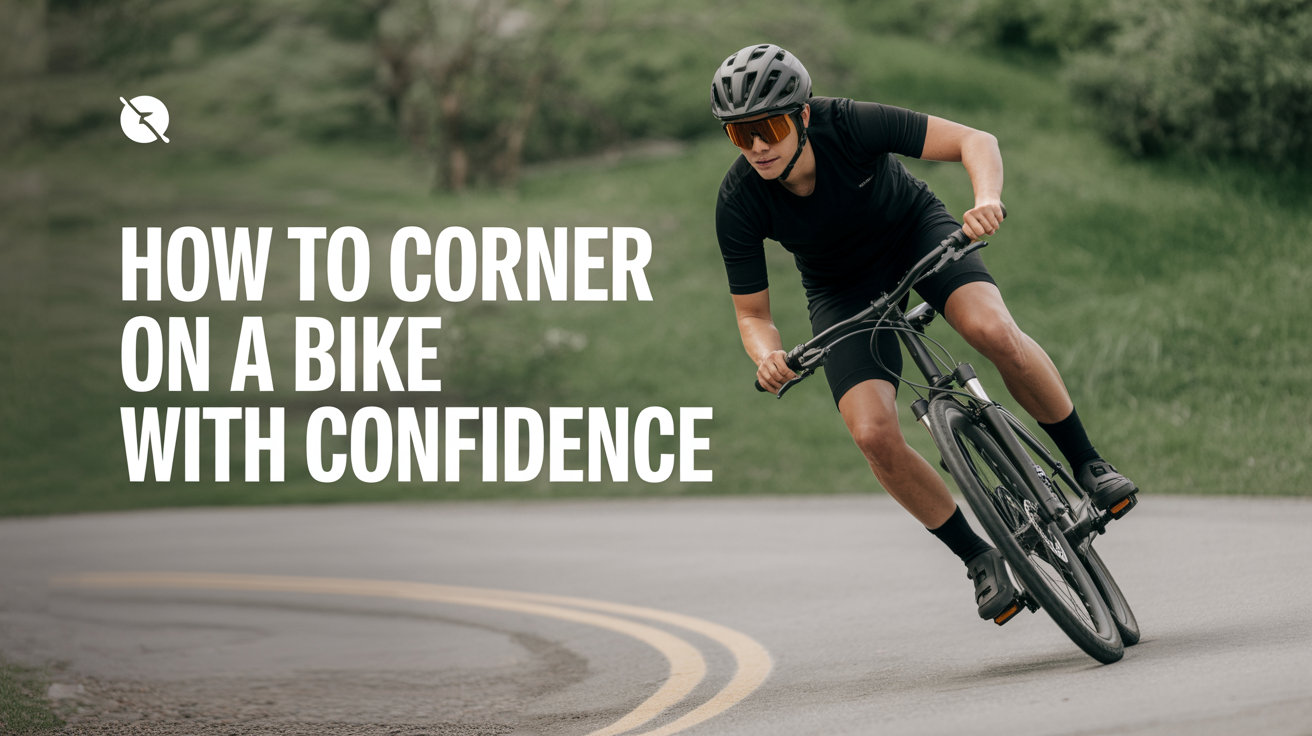
Cornering is one of those skills that separates riders who tense up at every bend from those who flow through turns without thinking. The good news: you don't need to be fast or fearless to corner well. A handful of specific habits, applied consistently, make corners feel much more predictable within a few rides.
Most beginners lose confidence in corners because they brake at the wrong moment, look at the wrong spot, or hold their body too stiff. Fix those three things and almost everything else improves on its own.
Why Cornering Feels Sketchy at First
Your instincts work against you in corners. When the road curves, the natural impulse is to look at the road surface right in front of your wheel and squeeze the brakes as you turn. Both responses make the corner harder, not easier.
Looking down shortens your reaction time to almost zero. Braking mid-corner shifts weight forward, reduces front-tire grip, and can cause a low-side slide on anything loose or damp. Understanding why these habits are wrong helps you replace them with something that actually works.
Traction is also a real factor. A bicycle tire has a contact patch roughly the size of a thumb. That patch can handle braking force OR cornering force reasonably well, but dividing it between both at the same time eats into your margin. Separate the tasks: brake before the corner, coast or pedal gently through it.
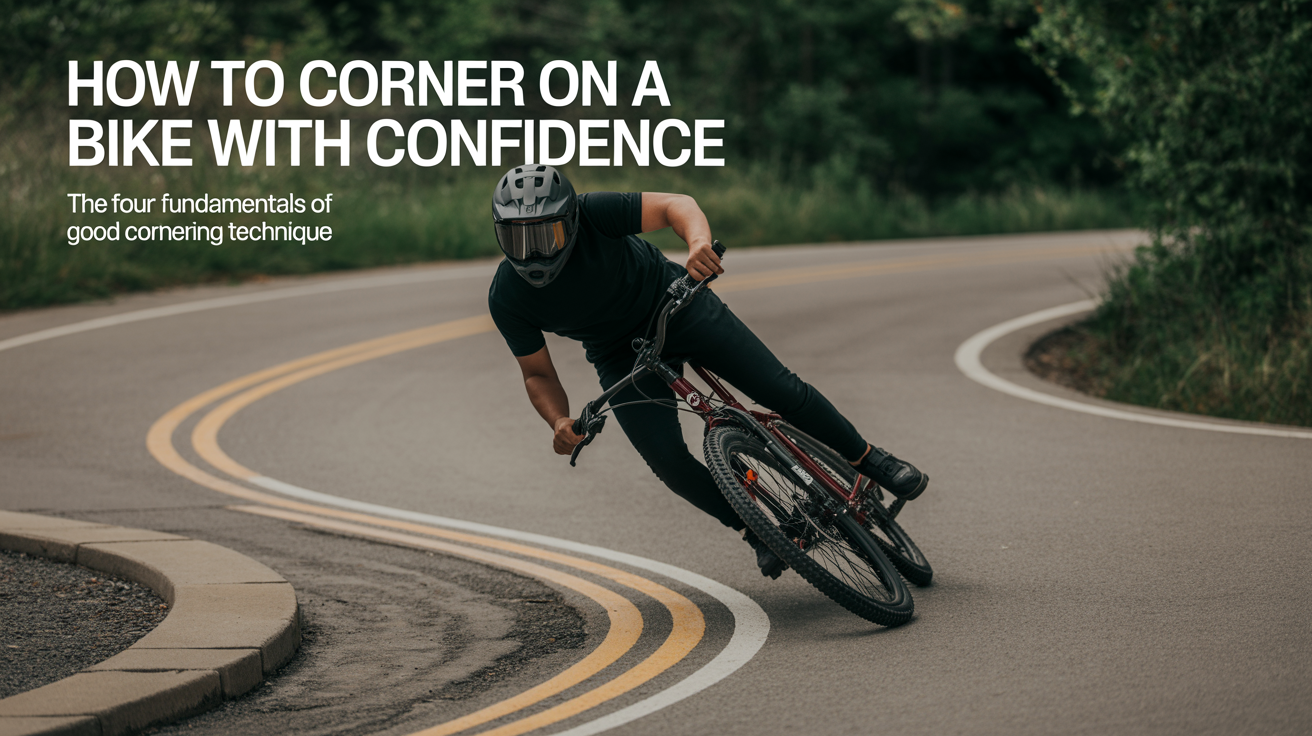
The Four Fundamentals of Good Cornering Technique
1. Look Through the Corner
Pick a point further around the bend than feels comfortable, roughly where you want to exit. Your body and bike will naturally follow your eyes. This isn't motivational advice; it's physics. The head turns, the shoulders follow, the hips follow, the bike follows.
A useful drill: on a quiet car park or empty road, mark an imaginary exit point and commit to looking at it from the moment you start turning. Notice how the bike tracks toward it without much conscious steering input.
2. Brake Before, Not During
Scrub speed before you reach the apex of the corner. By the time you're leaning into the turn, your brakes should be released or barely touching. This keeps weight distribution neutral and leaves your tires free to grip the road for cornering.
On a longer, sweeping corner you can apply very light rear-brake pressure to scrub a little speed mid-turn, but that's an advanced adjustment. For now, the rule is simple: brake on the straight, corner on clean tires. This pairs directly with braking technique, since knowing how to modulate front and rear brakes independently makes the pre-corner scrub much smoother.
3. Outside Foot Down, Weight Low
In any corner, drop your outside pedal to the 6 o'clock position and press your weight through it. If you're turning left, your right foot is at the bottom. This lowers your center of gravity and prevents your inside pedal from clipping the road surface if you lean more than expected.
Push your inside knee slightly outward, almost toward the inside of the turn. This sounds counterintuitive but it nudges your hips over the bike's centerline and helps the tires track smoothly. Keep your elbows relaxed rather than locked straight.
4. Lean the Bike, Not Just Your Body
Beginners tend to lean their whole upper body to turn, keeping the bike relatively upright. Faster, smoother cornering comes from leaning the bike itself into the turn while your body stays slightly more upright. Think of pressing the handlebar lightly on the inside (right hand pushes forward for a right turn) rather than throwing your shoulder in.
The lean angle required depends entirely on your speed. A slow 90-degree street corner needs almost no lean. A faster sweeping bend needs more. You'll calibrate this automatically once you stop fighting the sensation.
Reading the Corner Before You Enter
A corner you can read well is a corner you can corner well. Slow down more than you think you need to until you can see the exit. A tight hairpin that opens up is much easier to handle than a gentle bend that tightens mid-way.
Things to look for before and during entry:
- Road surface: Gravel, paint markings, drain covers, and wet leaves all reduce grip. Give yourself extra margin.
- Camber: A road that slopes toward the inside of the turn (positive camber) helps you. One that slopes away (negative camber or off-camber) requires earlier braking and more caution.
- Traffic: On open roads, consider cars coming from the opposite direction cutting the corner toward your lane.
- Exit visibility: If you can't see the exit, treat it as tighter than it looks.
The rule used by most experienced riders: enter wide, aim for the apex, exit wide. This straightens the line through the corner and lets you carry more speed without needing to lean as sharply. On roads with oncoming traffic, skip the wide entry and stay in your lane.
Cornering in Different Conditions
Wet Roads
Grip drops significantly on wet tarmac, particularly in the first few minutes of rain when oils rise to the surface. Reduce speed more than feels necessary before the corner. Avoid painted lines and metal drain covers, which become nearly frictionless when wet. Apply brakes gently and progressively; a sudden grab can lock a wheel.
Gravel and Loose Surfaces
Lean less than you would on clean tarmac. Wide tires at lower pressure handle gravel better than narrow ones, but neither gives you road-level grip. Look further ahead to spot patches of loose material, and reduce speed early.
Downhill Corners
Speed accumulates fast on descents, which is where poor cornering habits cause the most trouble. Brake firmly on the straight section before the corner, set your speed, then commit to the turn without grabbing the brakes again. Descending and hill riding involves the same principle in reverse: control your speed on the approach, not mid-corner.
Common Mistakes and How to Fix Them
| Mistake | What It Causes | Fix |
|---|---|---|
| Braking in the corner | Front wheel washes out or locks | Brake before the turn, release before leaning |
| Looking at the road surface | Late reactions, wide exit | Look at the exit point from entry |
| Inside pedal in the down position | Pedal strikes the ground | Outside pedal down at 6 o'clock |
| Stiff, straight arms | Less bike control, fatigue | Relax elbows, slight bend |
| Entering too fast | Running wide off the road | "Enter slower than you need to" every time |
| Sitting upright mid-corner | High center of gravity, less stability | Weight into outside pedal, hips low |
Practicing Cornering on Purpose
Improvement happens fastest when you practice cornering rather than just encountering corners. A quiet car park is the best training ground. Set up a simple course with cones or chalk marks, spacing them 10–15 meters apart in a figure-eight or zigzag pattern.
Work through this progression over a few sessions:
- Ride slowly (walking pace) through the course focusing only on looking at the exit of each corner.
- Add the outside-foot-down habit. Don't worry about speed.
- Practice braking firmly before each cone, then releasing before turning.
- Gradually increase speed only when the first three feel automatic.
Slow practice builds faster cornering. Trying to go fast before the basics are solid just reinforces bad habits at higher risk.
Shifting into the right gear before a corner also matters. If you need to accelerate out of a tight turn, being in a gear that lets you pedal smoothly from low speed helps. Smooth gear changes before corners avoid the clunky mid-turn shuffle that breaks your rhythm.
FAQ
How much should I lean when cornering on a bike?
Lean as much as the corner and your speed require. A gentle bend at low speed needs barely any lean. A fast sweeper needs more. The angle isn't a fixed number; it's whatever keeps you on the line you're aiming for. What matters more is leaning the bike into the turn while keeping your weight pressed through the outside pedal.
Is it safe to brake while cornering?
Light rear-brake pressure during a corner is possible but reduces your grip margin. Hard braking, especially on the front brake, while leaning can cause the front tire to wash out. The safer approach is to brake on the straight before the corner so you're not braking and cornering at the same time. This applies on both wet and dry roads.
Why do I keep running wide on corners?
Running wide usually means entering too fast, looking at the wrong spot, or both. If you're looking at the road in front of your wheel instead of the exit, you'll drift toward the outside automatically. Try dropping your entry speed and committing to looking at where you want to exit. Most riders find the corner suddenly feels much easier to hold.
Does tire pressure affect cornering?
Yes. Underinflated tires feel squirmy in corners, while significantly overinflated tires reduce the contact patch and grip. Check the pressure range printed on your tire sidewall and stay within it. For wet conditions, some riders drop a few PSI for slightly better grip, though the effect is more pronounced on mountain bikes than road bikes.
Should I pedal through a corner or coast?
For most corners, coasting or applying very gentle pedal pressure is safer. Pedaling while leaning risks the inside pedal striking the road. Once you've passed the apex and are starting to straighten up, pedaling out of the corner is fine and helps you accelerate smoothly into the next section of road.