Getting Back on a Bike as an Adult: A Confidence Guide
Nervous about cycling after years away? This guide walks you through the practical steps to get back on a bike as an adult, safely and with confidence.
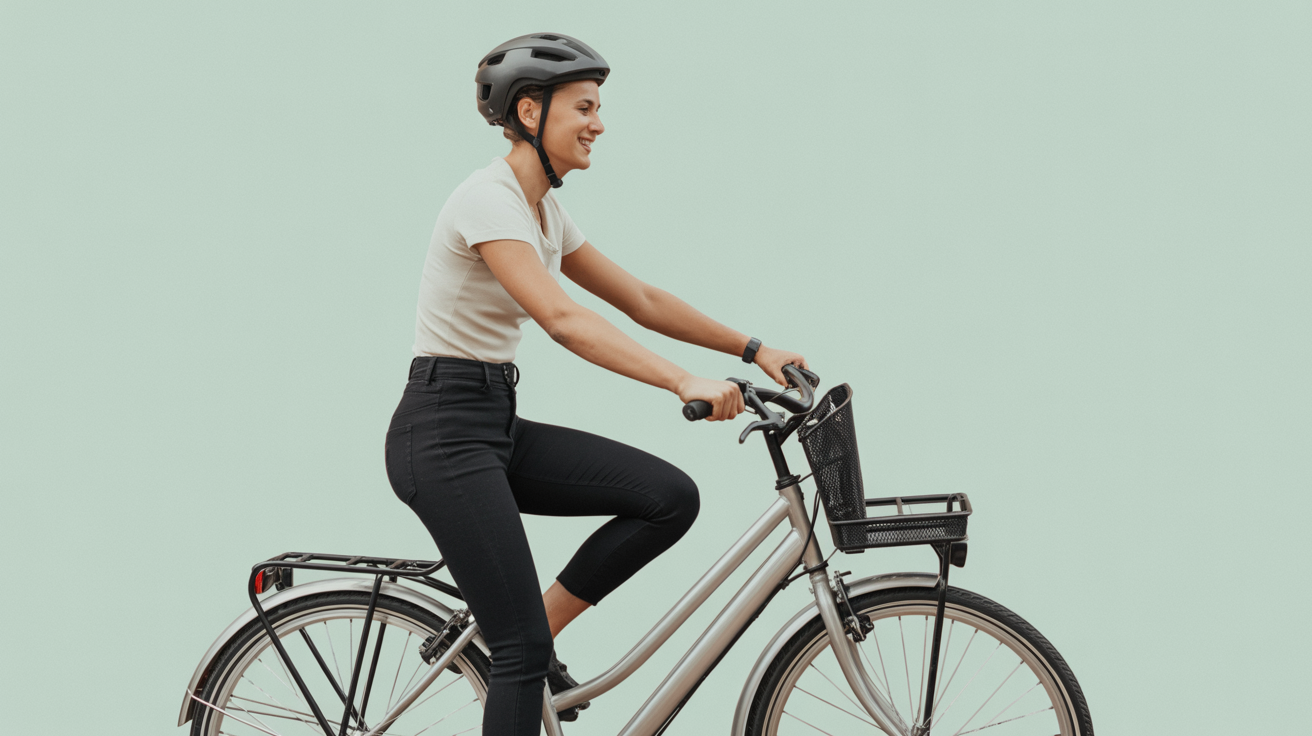
They say you never forget how to ride a bike. That is mostly true, but "not forgetting" and "feeling confident" are two different things. If you haven't cycled in years, the first few rides can feel shakier than you expect. That's normal. Adults bring different challenges to cycling than kids: more awareness of risk, more self-consciousness, and bodies that take longer to rebuild muscle memory. None of that means you can't get comfortable again. It just means the process looks a little different.
This guide is for adults returning to cycling after a long break, not for complete first-timers. If you never learned as a child, the approach is similar but the timeline is longer.
At a Glance
- Balance memory doesn't disappear. What's missing is confidence, and that rebuilds in a handful of sessions on flat, quiet ground.
- Fit your bike before your first ride: saddle height, brake reach, and correct tyre pressure all affect how stable it feels.
- Practice gliding before pedalling. Balance comes first, propulsion second.
- Follow a structured four-to-six session progression rather than jumping straight to a long ride.
- Look ahead, not down. Where your eyes go is where the bike goes.
- National physical activity guidelines put the target at 150 minutes a week of moderate activity, which regular cycling covers on its own once you're comfortable.
Why Adults Find This Harder Than Expected
Kids learning to cycle fall down, laugh it off, and try again. Adults tend to overthink each wobble and interpret it as evidence they've lost the ability entirely. You haven't. Your nervous system still holds the balance patterns; what's gone is the automatic confidence that comes from regular practice.
A few things that actually change after a long break:
- Reaction time slows slightly. Your steering corrections may feel less crisp until you ride regularly again.
- Core strength may have changed. Cycling uses stabilising muscles you might not have been working. Fatigue sets in faster at first.
- Risk perception increases. Adults are better at imagining what could go wrong, which is useful in traffic but can cause hesitation on open paths.
None of these are permanent. A few sessions on a safe, quiet surface rebuilds the patterns quickly. It's also worth putting the effort in context: the US Office of Disease Prevention and Health Promotion recommends adults get at least 150 minutes of moderate aerobic activity a week, plus muscle-strengthening activity on two or more days. Once you're riding comfortably a few times a week, cycling covers a meaningful share of that target on its own, which is a solid reason to push through the early wobbly sessions.
Set Up Your Bike Before You Ride
The single most common reason adults struggle to get back on a bike is a bike that doesn't fit. If you're using an old bike from a garage or a cheap buy online, take ten minutes to check the basics before your first ride.
Seat height matters most. When seated with your foot at the bottom of the pedal stroke, your knee should have a slight bend, around 5 to 15 degrees. Too low and you'll feel unstable; too high and you'll rock your hips. For early sessions, a slightly lower saddle than ideal gives you more confidence to put a foot down quickly.
Brake reach matters too, especially on older bikes with large levers designed for bigger hands. If you have to fully extend your fingers to reach the lever, braking is slower and less controlled. Some levers have an adjustment screw; a bike shop can adjust or swap them inexpensively.
Check the tyres are pumped to the pressure printed on the sidewall. Soft tyres make steering feel vague and increase rolling resistance, and a bike that's been sitting in a garage for years will almost always need air before its first ride back.
If you're unsure what bike to buy or what type suits your goals, our beginner's guide to choosing a first bike covers the full decision.
Where to Practice: Picking the Right Environment
Start somewhere flat, smooth, and free of traffic. A quiet car park on a weekend morning is ideal. A path through a park works if it's not busy. Avoid roads, narrow paths, and anywhere with pedestrians at first.
For the first session:
- Walk the bike alongside you to get a feel for its weight and how it steers.
- Sit on the saddle with both feet flat on the ground. Scoot forward a few metres without pedalling, just to rebuild the balance feel.
- Lift one foot at a time, then both for short glides. This rebuilds the core balance pattern before you add pedalling into the mix.
- Add pedalling once gliding feels relaxed, not before.
Resist the urge to go to a hill or add distance in the first session. Your goal is to walk away feeling that riding was easy, not that you survived it. If a session feels rougher than expected, that's information, not failure; go back to the previous step for a few more minutes rather than pushing through.
Gear You Actually Need for Early Sessions
You don't need to buy a lot to get back on a bike. But one item is non-negotiable:
A properly fitted helmet. According to the Bicycle Helmet Safety Institute's fit guide, the helmet should sit level and low on your forehead, just above your eyebrows (or just above your glasses if you wear them), with the side straps meeting in a V just below each ear. The chin strap should be snug enough that opening your mouth wide pulls the helmet down slightly, without cutting into your chin. An ill-fitting helmet offers significantly less protection than one that fits.
For early sessions on off-road paths:
- Flat-soled shoes with some grip (trainers are fine)
- Gloves if the weather is cold or you're prone to gripping the bars too hard
- Bright or reflective clothing if you're riding near dusk
You do not need padded shorts, clip-in shoes, or cycling-specific clothing for your first rides back. Add those later if you decide to ride further or more often.
Building Confidence Over Your First Few Rides
A structured approach over four to six sessions tends to work better than going straight for a long ride and hoping for the best.
| Session | Focus | What "done" looks like |
|---|---|---|
| 1 | Gliding and balance on flat ground, no obstacles | Coasting 10+ metres with both feet up, relaxed |
| 2 | Pedalling in a straight line, gentle braking practice | Riding 50+ metres without wobbling; smooth stops |
| 3 | Gradual turns at slow speed, start and stop practice | Turning both directions without unclipping a foot early |
| 4 | Figure-eight patterns, riding over small bumps | Completing a figure-eight without a foot down |
| 5-6 | Short route on a quiet path or road with light traffic | 15 to 20 minutes ridden without feeling on edge |
The table is a guide, not a rule. Spend more time on any step that doesn't feel automatic yet before moving on. Most adults move through sessions 1 and 2 quickly and spend more time on the turning and figure-eight work in sessions 3 and 4, since that's where balance and steering combine.
One specific thing to practise deliberately: looking where you want to go, not at the ground in front of your wheel. Cyclists steer toward where their eyes focus. Looking down causes wobbling; looking ahead five to ten metres smooths everything out.
When to Consider Getting Help
Most adults returning to cycling don't need formal instruction. Self-guided sessions in a quiet space are enough. But if you're finding progress very slow after several sessions, or you feel anxious in a way that makes each ride feel like a test rather than a practice, a single lesson with a cycling instructor can help significantly. Many local councils and cycling charities offer adult-specific sessions, sometimes free or subsidised.
If you're also thinking about what type of bike suits the riding you want to do, it's worth reading the breakdown of road, hybrid, gravel, and mountain bikes before committing to a purchase. Once you're riding regularly, getting your bike to fit properly will make longer rides far more comfortable.
Frequently Asked Questions
How long does it take to feel confident cycling again as an adult? Most adults returning after a break feel reasonably comfortable within three to five sessions, assuming they're practising in a quiet, low-pressure environment. Full traffic confidence takes longer and comes with regular riding, not from any single session.
Is it safe to learn to ride on roads straight away? Not usually, no. Even experienced cyclists avoid roads until they can start, stop, steer, and brake without thinking about it. Use off-road paths or quiet car parks until those basics are automatic.
What if I feel too old to start cycling again? Cycling is low-impact and accessible to people of a wide range of ages and fitness levels, and national activity guidelines don't set an age ceiling for moderate aerobic exercise like cycling. The main adjustment adults make compared to children is giving themselves more time and choosing quieter environments to practise. There's no age ceiling on getting back on a bike.
My bike feels wobbly at slow speeds. Is something wrong with it? Probably not. Bikes are inherently less stable at very low speeds, which is why learning in glides feels shaky but riding at a normal pace feels steadier. Once you're moving at walking pace or faster, the gyroscopic effect of the wheels adds significant stability.
Do I need to relearn how to use gears? Not immediately. In early sessions, ride in a single, easy gear and ignore the shifters entirely. Gear use can wait until straight-line riding and braking feel natural, which usually takes two or three sessions.
Is it normal to feel sore after the first ride back? Yes. Even a short, slow session uses muscles differently than walking or other everyday movement, particularly the hips and inner thighs. Mild soreness for a day or two is normal; sharp joint pain is not, and is worth mentioning to a doctor if it doesn't settle. Spacing your first few sessions two to three days apart gives your body time to adapt.
How do I know if my old bike is safe to ride again, or if I need a new one? Before your first ride, check that the tyres hold air overnight, the brakes engage firmly before the lever hits the bar, and the chain doesn't feel gritty or rusted. If the frame has any cracks, dents, or a chain that's badly rusted through, have a shop assess it before you rely on it. A basic safety check costs little and prevents your first ride back from being derailed by a mechanical problem.