Group Riding 101: Etiquette and Skills for Beginners
Learn group riding etiquette, paceline basics, and communication signals so your first group ride goes smoothly and safely.
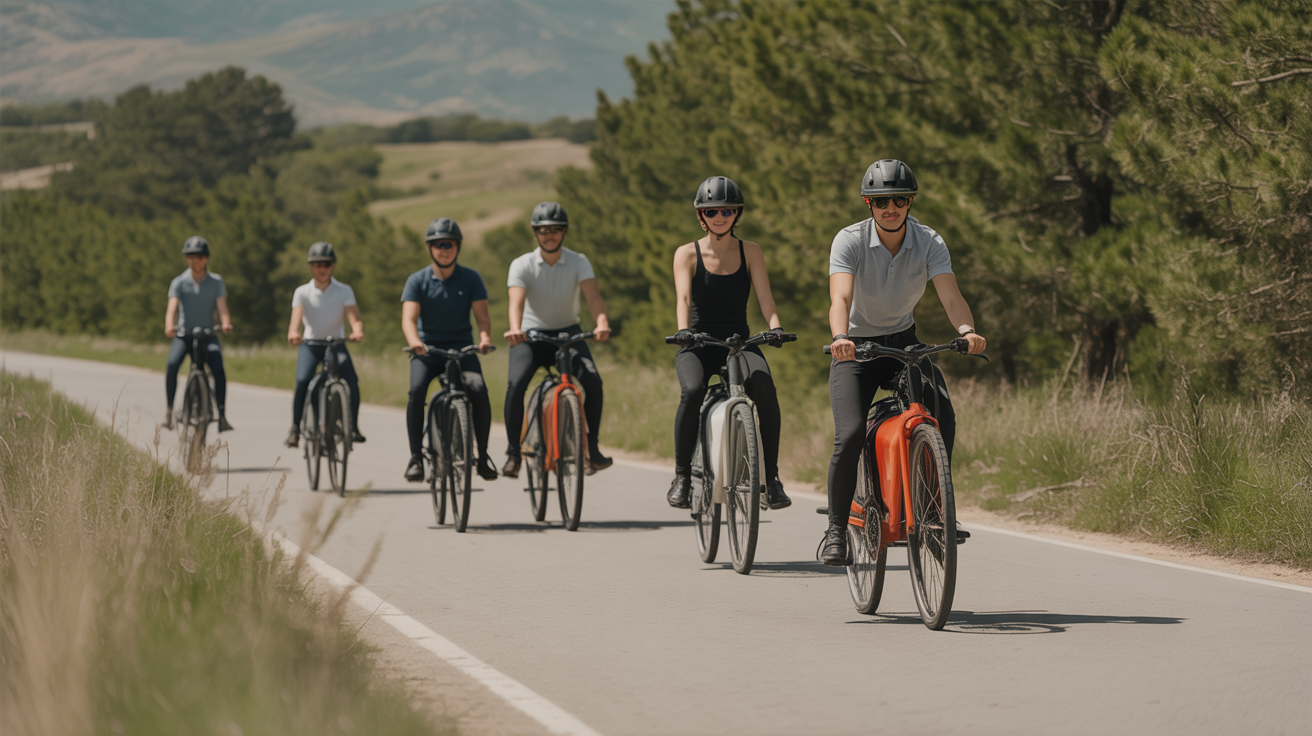
Group rides can be one of the best parts of cycling. You go faster with less effort, learn from more experienced riders, and have company on longer routes. They can also feel chaotic the first time if you don't know how they work.
The good news: most group riding skills come down to predictability. Other riders need to trust that you'll do what you signal, hold your line, and not make sudden moves. Once that clicks, everything else follows.
How a Group Ride Actually Works
Most casual group rides use one of two formats.
A chain gang (or two-by-two) has pairs of riders side by side, often rotating at the front so no single person takes all the wind. A single-file paceline is one long line, also rotating. Some club rides are less formal, just a bunch of people rolling together at a social pace.
Before you show up, ask the organizer:
- What's the average speed?
- Is it drop or no-drop? (Drop rides leave riders behind; no-drop rides wait.)
- How many kilometers and how much climbing?
Choose a ride that matches your current fitness. Spending the whole time off the back is demoralizing and unsafe.
Positioning and Holding Your Line
New riders often drift around without noticing. In a group, that's a problem because the rider behind you is following your wheel closely.
Keep these habits from the start:
- Ride in a straight line. Pick a spot on the road and track it. Avoid snaking or drifting toward the center of the road.
- Maintain a consistent gap. Aim for about half a wheel's length to a full wheel between you and the rider ahead. Closer takes more skill. Much more than a wheel and you'll lose the draft benefit and create accordion effects behind you.
- Look ahead, not at the wheel in front of you. Watch two or three riders up so you see braking or obstacles early.
If you're new, ask to start near the back rather than in the middle. You'll have more time to react and less pressure.
Signals and Communication
Group riding runs on a simple vocabulary of hand signals and calls. Learn these before your first ride, not during it.
| Signal | Meaning |
|---|---|
| Point down at the road | Hazard ahead (pothole, gravel, drain) |
| Left/right arm out | Turning left or right |
| Hand behind back, palm down | Slowing or stopping |
| Flick elbow out | You're pulling off the front; move up |
| Wave arm behind back | Rider dropped, group should slow |
Verbal calls matter just as much:
- "Car up" or "car back" warns of traffic
- "Stopping" before you brake
- "On your left" when passing
- "Slowing" as you ease off the pedals
Pass calls back through the group. If you hear "car back," say it loud enough for the person behind you.
Braking in a Group
This is where many beginners run into trouble. Braking safely on a bike comes naturally on solo rides, but in a group, how and when you brake affects everyone behind you.
The key rule: avoid sudden hard braking. In a tight group, a surprise stop at the front becomes a crash two seconds later at the back.
Instead:
- Ease off the pedals first to scrub speed gently
- Apply brakes lightly and progressively
- If you need to slow, call "slowing" or "stopping" at the same time
- Create a small gap before a descent or corner so you have room to work with
The closer you are to the front, the more important smooth braking becomes. If you're near the back and someone ahead brakes, you may need to absorb it by moving slightly out to one side rather than panic-stopping.
Riding in a Paceline
A paceline is where group riding gets efficient. Each rider takes a turn at the front, battling the wind, then pulls off to recover at the back.
Here's the basic rotating sequence for a two-up (double) paceline:
- The two front riders do their pull (30 seconds to a few minutes, depending on pace and distance)
- The left-column rider accelerates slightly and moves right, slotting in front of the right-column rider
- The right column speeds up slightly to fill the gap
- Both riders drift back through the outside of the group
- At the back, they slot back in and the cycle repeats
For a single-file paceline, the front rider pulls off to one side after their turn, drifts back, and tags on at the rear.
A few things that help:
- Don't surge when you hit the front. Accelerating when you reach the front scatters the group. Keep the same speed or even back off a little.
- Keep your pull short if you're tired. Better a 20-second pull than blowing up at the front and losing the group.
- Knowing how to shift gears smoothly helps here. Shifting without crunching keeps your cadence steady when the pace changes.
Cornering and Descending in a Group
Groups generally spread out a little through corners, then reform on the other side. This is normal. Don't try to hold a tight gap through a sharp bend.
On descents, gaps open up as faster descenders pull away. That's fine. Don't take risks to stay attached. The group usually regroups at the bottom or waits at a junction.
Cornering with confidence on your own is the foundation. If cornering still feels shaky, practice it solo before your first group ride.
A few descent habits:
- Don't overlap wheels through corners (if the rider ahead swerves, you'll crash)
- Keep your head up and eyes on the exit of the corner
- Brake before the corner, not in it
Frequently Asked Questions
Is it okay to drop off the back of a group ride? Yes. Getting dropped happens to everyone, especially on hilly routes or fast rides. It's far better to ease off and ride your own pace than to push beyond your limit and crash or bonk. Many groups have a sweep rider at the back for exactly this reason.
What should I bring on a group ride? At minimum: a filled water bottle, a tube and pump or CO2 inflator, a small snack for anything over an hour, and your phone. Don't rely on others to have spares for you.
How close should I ride to the wheel in front? Start with a full wheel length (roughly 70 cm). Experienced riders may ride closer, but there's no need to rush this. Comfort and consistency matter more than gap size.
What if I need to stop mid-ride? Signal to the riders behind you, call "stopping," and ease to the side of the road rather than stopping abruptly in the line. If you need a mechanical stop, raise your hand and move off the road safely.
How do I know if a group ride is right for my fitness level? Ask about the average speed and total distance. A casual club ride might average 20-24 km/h; a faster chain gang might push 32-35 km/h. If you can comfortably ride 80% of the listed distance solo, you're likely ready to give it a go.