How Much Should You Spend on Your First Bike?
Setting a beginner bike budget doesn't have to be complicated. Here's what your money actually buys at each price point and where to draw the line.
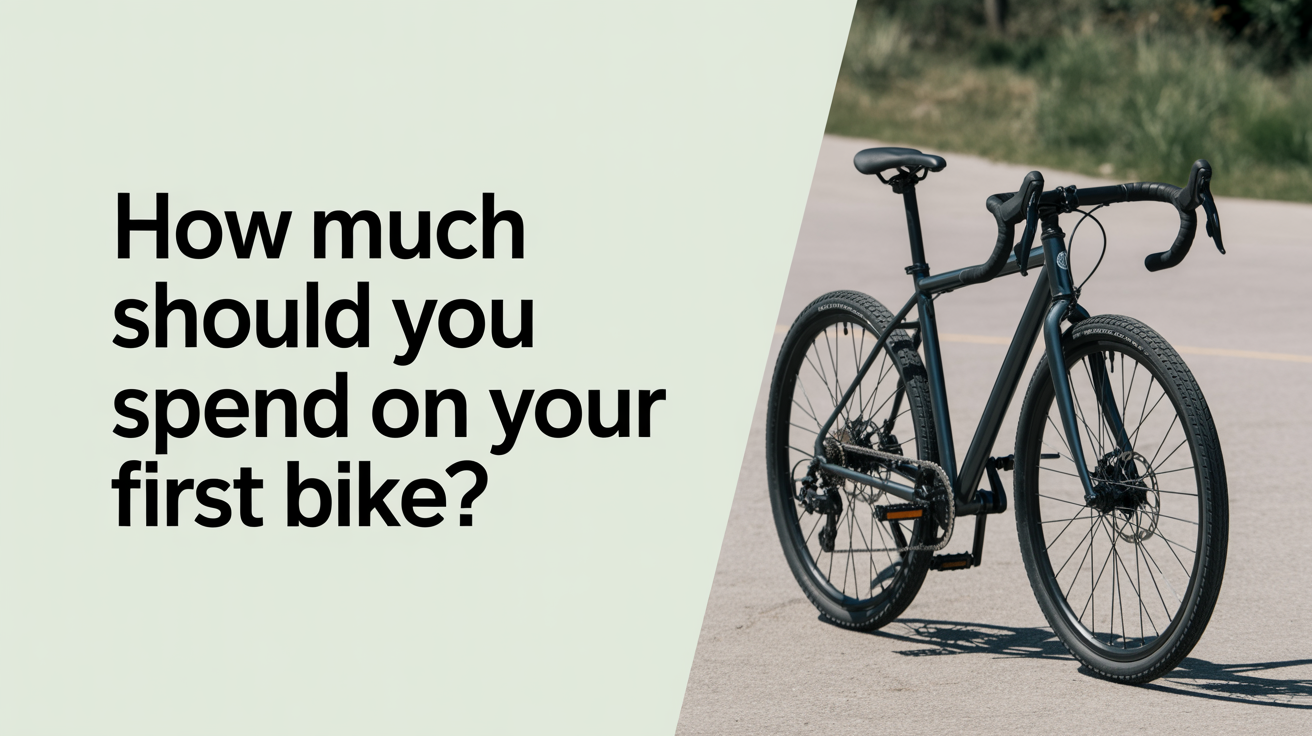
The honest short answer: somewhere between $400 and $800 buys a solid first bike from a bike shop, and most beginners land right in that window. Spend less and you start running into real quality problems. Spend more and you're paying for features that won't matter until you've put in a few hundred miles.
That said, the right number for you depends on what kind of riding you plan to do and where you buy. This guide breaks it down so you can set a realistic budget and know what you're getting at each level.
At a Glance
- Practical floor for a bike worth riding: $350 to $400 new from a shop. Below that, quality problems pile up fast.
- Sweet spot for most beginners: $500 to $700. Reliable shifting, functional brakes, a frame that doesn't flex under you.
- Beyond $800 to $900, you're mostly paying for weight savings and refinement you won't notice until your fitness and technique catch up.
- Used bikes can get you $500 to $800 quality for $250 to $400, if you check condition or pay a mechanic $50 to $75 to check it for you.
- Budget an extra $100 to $150 for a helmet, lock, and lights. None of these are optional.
- Fit matters more than price. A well-fitting $600 bike beats a poorly-fitting $900 one every time.
Why Your Budget Floor Matters More Than Your Ceiling
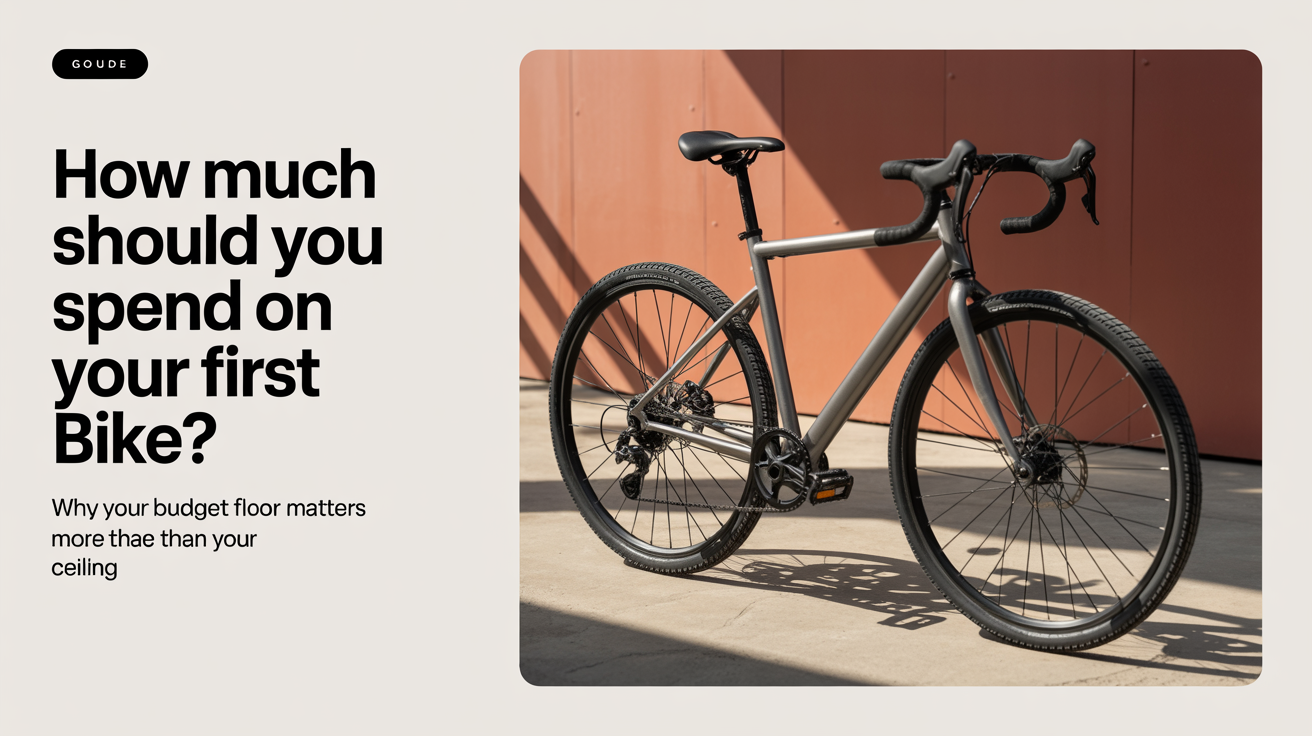
The cheapest bikes sold at department stores and big-box retailers tend to look like bikes but ride like furniture. The components are often so heavy and imprecise that shifting becomes a chore, braking takes more grip than it should, and frames can flex in ways that make riding genuinely unpleasant.
This is less about snobbery and more about safety and longevity. Brake levers that take 80% of your grip to engage, or derailleurs that drop the chain regularly, create situations you don't want on a road or trail.
The practical floor for a bike worth riding is around $350 to $400, bought new from a shop. At that price, you start seeing components that work reliably out of the box. Below that, the tradeoffs pile up quickly: heavier steel frames instead of aluminum, unbranded drivetrains that wander out of adjustment within weeks, and brakes assembled without the careful cable tensioning a shop mechanic would do.
What You Get at Each Price Point
Here's a rough breakdown of what your money buys in the new bike market. Prices shift by region and brand, but the quality tiers are fairly consistent.
| Price Range | What to Expect |
|---|---|
| Under $300 | Big-box or department-store bikes. Heavy frames, vague shifting, inconsistent braking. Fine for occasional short rides, not for regular use. |
| $350 to $500 | Entry-level bikes from reputable brands at bike shops. Reliable shifting, functional brakes, manageable weight. Good for casual riders and new commuters. |
| $500 to $800 | Mid-range bikes with better components, lighter frames, and more comfortable geometry. Shifting is noticeably crisper. A good target range for most beginners. |
| $800 to $1,200 | Quality components that last longer and require less adjustment. Worth considering if you plan to ride frequently or have a specific use case like loaded commuting. |
| $1,200 and up | Performance territory. Real gains here are incremental. Hard to justify for a first bike unless you already know you'll use it heavily. |
If you're buying used, the same quality tiers apply, but you can often land a bike from the $500 to $800 new range for $250 to $400. That's a legitimate way to get more bike for less money, provided you know what to check or have a mechanic look it over before you buy.
Cheap vs. Expensive Bikes: Where the Difference Actually Shows Up
The jump from a $250 big-box bike to a $500 shop bike is more noticeable than the jump from $800 to $1,200. Here's where the money goes at the lower end of the range.
Brakes: Entry-level shop bikes typically use mechanical disc brakes or quality rim brakes. Both stop reliably. Department-store bikes use brakes that can feel like suggestions rather than commands.
Shifting: Shimano and SRAM make components across a wide range, and manufacturers structure these ranges in visible tiers, from entry-level groups aimed at new riders up to race-level parts. Wikipedia's overview of bicycle groupsets notes that brands typically offer "a range of several groupsets, each targeted at a different budget or use," and that even the entry-level tiers (Shimano Claris, Altus, and Tourney, for example) are built to index gears accurately, not just cheaply. The no-name shifting on big-box bikes skips this tiered engineering entirely, and can wander mid-ride in ways a branded entry-level groupset won't.
Frame weight: You won't notice the difference between an 11-pound road bike and a 13-pound one until you're carrying it up stairs. But a 35-pound big-box mountain bike is a different experience altogether, especially on a climb or when you're lifting it onto a car rack.
Assembly and setup: Bikes sold through bike shops are assembled by mechanics. Boxed bikes from online retailers or department stores are often assembled partially, and the setup can be off in ways that affect handling and brake alignment. A poorly torqued headset or a brake that isn't centered is the kind of thing a new rider won't notice until it causes a problem.
For most beginners, the sweet spot is somewhere around $500 to $700. You get a bike that rides well, holds adjustments, and won't require a mechanic visit within the first month.
New vs. Used: How to Think About It
Buying used can stretch your budget significantly, but it comes with a different set of risks.
A good used bike at $350 to $450 from a private seller or local shop might be equivalent to a $700 new bike in terms of components and frame quality. The catch is that you need to assess condition before you buy or pay a mechanic to do it for you (typically $50 to $75 for a pre-purchase inspection, which is money well spent).
Things to look for on a used bike:
- Straight frame with no dents, cracks, or signs of a hard crash
- Chain that doesn't skip or sag under tension
- Wheels that spin without wobbling side to side
- Brakes that engage firmly before the lever hits the bar
- Shifters that move through gears smoothly
If anything feels off and the seller can't explain it, move on. There are always more used bikes.
A worked example: say you have a $600 total budget. A new bike at that price gets you into the low end of the mid-range tier, decent but not exceptional. The same $600 spent used might land a bike that retailed at $900 to $1,000 two or three years ago, with better components throughout, if you're willing to spend a weekend searching and factor in $50 to $75 for an inspection. The tradeoff is time and some risk versus a guaranteed, warrantied bike from day one.
Don't Forget the Gear Budget
A helmet is not optional. A properly fitted helmet rated to current safety standards (look for CPSC certification, which is mandatory for any helmet sold in the US) runs $40 to $100. Some helmets also carry the Snell Foundation's voluntary bicycle standard, a stricter independent test than the government minimum; it's a reasonable tiebreaker if you're choosing between two helmets at a similar price, though CPSC certification alone is enough for everyday riding. This is worth every dollar.
Beyond that, the short list for a new rider:
- Helmet: $40 to $100
- Lock: $30 to $60 (U-lock or heavy chain; cable locks alone aren't enough for anything you park outside)
- Lights: $25 to $50 for a front and rear set (required for road riding after dark in most places)
- Patch kit or spare tube: $10 to $15
Budget an extra $100 to $150 on top of your bike budget to cover the basics. Gloves, padded shorts, and a pump are worth having but can wait until you know you'll keep riding.
Getting the Right Fit Before You Buy
Budget matters less than fit. A $600 bike that fits you well will be more enjoyable and safer than a $900 bike that doesn't. Most beginners have some room to adjust saddle height and handlebar reach, but the frame size has to be close.
For help figuring out the right size and style of bike for your riding plans, see how to choose your first bike and what size bike do I need. If you're still deciding between road, hybrid, gravel, and mountain options, bike types explained walks through the real differences.
Frequently Asked Questions
How much does a good bike cost for a beginner? Most beginners find a reliable, enjoyable bike in the $450 to $750 range when buying new from a bike shop. Used bikes in good condition can bring that number down to $250 to $400 for equivalent quality. Below $350 new, the components tend to compromise the riding experience in ways that matter.
Is it worth spending more on your first bike? Generally, no. The meaningful quality jump happens between the bottom end and the mid-range. Beyond $800 to $900, you're paying for lighter materials and faster components that won't make a difference until you've developed the fitness and technique to notice them. Spend enough to get a bike that works well, then upgrade later if the riding sticks.
Can I get a decent used bike for under $300? Yes, but you'll need to do some searching and ideally have a mechanic inspect it before buying. Look for bikes from reputable brands (Trek, Specialized, Giant, Cannondale, and similar) that have been well maintained. Avoid bikes that have been left outdoors, show rust on the chain or cables, or have frames that look bent or damaged.
What's the difference between a bike shop bike and a big-box bike? Mostly components and assembly. Bike shop bikes use name-brand groupsets (brakes, shifters, derailleurs) that index accurately and last longer. They're also assembled by trained mechanics who set up the brakes and shifting before you take it home. Big-box bikes can look similar on paper but often use off-brand parts that wear faster and require more adjustment out of the box.
Should I include accessories in my bike budget? Plan for it. A helmet, lock, and lights add $100 to $150 to your total cost, and those aren't optional items. If your total budget is $600, that might mean $450 to $500 for the bike and $100 to $150 for the basics rather than putting the whole amount into the bike itself.
Should I finance a bike or save up and pay cash? For a first bike in the $400 to $800 range, saving up and paying cash is usually the simpler path. Bike shop financing exists and can make sense for a $1,500-plus bike you're confident you'll use for years, but for a first purchase you're still testing your interest in, avoiding interest and fees keeps the total cost closer to the sticker price.
Do bike shops ever include free tune-ups with a new bike? Many do. A common arrangement is one or two free adjustment visits in the first one to three months, since new cables and housing settle in and often need a follow-up tweak. Ask about this before you buy; it's effectively part of the price and can save you the cost of a shop visit down the line.