How to Buy a Used Bike Without Getting Burned
A practical guide to buying a used bike safely: what to inspect, what to avoid, and how to negotiate a fair price.
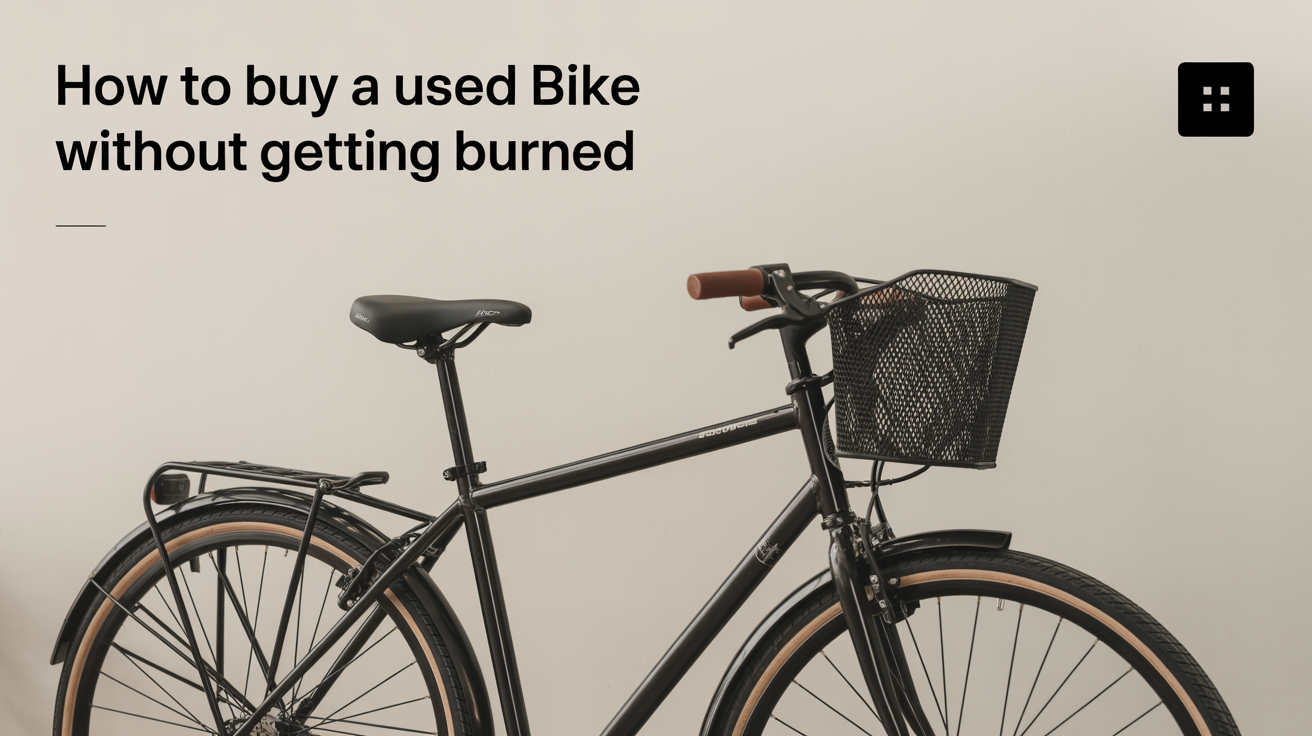
Buying a used bike is one of the smartest moves a beginning cyclist can make. You get a lot more bike for your money, and if you discover cycling isn't your thing, you haven't sunk $800 into something gathering dust. The catch is that a bad used bike can cost you more in repairs than a new entry-level bike would have. This guide walks you through the inspection process so you spend your money on riding, not on fixing someone else's problems.
Where to Find Used Bikes
The most common sources are Craigslist, Facebook Marketplace, eBay Local, and local bike shop consignment sections. Each has trade-offs.
Online classifieds have the widest selection and the widest range of quality. You'll see everything from legitimate upgrades to bikes that have been sitting in a flooded garage for six years. Arrange to meet in person so you can inspect before buying.
Local bike shop used sections tend to be safer. Staff usually check bikes before accepting them, and many shops offer a short warranty on used inventory. Prices are higher than classifieds, but the risk is lower.
Garage sales and estate sales can yield genuine bargains, but the sellers rarely know anything about the bike's history. You're buying blind to some degree, which means your inspection skills matter even more.
One place to be cautious: bikes priced extremely low with no photo of the serial number, a seller who won't meet in person, or stories about a "sick relative" who can't bring it to you. Stolen bikes are a real part of the used market, and buying one puts you in a difficult legal position. Check any potential purchase against a database like Bike Index before handing over cash.
What to Inspect Before You Buy
Take your time with this. A 20-minute inspection can save you hundreds of dollars. Bring a flashlight if you can.
Frame and Fork
This is the most important check. Cracks, dents, or buckled tubes are deal-breakers on an aluminum or carbon frame. Steel frames can sometimes be repaired by a skilled welder, but unless you know what you're doing, treat frame damage as a reason to walk away.
Look at the welds. They should be consistent, without cracks radiating out from them. Check around the bottom bracket shell, the head tube, and the rear dropout areas; these take the most stress. On carbon frames, run your hand along every tube and look for any soft spots or paint bubbles, which can indicate delamination underneath.
A bent fork is also a deal-breaker. Look at the bike straight-on from the front. The fork should be perfectly centered under the head tube. Any offset means it's been in a crash hard enough to bend metal.
Drivetrain
Spin the pedals and watch the chain go around. A chain that skips, jumps, or makes grinding noises points to worn components. Chains and cassettes wear together; replacing just one without the other often doesn't fix the problem.
Shift through every gear. The derailleurs should move crisply and settle into each gear without hesitation. Sluggish shifting is sometimes a cable and housing issue (cheap to fix) and sometimes worn derailleur jockey wheels or a bent derailleur hanger (also cheap) and sometimes a worn cassette and chainrings (more expensive).
Look at the chainrings from the side. The teeth should be relatively uniform. Shark-fin shaped or hooked teeth mean they're due for replacement.
Brakes
Squeeze each brake lever hard and try to roll the bike forward. The wheel should lock up before the lever reaches the handlebar. If it doesn't, the pads are worn or the cables are stretched, or both.
Look at the brake pads. On rim brakes, you'll see wear lines molded into the pad; if the pads are below those lines, they need replacing. On disc brakes, the pads should be at least 1mm thick. Disc rotors should be flat and unwarped; hold the bike up and spin the wheel slowly, watching the rotor pass through the caliper. Any wobble means the rotor may need truing or replacing.
Wheels
Lift each end of the bike and spin the wheels. They should spin true, meaning without side-to-side wobble. A minor wobble can often be corrected by a bike shop for $10 to $20. A significant wobble or a severely dented rim usually means the wheel needs replacing.
Grab each wheel at the 3 o'clock and 9 o'clock positions and try to wiggle it side to side. Any play in the hub bearings means they need adjustment or replacement.
Check the tires for cracking in the sidewalls. Old rubber dries out and cracks, and a cracked tire is a flat waiting to happen.
Headset and Bottom Bracket
Grip the front wheel between your knees and try to twist the handlebars. The headset (the bearing assembly connecting the fork to the frame) should feel smooth and have no play. Any looseness means it needs adjustment.
Grab the crank arms and try to push them side to side. They should feel solid. Any lateral play in the bottom bracket means it needs service.
How to Negotiate the Price
Once you've completed your inspection, you have a clearer picture of what the bike actually needs. Parts and labor aren't free.
If everything checks out, a fair offer is usually the asking price or a small reduction for normal wear. If you find real issues like worn brake pads, stretched cables, or a chain that needs replacing, get an estimate from a bike shop and factor that into what you're willing to pay. Most sellers would rather reduce the price than haul the bike back home.
Ask for the serial number before you buy. If the seller won't provide it, that's a red flag. You can record it and cross-reference it against Bike Index or the National Bike Registry.
Getting the Right Fit
Before any inspection, check the basic size. Stand over the frame; for a road bike, you want 1 to 2 inches of clearance between the top tube and your body. For a mountain bike, aim for 2 to 4 inches.
Sit on the saddle with your heel on the pedal at its lowest point. Your leg should be nearly straight. If you're reaching uncomfortably or your knees are up near your chest, the frame is the wrong size, and no amount of seat adjustment will fix it.
A used bike that fits badly is a bad deal regardless of price. Fit matters more than brand or component level. If you're unsure what size you need, pair this with essential cycling gear for beginners and what can wait, which covers what to prioritize when you're just starting out.
After You Buy
Even a bike that passes inspection should get a basic tune-up before you ride it regularly. At minimum:
- Adjust tire pressure to the range printed on the sidewall
- Check that all bolts are properly tightened
- Lube the chain if it looks dry or discolored
- Test the brakes and gears in a parking lot before your first real ride
Once you're rolling, make sure you're protected from the head down. Read up on how to choose a bike helmet that actually fits before you get out on the road. And if you're riding in changing conditions, what to wear cycling in any weather covers how to dress without overcomplicating it.
Frequently Asked Questions
How much should I spend on a used bike as a beginner?
For recreational riding, $150 to $400 will get you a solid used bike in good condition. Below $100, the components are usually worn enough that you'll spend more fixing it than it's worth. Above $500 in the used market, you're getting into bikes originally spec'd as serious equipment, which can be great value if you know you'll stick with cycling.
Is it safe to buy a used bike from a stranger?
Generally yes, as long as you meet in a public place, bring a friend if possible, and inspect the bike before handing over money. Check the serial number against a stolen bike registry before you commit.
What tools do I need to inspect a used bike?
You don't need tools for most of this. A flashlight helps, and if you want to check chain wear, a $10 chain wear indicator is useful. Otherwise, eyes and hands get you through most of the checklist.
What's the biggest red flag on a used bike?
Frame damage. Everything else, from worn tires to a skipping chain, is a parts and labor cost you can calculate. A cracked or bent frame means the bike is unsafe and cannot be made safe for a reasonable cost. Walk away from any frame with cracks, dents, or obvious collision damage.
Should I buy a used bike from a bike shop or a private seller?
Both work, but they're different trade-offs. A shop gives you more certainty that the bike has been checked, and you have somewhere to go if something is wrong. A private seller may offer a better price but with no safety net. If you're confident in your inspection skills, private sales can be excellent value. If you're not sure what to look for, starting with a shop's used section is a lower-risk way to go.