How to Choose a Comfortable Bike Saddle for Longer Rides
Learn how to choose a comfortable bike saddle by matching width to your sit bones, picking the right padding, and giving it a fair trial.
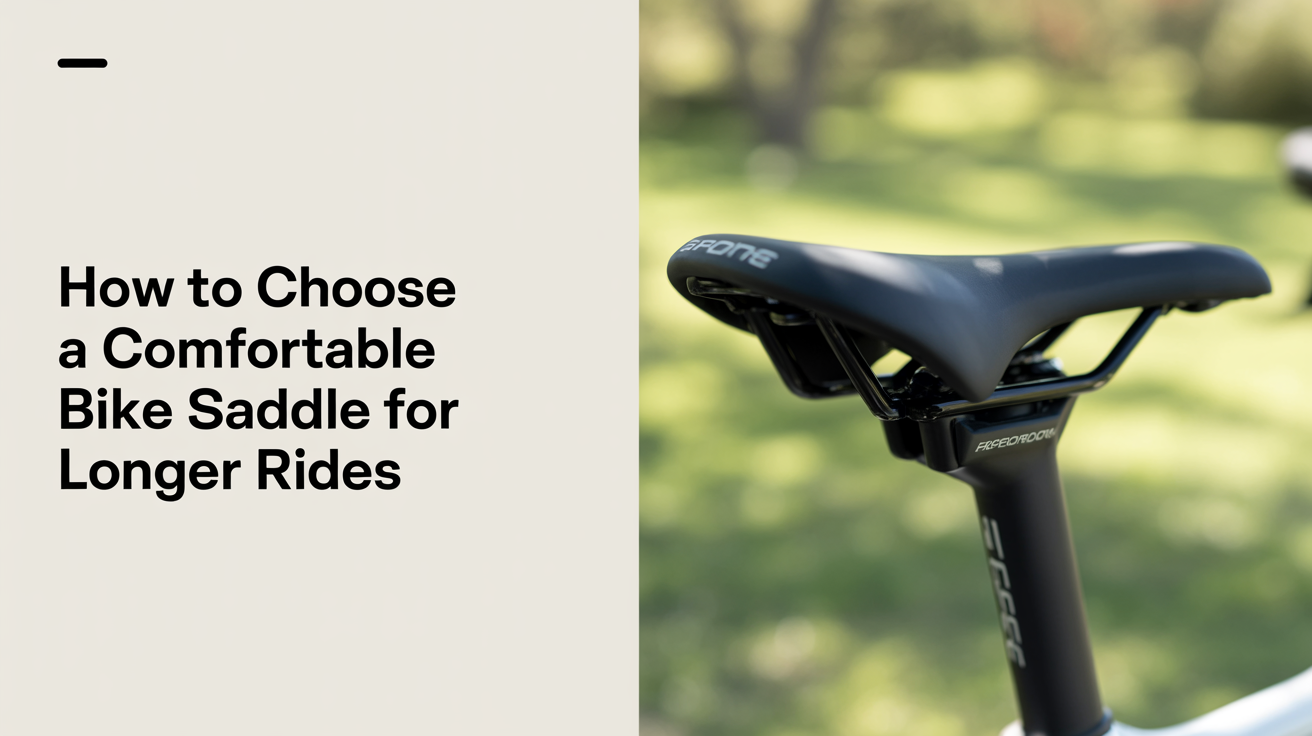
If your seat hurts every time you ride, the stock saddle that came with your bike is probably the reason, and figuring out how to choose a comfortable bike saddle usually solves more of the problem than people expect. This isn't about saddle height. If your knees ache or you're rocking side to side to reach the pedals, that's a fit issue covered in our guide on setting your saddle height the right way. What we're talking about here is the ache, numbness, or raw feeling that shows up no matter how well the bike is adjusted. That's almost always about the saddle itself, specifically about width, not cushioning.
Why More Padding Usually Makes It Worse
New riders assume a sore seat means they need a plusher saddle. In practice it often gets worse. A saddle that's too soft lets your sit bones sink into the padding, and the surrounding tissue takes the pressure instead. Ride a few miles and that extra foam compresses and bunches, creating friction and pressure points in exactly the places you didn't want them.
Road and gravel riders lean toward firmer saddles for this reason. A saddle with the right shape and width supports your weight on the two bones built to carry it, so it needs less padding to do the job. Comfort comes from matching the saddle to your anatomy, not from how much foam sits on top of it.
Start With Your Sit Bones
Every saddle problem traces back to one measurement: the distance between your sit bones (the ischial tuberosities, the bony points you can feel if you sit on a hard chair and rock side to side). Saddles are built in width tiers to match that spacing, usually in ranges like 130mm, 143mm, 155mm, and 168mm, though the exact numbers vary by brand.
Plenty of bike shops offer sit-bone measuring on the spot, usually with a pressure-sensitive pad. It takes about two minutes and gives you a real number instead of a guess. Ask about it even if you're not buying a new bike that day; some shops measure you for free hoping you'll buy a saddle from them, which is a fair trade.
If you can't get measured, a home method works too: sit on a piece of corrugated cardboard on a hard, flat surface, lean forward slightly like you're gripping handlebars, and let your weight settle. Stand up and look for two indentations. Measure the distance between the centers of those marks, add roughly 10-20mm for the slight outward movement your pelvis makes while pedaling, and that's your target saddle width.
Too Narrow and Too Wide Both Hurt, Just Differently
This is the part people get backward. A saddle that's too narrow lets your sit bones drop off the edges of the platform entirely. Your weight lands on soft tissue instead of bone, causing numbness, chafing, and an ache that gets worse the longer you ride.
A saddle that's too wide causes a different problem: the edges rub against your inner thighs with every pedal stroke, creating chafing and skin irritation rather than pressure pain. Riders sometimes describe it as "my seat feels huge," and the fix isn't more padding, it's a narrower saddle.
A simple way to think about the mismatch:
| Symptom | Likely cause |
|---|---|
| Numbness or tingling after 10-15 minutes | Saddle too narrow, sit bones unsupported |
| Sharp point-pressure right under the sit bones | Saddle too firm for your weight distribution, or nose angle off |
| Chafing on inner thighs | Saddle too wide, edges rubbing with each stroke |
| Soreness that fades within a ride but returns each time | Normal adaptation, worth continuing to monitor |
| Pain that gets sharper the longer you're out | Width or shape mismatch, not a break-in issue |
Recognizing a pattern here is a strong hint about which direction to adjust, even before a formal measurement.
What Padding, Cutouts, and Channels Actually Do
Once width is right, the details start to matter. A center cutout or channel relieves pressure on soft tissue and blood vessels, which is why they're common on saddles marketed for longer rides. They're not required for comfort, but for riders who feel numbness rather than bone-on-saddle pain, a cutout is often the single change that fixes it.
Padding density matters more than padding thickness. A denser foam that holds its shape under load usually feels better after an hour than a thick, soft foam that flattens out. Gel inserts feel great in the shop when you press on them with your hand, but under sustained body weight they compress unevenly. That's part of why testing a saddle with a single sit-down in a store tells you very little about how it'll feel forty-five minutes into a ride.
Saddle shape also varies by riding position. An upright commuting position pairs well with a wider, flatter saddle, since your weight sits more directly over the sit bones. A forward-leaning road position works better with a narrower, curved saddle, since your legs need clearance to pedal without rubbing the sides.
"Men's" and "Women's" Saddles Are Really Just Width Categories
Saddles marketed by gender are mostly a proxy for width and nose length, based on average anatomical differences, not a strict rule. Saddles labeled for women are typically wider at the rear with a shorter nose, built around a wider average sit-bone spacing. Saddles labeled for men tend to be narrower and longer.
These are averages, not guarantees. Plenty of men are more comfortable on a "women's" saddle because of their own sit-bone spacing, and the reverse is just as true. If you get measured and the number points you toward a saddle marketed for the other gender, ignore the label and go with the measurement. Many brands now just list width and shape without a gender tag at all.
Give a New Saddle Two Weeks Before You Judge It
This is the step people skip, and it costs them money. A saddle that feels off on ride one might just need a break-in period, for both the cover to soften and your body to adjust to a new pressure pattern. Some soreness in the first few rides on any new saddle is normal, especially coming off a badly fitted stock seat.
Give a new saddle a fair trial of roughly ten to fourteen days of normal riding before deciding it's wrong for you. Pay attention to whether the discomfort trends down each ride (a good sign, your body is adapting) or stays flat or gets worse (a sign the saddle itself is the problem). If after two weeks you're still sore in the same spot every time, that's real data, and it's a fair reason to try a different width or shape.
Many shops offer a demo program or return window, because saddle fit is trial and error even with a correct sit-bone measurement.
Shorts Matter Almost as Much as the Saddle
A great saddle paired with the wrong shorts will still hurt. Padded cycling shorts (worn without underwear, since seams underneath cause rubbing) reduce friction and add cushioning that works with the saddle rather than against it. Regular gym shorts or jeans, with their seams and loose fabric, can undo a lot of the benefit of a well-fitted saddle. We cover this in more detail in do you really need padded bike shorts, including when they're worth it and when they're optional.
If width, padding, and shorts are all sorted and you're still dealing with regular aches, it may not be a saddle problem at all. Our guide to avoiding common cycling aches and pains covers the other usual suspects, from handlebar height to riding posture.
Frequently Asked Questions
How do I know if my bike saddle is too narrow?
The clearest sign is numbness or tingling in the sit-bone area within the first ten to fifteen minutes of a ride, since your weight lands on soft tissue instead of bone. If the ache eases as soon as you stand on the pedals for a moment, that's another clue the saddle isn't supporting you where it should.
Should I buy the softest, most padded saddle I can find?
Not necessarily. Extra-soft saddles often feel great for the first few minutes and then cause more pressure and friction once the padding compresses under sustained weight. A firmer saddle that matches your sit-bone width usually holds up better over a long ride than a thickly padded one that doesn't.
How long should I give a new saddle before deciding it doesn't work?
Plan on roughly two weeks of normal riding. A short break-in period is normal for both the saddle and your body. If discomfort keeps improving ride over ride, stick with it. If it's flat or worse after two weeks in the same spot, try a different width or shape.
Do saddle cutouts and channels actually help?
For many riders, yes, especially if the discomfort is numbness rather than general soreness. A cutout or channel relieves pressure on soft tissue and blood vessels in the center of the saddle. It's not universal, but it's worth trying if width alone hasn't solved the problem.
Can I use a "women's" saddle if I'm a man, or the other way around?
Yes. The gendered labels are shorthand for typical width and nose-length differences, not a fixed rule. Your actual sit-bone measurement should decide which saddle you buy, regardless of how it's marketed.