How to Climb Hills on a Bike Without Burning Out
Practical hill climbing tips for cyclists: pacing, gear selection, body position, and breathing so you reach the top feeling strong.
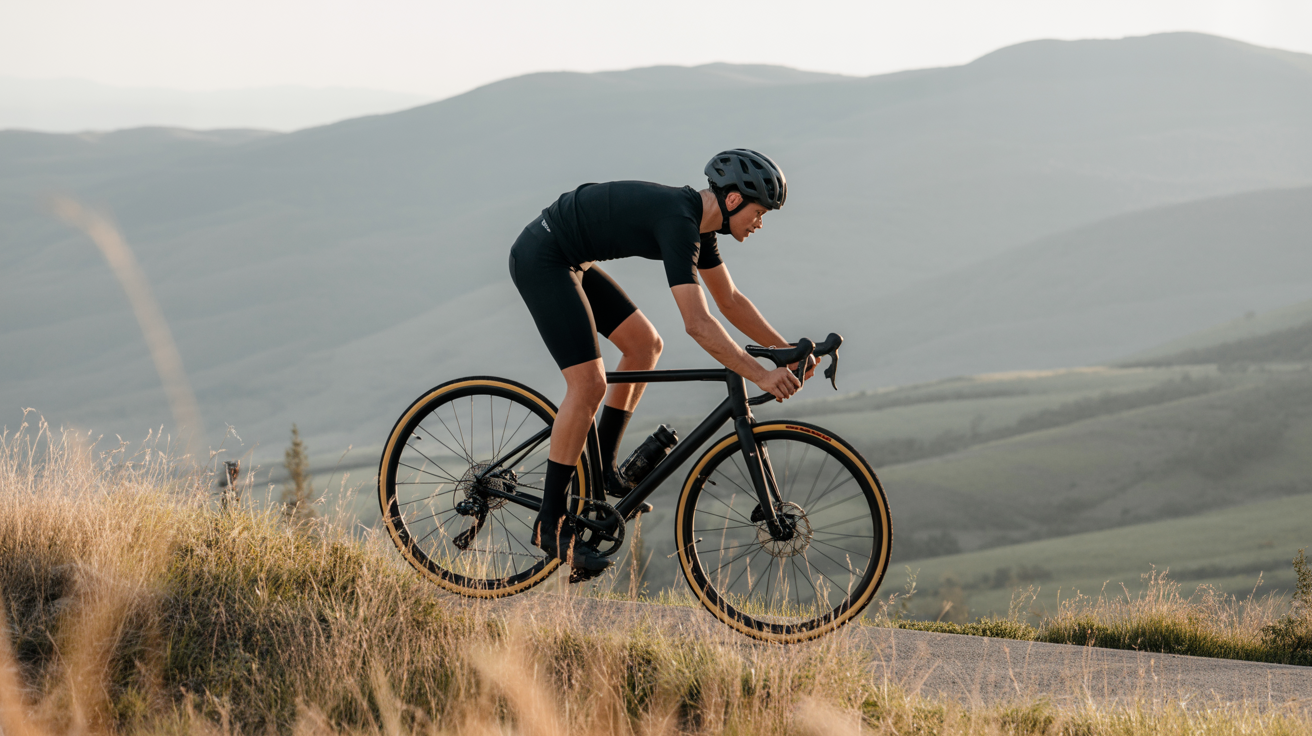
The single best thing you can do to get up a hill without blowing up is to slow down before it hurts. Most beginners attack hills too hard at the bottom, spend everything in the first third, and grind to a near-stop at the top. With a few tweaks to pacing, gearing, and position, that same hill starts to feel manageable.
This guide covers everything you need to climb cycling hills steadily: how to read a climb before you start, how to pick the right gear, where to put your body, and how to pace effort so you have something left when the gradient steepens.
Read the Hill Before You Start
Glancing ahead for ten seconds before a climb changes everything. You want to know roughly how long it is, whether the gradient increases near the top, and if there are any flat stretches where you can recover.
Short punchy hills (under 200 m) can be ridden at a harder effort because they're over quickly. Longer climbs, anything you'll spend two minutes or more on, need a controlled start. Burning matches early on a long ascent is the number-one reason beginners walk sections they could have ridden.
Things to look for before you begin climbing:
- Is there a steeper section near the top? Many roads tilt up as you approach a crest.
- Is the surface rough or smooth? Loose gravel or wet tarmac changes traction and braking distance on the way back down.
- Is traffic coming from behind? A quick shoulder check before slowing to shift gears prevents nasty surprises.
If you ride the same local hills regularly, keep a rough mental log: "the third lamppost is where it gets steep" is genuinely useful information.
Gear Selection: Shift Early, Not Late
The most common gearing mistake on hills is shifting too late, when you're already grinding and almost stalled. Chainrings and cassettes don't like being forced under heavy load; it wears them faster and can drop your chain.
Shift down one or two gears before the gradient increases, not after. You should feel like the gear is almost too easy for the first quarter of the climb. That's correct. You'll need that headroom.
For beginners trying to understand which gear to choose, the basic rule is: pick a gear where you can spin the pedals at around 70-90 rpm without straining your knees. If your cadence drops below 60 and your legs feel like they're pushing against concrete, drop to an easier gear. If you're spinning so fast your hips are bouncing in the saddle, go one harder.
If you're not yet comfortable with your bike's shifters, the guide on shifting gears smoothly covers the mechanics in detail. Getting confident with your shifters on flat roads first means gearing changes on hills become instinctive rather than stressful.
What "Easy Gear" Actually Means
On a bike with multiple chainrings (the gears at the pedals) and a rear cassette:
- Easiest gear: small chainring at the front, largest sprocket at the rear. This gives the least resistance per pedal stroke.
- Hardest gear: large chainring at the front, smallest sprocket at the rear. Maximum speed, maximum effort.
For most beginners on moderate to steep gradients, you'll be in the small chainring and somewhere in the middle-to-large end of the rear cassette.
Body Position on the Climb
Where you put your weight matters more than most beginners expect.
Stay seated for steady climbs. Seated climbing is more efficient for anything longer than about 20 seconds because your major muscle groups work in a stable rhythm and your heart rate stays more controlled. Grip the handlebars lightly, keep your elbows slightly bent rather than locked, and let your upper body stay relatively still.
Shift back slightly in the saddle on steep sections. When the gradient kicks up hard, moving your hips toward the back of the saddle keeps your rear wheel weighted down, which matters for grip, especially on loose or wet surfaces.
Stand up for short surges only. Out-of-saddle climbing burns significantly more energy. Use it to push over the steepest 10-15 seconds of a climb, or to give your sitting muscles a brief rest. When you stand, shift up one gear so you don't spin out.
Relax your grip and jaw. This sounds like odd advice, but tension in your hands and face travels through your shoulders and wastes energy. Keep your shoulders down, not hunched near your ears.
Pacing: The Most Underrated Skill
Pacing is what separates cyclists who finish climbs from cyclists who suffer through them.
Your breathing is the clearest indicator of effort. You should be able to get a sentence out, maybe a short one, but not hold a full conversation. If you're gasping after two words, back off. If you're chatting easily, you have room to push.
A simple approach for longer climbs:
- First quarter: feels almost easy. Resist the urge to push.
- Middle half: steady, controlled effort. This is where most of the work happens.
- Final quarter: you can push harder here if you have anything left.
Negative splits (starting easier and finishing stronger) feel counterintuitive but produce better results than going hard from the start. If you crest a hill feeling like you had a bit more in reserve, that's a good climb.
Breathing Rhythm
Breathing in through the nose and out through the mouth, at a consistent rhythm, helps regulate effort better than shallow panting. On a hard climb, some people find it useful to count pedal strokes (four strokes in, four strokes out). It's not a rule; it's a trick for staying calm when the gradient stings.
Descending After the Climb
The downhill is where riders pick up speed quickly, and it's worth a few words on safety. Before you come off the crest, check your brake levers are within comfortable reach of your fingers. The guide on braking safely on a bike goes into the full technique, but the short version for descents is: use both brakes progressively and brake before corners, not during them.
Move your weight back over the saddle on steep descents to keep the front wheel from diving. Stay loose on the handlebars; a rigid grip makes the bike feel twitchy over bumps.
If there are bends at the bottom of the hill, slow to a speed you're fully comfortable with before entering. It's easy to carry too much speed into a corner after a long descent. For advice on how to handle corners confidently, the article on cornering on a bike is worth reading before your next hilly ride.
A Quick Reference: Hill Climbing Checklist
| Situation | What to Do |
|---|---|
| Approaching the base of a long climb | Shift down 1-2 gears before the gradient increases |
| Legs burning after 30 seconds | Ease off effort; drop a gear if cadence has fallen below 60 rpm |
| Rear wheel slipping on loose surface | Shift back in the saddle; stay seated |
| Feeling panicked at the steepest point | Breathe out slowly; keep pedaling; small circles |
| Near the crest | Maintain effort; don't stand unless you need a short burst |
| Post-climb descent | Check brakes; shift weight back; slow before bends |
Building Up to Harder Climbs
Progress on hills is real but it takes time. A few practical habits accelerate it:
- Ride the same hills repeatedly. You get better at specific climbs because you learn exactly where to conserve and where to push.
- Add elevation gradually. If you're currently riding 100 m of elevation per outing, try 130-150 m next week, not 400.
- Recover properly between hard efforts. Legs that are chronically tired don't adapt; they just hurt.
- Don't skip easier days. Riding at an easy pace on flat ground builds aerobic base that directly improves climbing endurance.
One thing worth knowing: a lot of the discomfort on climbs in the early weeks isn't fitness. It's unfamiliarity with sustained effort. The sensation of your heart rate climbing and your legs working hard feels alarming at first. As you accumulate hours on the bike, your body stops treating that sensation as a crisis signal, and climbing starts to feel like work rather than survival.
FAQ
How do I stop my legs from burning so much on climbs?
The burn usually comes from going too hard, too soon, or being in a gear that's too big. Ease off the pace and drop to an easier gear so you can maintain a cadence of 70-90 rpm. Some muscular discomfort is normal; the kind that makes you want to stop is almost always a pacing or gearing problem.
Should I stand up or stay seated when climbing steep hills cycling?
Staying seated is more efficient for most sustained climbs. Standing burns more energy and raises your heart rate faster. Use standing for very short steep sections or to give your muscles a brief change, not as your default climbing style.
What is the best gear for climbing hills on a bike?
The easiest gear that lets you maintain a smooth pedal stroke at around 70-90 rpm for the length of the climb. This varies by the gradient and your fitness. If you're unsure, err toward easier. You can always shift harder if the gear feels too light.
Why do I get so out of breath on hills compared to flat roads?
Climbing requires more power output, which raises your heart rate faster. On flat ground, you can coast and recover; on a climb, the work is continuous. Your aerobic system adapts over several weeks of regular riding. In the meantime, start climbs conservatively to keep breathing controlled.
Is it bad to walk my bike up a hill?
No. Walking a section you're not ready for is a better option than injuring yourself or stopping traffic by grinding to a halt. There's no rule that says you have to ride every inch of every hill. As your fitness improves, the sections you walk get shorter.