How to Descend on a Bike Without Fear
Learn how to descend on a bike safely and smoothly with practical technique tips for beginners covering body position, braking, and cornering.
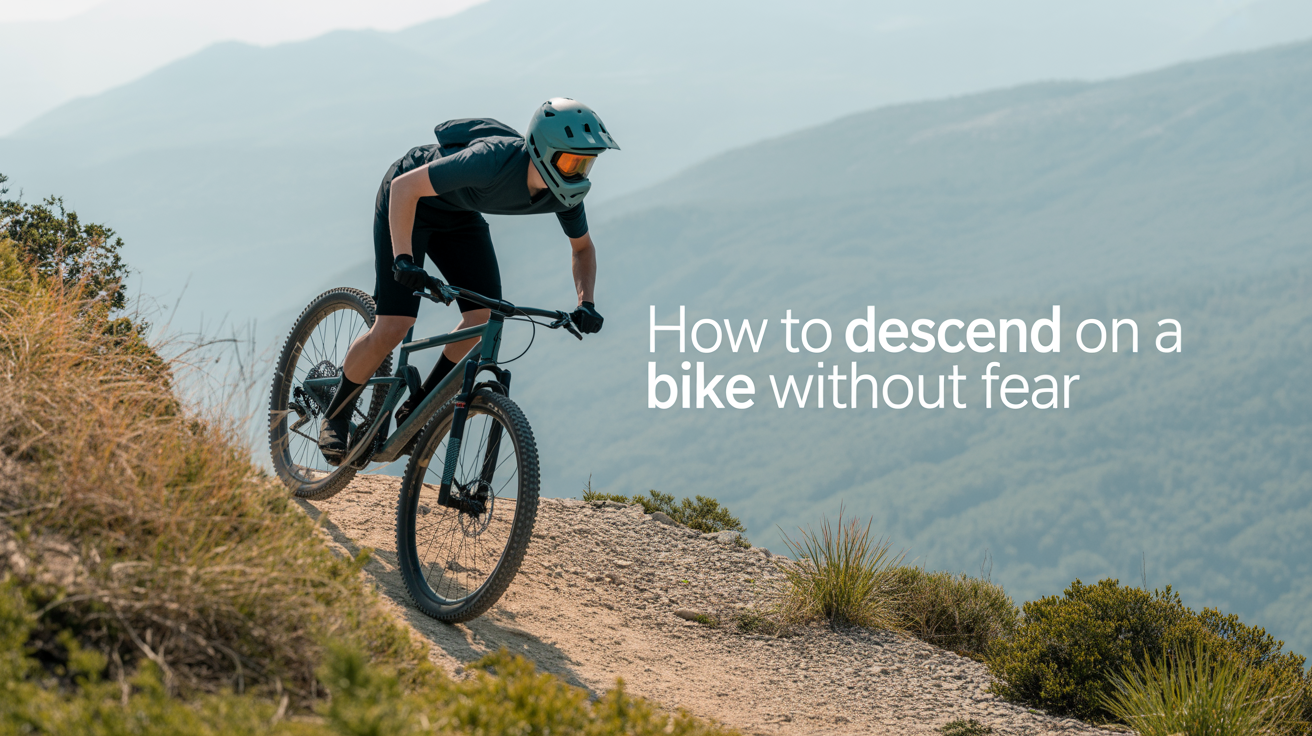
Descending feels intimidating at first because speed amplifies every mistake. But the riders who go downhill smoothly are not necessarily fearless; they just know a handful of things that make the bike feel stable instead of skittish. Get those right and the fear quietly steps back on its own.
Get Your Body Position Right Before Anything Else
Most beginner descending problems trace back to body position. When the bike speeds up, the instinct is to sit upright and grip the bars tightly. Both things make the bike harder to control.
Instead, lower your center of gravity by bending your elbows slightly and dropping your chest a few inches toward the bars. Keep your weight balanced side to side. If you are on a road bike, moving your hands to the drops (the curved lower part of the bars) lowers your center of gravity and brings your brake levers within easy reach.
Your pedals matter too. Put both cranks at the 3 and 9 o'clock positions (horizontal) and push gently through your feet. This keeps weight off your saddle and onto the pedals, which is a far more stable platform. Avoid letting a pedal hang at the bottom, especially in corners; it can clip the ground.
Relax your grip. Tight hands transmit every road vibration straight up your arms and make it harder to feel what the bike is telling you. Think firm but not clenched.
How to Brake Safely on a Descent
The biggest descending mistake beginners make is grabbing the brakes hard at the last moment. That can lock a wheel or throw your weight forward over the front axle, neither of which ends well.
The better approach is to brake early and progressively, before corners or steeper sections, then release the brakes as you go through the turn. If you need to scrub speed mid-descent, feather both brakes gently rather than squeezing hard on one.
Your front brake provides most of your stopping power, but it needs to be applied smoothly. Grab it abruptly on a steep descent and the rear wheel can lift. A general rule: use both brakes together, with slightly more pressure on the front, and ease off before the apex of a corner.
For a full breakdown of how each brake works and how to modulate pressure, this guide to braking safely covers the technique in depth.
Manage Your Speed Before the Descent, Not During
Steep descents are much easier to handle when you arrive at them already at a manageable speed. If you see a long downhill ahead, brake on the flat or gentle slope before it drops away. Hauling yourself back from 40 mph partway down a steep grade is harder and scarier than never reaching 40 mph in the first place.
Look Further Ahead Than Feels Natural
At 15 mph, looking 10 feet ahead is enough. At 30 mph, 10 feet disappears in under a second. Trained riders look much further down the road than beginners do, and that lookahead time is what gives you the chance to react.
Practice scanning well ahead for potholes, gravel patches, debris, or tightening curves. When you spot something, you have time to adjust your line or brake before you reach it. Looking close to your front wheel is a reliable way to get surprised by things.
This principle also applies to corners. Look through the turn to where you want to exit, not at the road directly in front of you. Your bike tends to go where your eyes go.
Cornering on a Descent
Taking a corner while going fast downhill is where a lot of beginners get nervous, and it is also where technique pays off the most. The good news is that the core ideas are the same as flat cornering; the descent just makes the consequences of getting it wrong more obvious.
The basics:
- Brake before the corner, not during it. Try to be at your target speed before you start turning.
- Look through the corner to the exit point.
- Lean the bike, not just your body. Push gently on the inside handlebar to initiate the turn; the bike leans while you stay a little more upright over it.
- Keep the inside pedal up (at the 12 o'clock position) so it does not catch the road surface.
- Straighten up before you accelerate out of the corner.
For a more detailed walkthrough of how to set up a line through a bend, the guide on cornering with confidence goes step by step.
When to Shift Gears on a Downhill
Many beginners forget about gearing on a descent, but it matters. If you are pedaling and you spin out your current gear early in the descent, you will stop being able to contribute any power and your legs just spin uselessly.
Before a long descent, shift to a harder gear (bigger chainring or smaller sprocket at the rear) so you can keep pedaling productively as the speed builds. Once you have reached a speed where pedaling is no longer practical, stop pedaling, put your cranks horizontal, and focus on body position and braking.
On the way back up or if you need to accelerate out of a corner near the bottom, you will want an easier gear ready. Thinking about this before you drop in is easier than trying to shift under pressure halfway down. The guide on how to shift gears explains when and how to time gear changes smoothly.
A Quick Descending Checklist
Before you drop into a descent, run through these in a few seconds:
| Check | What to do |
|---|---|
| Speed | Scrub excess speed before the slope steepens |
| Hands | Move to the drops (road bike) or cover the brakes |
| Pedals | Both cranks horizontal, weight through your feet |
| Gearing | Shift to a harder gear if you plan to keep pedaling |
| Eyes | Look well ahead, not at the front wheel |
| Grip | Firm but relaxed, elbows slightly bent |
Run this pre-descent check a few times and it becomes automatic.
Building Confidence Gradually
No one gets comfortable on descents by white-knuckling through fast ones from day one. Start on gentle slopes where you can practice body position and early braking without much consequence. Let your comfort level rise naturally before seeking out steeper roads.
A useful drill: pick a gradual, straight descent with no traffic. Ride it a few times, focusing only on body position. Then add the braking drill: aim to maintain a steady, moderate speed using only feathered braking. After a few sessions your hands will stop reaching for the brakes out of panic, because you have already practised not needing to.
Riding with someone more experienced on a descent can also help. Watching how a competent rider handles a slope (relaxed, looking ahead, not braking into corners) is worth more than reading about it.
Frequently Asked Questions
How do I stop being scared of going downhill on a bike? Start on mild slopes and work on technique rather than speed. Fear on descents is usually your brain flagging a lack of control, not actual danger. Once braking, body position, and line-choice feel reliable, the sensation of speed becomes much less threatening. Progress gradually and the fear tends to shrink on its own.
Should I be in a low gear or high gear going downhill? A harder gear (higher gear number, smaller sprocket) is better for descents where you plan to keep pedaling, because it lets you contribute power as speed increases without spinning out. If the descent is steep enough that pedaling is not practical, gear choice matters less; focus on body position and braking instead.
Is it safe to use the front brake on a downhill? Yes, and it is necessary; the front brake provides most of your stopping power. The key is to apply it progressively rather than grabbing it suddenly. Squeeze both brakes together with slightly more pressure on the front, and ease off before corners. A smooth front brake input on a descent is far safer than relying only on the rear.
What should I do if I feel like I am going too fast? Stay calm and brake gently and progressively. Sudden or hard braking at high speed can cause a skid or weight shift. Feather both brakes, look well ahead for a safe place to slow, and keep your body position low and centered. Avoid tensing up; a rigid body is less able to absorb bumps and makes bike handling worse.
Why does my bike feel wobbly on fast descents? Wobble or speed shimmy is usually caused by tension in your grip and arms. Loose, bent elbows act like shock absorbers and let the bike track straight. Also check that your weight is balanced on the pedals (cranks horizontal) rather than sitting heavily on the saddle. If shimmy persists across multiple bikes or speeds, it is worth having a mechanic check the bike's fit and components.