How to Ride in the Rain Without Hating It
Wet roads aren't a reason to stay home. Learn how to brake, corner, and gear up for rain so you ride safely and stay comfortable.
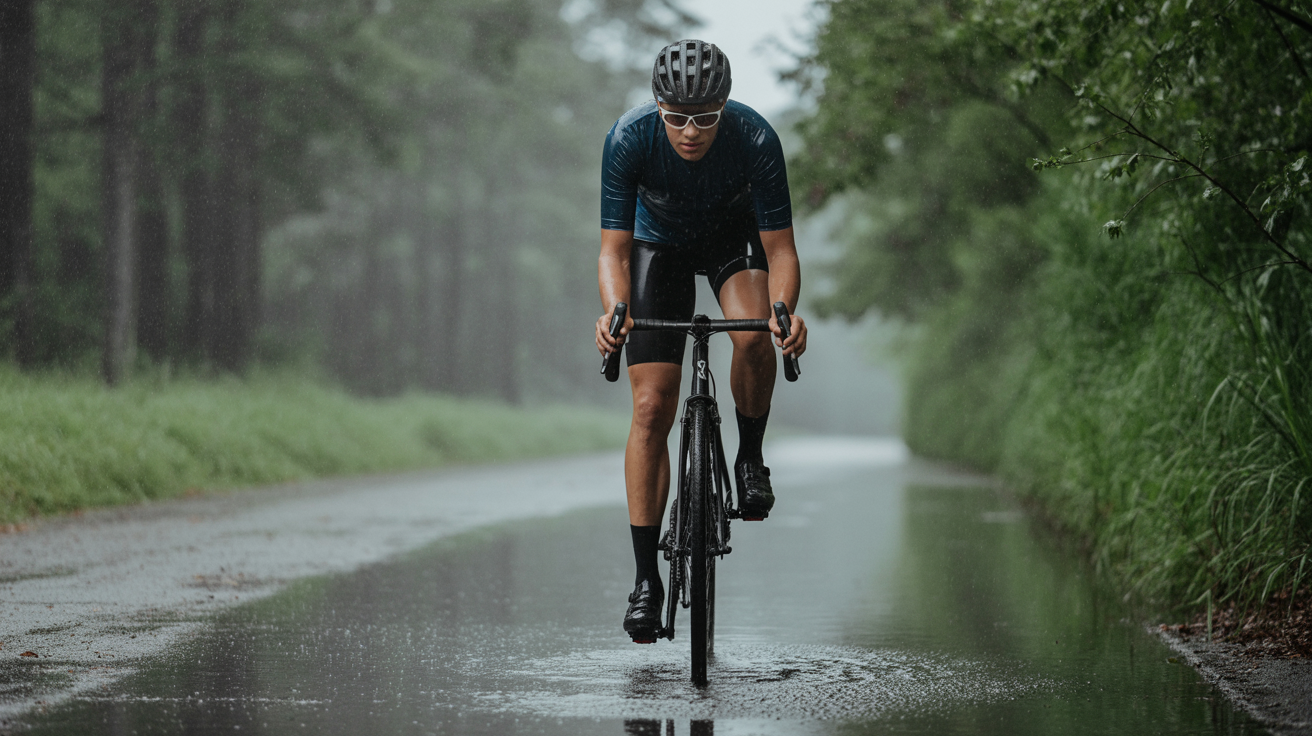
Rain catches a lot of new cyclists off guard. You head out when the forecast looks fine, a shower rolls in, and suddenly the road feels nothing like it did ten minutes ago. The good news: wet roads are manageable once you understand what changes and what to do about it.
This guide covers the adjustments that make the biggest difference for beginners: braking distance, cornering technique, line choice, and a short list of gear that keeps you comfortable without requiring a wardrobe overhaul.
What Changes When Roads Get Wet
Traction drops on wet pavement, but the drop is predictable. Your tires still grip the road surface itself. What gets slippery fast are painted lines, metal grate covers, manhole lids, and fallen leaves. These surfaces can shed grip almost entirely when wet.
Braking distance increases significantly. Rim brakes especially need time to clear water off the braking surface before they bite. Disc brakes respond faster in the wet but still require more stopping room than dry conditions.
Your visual cues change too. Puddles can hide potholes. Wet road surfaces reflect glare that makes depth harder to judge. Slow down a little at the start of a ride so your eyes and hands can calibrate.
Braking in the Rain
The key shift is starting earlier. On dry roads you might brake 20 meters from a junction. In the rain, start braking 30 to 40 meters out and squeeze gradually rather than grabbing.
If you have rim brakes, the first rotation or two of braking mainly squeeges water off the rim. After that, stopping power improves. This means you need to start braking even earlier to allow for that delay.
A few practical habits:
- Use both brakes together, weighted more toward the rear to avoid front-wheel skid
- Feather the brakes lightly on descents to clear water and stay in control
- Avoid braking while leaning into a corner if you can help it
For a full walkthrough of technique in any conditions, the guide on how to brake safely on a bike goes deeper into weight distribution and hand pressure.
Cornering on Wet Roads
The same physics apply in the wet as in the dry, but the margin for error shrinks. The main adjustment is taking corners more upright and more slowly.
Before the corner: shed most of your speed before you enter the turn, not during it. Braking while leaning compresses the grip available to your tires and increases the chance of a slide.
Through the corner: stay as upright as you can while still turning. A more upright bike puts more tire tread in contact with the road. Lean with your body if needed while keeping the bike more vertical.
Line choice: avoid the painted centre line and white edge markings. These become genuinely slick in the wet. Take a slightly wider entry to the corner so you can avoid painted surfaces mid-turn.
The guide on how to corner on a bike with confidence covers entry speed and body position in more detail if you want to build on the basics here.
Choosing Your Line
Line choice matters more in the rain than any other condition. The road surface is not uniform.
Aim for the asphalt itself, which retains grip even when wet. Steer clear of:
- White painted markings (lane lines, crosswalks, arrows)
- Metal drain covers and utility lids
- Puddles of unknown depth
- Leaf debris, which acts like wet cardboard
- The greasy strip of road nearest the centre line where engine oil from passing vehicles accumulates
You do not need to swerve dramatically. Small, deliberate steering adjustments are enough. Keep your head up and look ahead so you spot hazards early rather than reacting to them at the last second.
Gear That Actually Helps
You do not need a full rain suit for short rides. A few targeted pieces make a big difference.
| Item | What it does |
|---|---|
| Waterproof jacket | Keeps your core dry; wind chill in rain drops your temperature fast |
| Mudguards (fenders) | Block road spray from your face and rear end |
| Gloves | Maintain grip on wet bars and keep hands functional in the cold |
| Overshoes | Delay soaked feet significantly; not required for short rides |
| Clear or yellow lens glasses | Block spray and road debris while maintaining visibility in low light |
A waterproof jacket and a pair of mudguards cover most situations. Mudguards are especially worth it if you commute or ride regularly in a rainy climate. They keep spray off your face and reduce how wet your lower half gets.
Tyre pressure is worth adjusting too. Dropping 5 to 10 PSI below your usual level increases the contact patch and improves grip on wet surfaces. Do not go too low or you risk pinch flats.
The guide on what to wear cycling in any weather has more detail on building a kit that handles variable conditions without overcomplicating things.
Before and After Your Ride
A few habits protect your bike and your safety.
Before heading out, check that your brakes are working well. Worn brake pads perform poorly in the wet. If the pads are thin or cracked, replace them before a wet ride.
After riding in the rain, wipe your chain and apply a wet-weather lubricant. Rain washes lubricant away and introduces grit. A chain that runs dry wears out fast. You do not need to do a full service after every wet ride, but a quick wipe and re-lube takes two minutes and extends drivetrain life noticeably.
Frequently Asked Questions
Is it safe to ride in the rain as a beginner?
Yes, with some adjustments. Slow down, brake earlier, avoid slick surfaces like painted lines and drain covers, and wear something waterproof. Beginners who have not yet ridden in the wet should start on quieter roads while they build confidence.
Do I need different tyres for wet weather cycling?
Your current tyres are probably fine for road riding in the rain. The surface texture of the road matters more than tyre compound at beginner speeds. Running slightly lower tyre pressure helps. Slick track tyres are the exception; those are designed for dry conditions only.
Why does my bike feel squirrelly when braking in the rain?
The most common cause is locking the front wheel or braking too hard while the bike is leaning. Squeeze both brakes gradually, stay more upright, and give yourself more stopping distance. If you have rim brakes, the first moment of braking may feel weak while water clears off the rim.
Do I need disc brakes to ride safely in the rain?
No. Rim brakes work in the rain, they just need more lead time. Disc brakes do reduce that delay and perform more consistently in wet conditions, but experienced cyclists managed wet riding long before disc brakes were common on road bikes.
How do I stop my glasses from fogging up in the rain?
Anti-fog lens coatings help. Venting also matters: glasses that sit away from your face slightly allow airflow that reduces condensation. Some riders prefer to go without glasses in light rain and only wear them in heavy spray situations where debris is the bigger concern.