How to Ride in Traffic Safely
A beginner's guide to cycling in traffic safely: road positioning, signaling, scanning, intersections, and building confidence on the road.
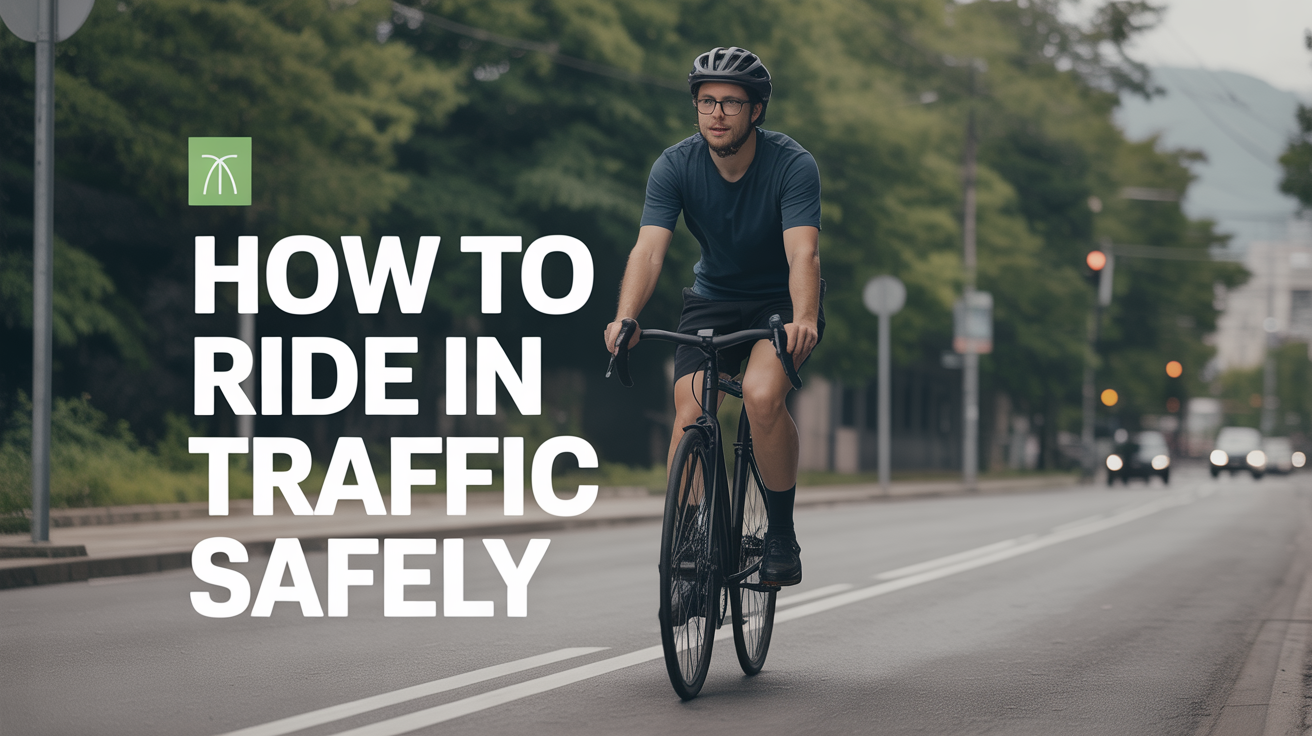
Cycling in traffic feels daunting when you first try it. The noise, the speed, the unpredictability. But most beginners find that within a few rides, it becomes far less stressful than expected. The key is knowing a handful of specific habits rather than hoping instinct kicks in. This guide covers what you actually need to know to ride in traffic as a beginner.
Claim Your Space on the Road
The single most counterintuitive truth about road cycling safety is that hugging the edge of the road often makes you less safe, not more.
When you ride too close to the gutter or parked cars, drivers assume they can squeeze past you without changing lanes. That creates dangerous close passes. It also puts you directly in the "door zone" where a car door can swing open without warning.
Where to ride:
- About 1 metre (roughly 3 feet) from any parked cars. This keeps you clear of opening doors.
- Closer to the centre of a narrow lane when the lane is too tight for a car to pass you safely. This forces drivers to wait for a proper gap before overtaking.
- Further left (or right, depending on country) in wider lanes, but never so close to the edge that you have no room to manoeuvre around debris or potholes.
This is called "taking the lane" and it is not aggressive. It is a legal and practical way to make yourself visible and predictable.
Be Predictable Above All Else
Drivers plan around what they expect to see. When you behave unpredictably, you increase the chance of a mistake.
Ride in a straight line. Weaving around parked cars, darting between gaps, or suddenly pulling out without warning gives drivers no time to react. If you need to move around an obstacle, check behind you first, signal your intention with your arm, then make a smooth, gradual move.
Signal every turn. Extend your left arm for a left turn, your right arm for a right turn. Do this well in advance so drivers behind you have time to adjust. You need to be able to take one hand off the bars to do this, so practice that skill in a quiet car park before you need it in traffic. If your bike handles and braking are already familiar to you, signaling feels natural.
Look before you move. Before pulling out, changing lane position, or turning, turn your head and check over your shoulder. This serves two purposes: it lets you see what is behind you, and it signals to drivers that you are aware of them and about to do something.
How to Handle Junctions and Intersections
Intersections are where most road cycling accidents happen. The main risk is a driver turning across your path, either not seeing you or misjudging your speed.
Approach slowly enough to stop. If you cannot see clearly whether cross traffic has stopped, slow down. Never assume a green light means it is safe to accelerate through.
Make eye contact at junctions. Before crossing in front of a waiting car, try to catch the driver's eye. If they are looking at their phone or looking the other way, they may not know you are there.
Position yourself clearly. At a junction with a cycle lane that runs to the left of a left-turn-only lane, use the main lane if you are going straight. Riding in a left-turn-only lane and then going straight puts you in a dangerous position with turning vehicles.
At roundabouts, signal your exit. Enter in a clear position, signal your intended exit, and look for vehicles already on the roundabout. Take the lane through the roundabout rather than hugging the inside edge.
Scanning and Awareness Habits
Good road cyclists are always scanning several moves ahead. This is a learnable habit.
Read parked cars for signs of activity. Brake lights on, exhaust smoke, someone in the driver's seat, a wheel turned outward. Any of these suggest a car is about to move. Give extra space and be ready to brake.
Watch for gaps in parked traffic. A gap between parked cars is a place where a pedestrian, a child, or a vehicle might emerge suddenly. Slow slightly when passing gaps.
Track the vehicles ahead of the vehicles ahead. If a bus three cars ahead is stopping, the cars behind it will brake. You want to see this coming, not react to the car immediately in front of you braking hard.
Use your ears too. Traffic sound gives you information about what is approaching from behind. A van that sounds like it is speeding up is different from one that has slowed to your pace. Riding with headphones in makes this harder and is not recommended in traffic.
Practical Tips for Common Situations
| Situation | What to do |
|---|---|
| Being overtaken too closely | Hold your line. Do not swerve into the kerb. |
| A driver is tailgating you | Move toward the centre of the lane, which slows the driver, then signal and pull over somewhere safe to let them pass. |
| A pothole appears ahead | Signal a single pointing gesture toward the hazard, then steer around it smoothly. |
| You need to stop suddenly | Learn to brake effectively before you ride in traffic. |
| Overtaking a slower vehicle | Check behind, signal right, check again, then pass with a generous gap. |
| Riding on a road with no cycle lane | Take a position about 0.5 to 1 metre from the kerb. Do not ride in the gutter. |
Building Confidence Over Time
Traffic confidence grows through exposure, but the exposure needs to be managed. Starting with quiet roads and building up works far better than throwing yourself onto a busy high street on day one.
A useful progression:
- Ride residential streets at off-peak times until your bike handling feels automatic. Being able to shift gears and control speed without thinking frees your attention for the road.
- Add short sections of busier road during quiet hours (early morning on weekends is ideal).
- Gradually extend those sections and try them at busier times of day.
- Learn one new junction type at a time: a simple T-junction first, then a roundabout, then a busy crossroads.
Riding with a more experienced cyclist for a few sessions also helps. You can follow their line and observe how they position themselves and react to situations. Many cycling clubs have beginner-friendly rides specifically for this.
Also worth knowing: how you corner on a bike affects traffic riding. Poor cornering forces hesitation at junctions, which can be more dangerous than a smooth, confident turn.
Wear a properly fitted helmet and follow the traffic laws in your area. What is covered here is general guidance; local rules vary, and some country-specific rules (such as which side of the road you ride on) apply.
Frequently Asked Questions
Is it safer to ride on the pavement (sidewalk) to avoid traffic?
In most places, riding on the pavement is illegal for adults, and it can be less safe than the road. Drivers exiting driveways or junctions do not expect fast-moving cyclists on the pavement. On the road, you are where drivers are looking.
What if a driver shouts at me or gets aggressive?
Stay calm, do not escalate, and do not stop in a position where you feel unsafe. Most aggression from drivers is brief and has no further consequence. Engaging rarely helps and occasionally makes things worse. Focus on getting to where you are going.
Do I need to stop at red lights?
Yes. Running red lights is illegal in virtually every jurisdiction and significantly increases your risk of being hit. It also creates poor relations between cyclists and drivers generally. Stop at the line, signal your intentions, and wait.
How do I stay visible at night or in low light?
Front and rear lights are essential and required by law in most places after dark. A white front light and a red rear light are the standard. Reflective details on clothing or your bike help, but lights are what actually get you seen by approaching drivers.
Should I wear high-visibility clothing?
It can help, particularly on busy roads or in poor weather. Bright colours and reflective materials make you easier to spot. That said, your road position and predictability matter more than your clothing. A cyclist in black who takes the lane is more visible to drivers than one in yellow who hugs the gutter.