Electric Bike or Regular Bike: How to Decide as a Beginner
A beginner's guide to the electric bike vs regular bike decision: how pedal assist works, when it's worth the cost, and what to check first.
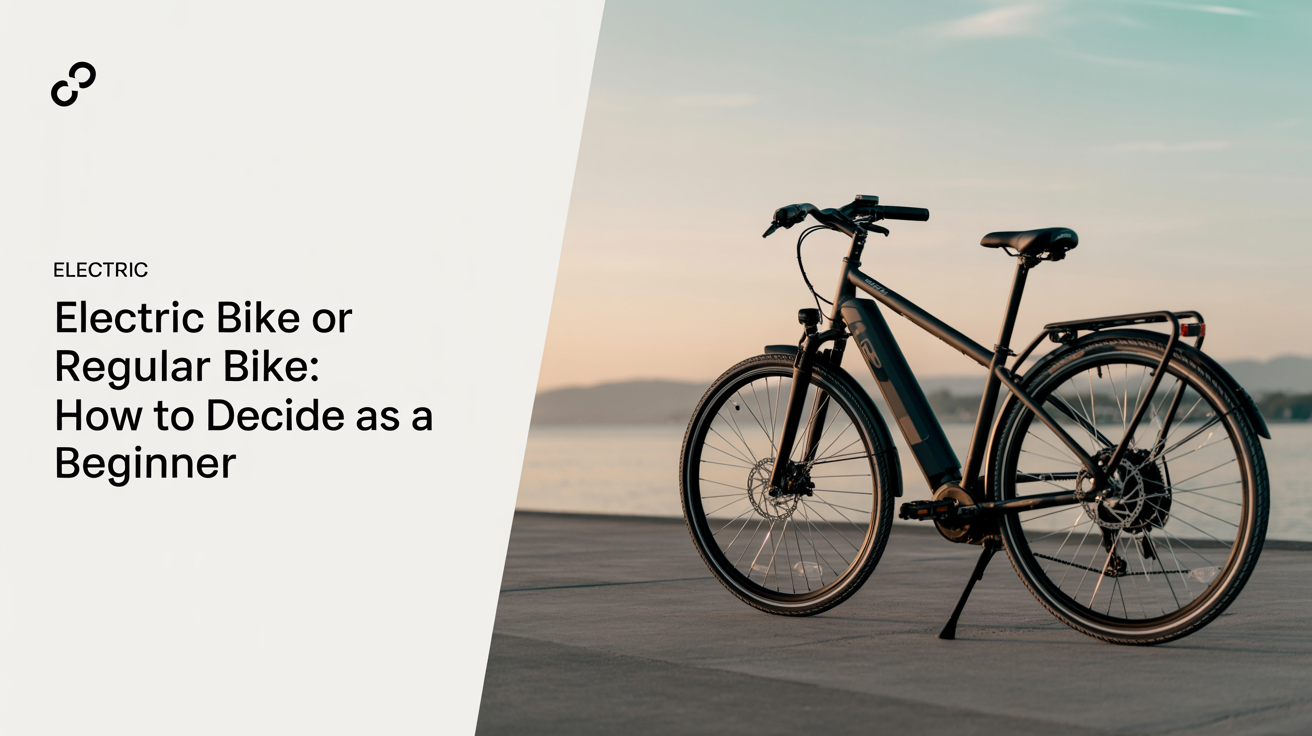
If you're standing in a bike shop trying to decide between an electric bike and a regular bike, you're not alone, and there's no universally correct answer. The right choice depends on your hills, your distances, your body, and honestly, your patience for maintenance. This guide walks through how pedal assist actually works, when the extra weight and cost buy you something real, and when a standard bike is just the smarter, simpler pick.
How Pedal Assist Actually Works
An e-bike isn't a moped, and most beginner-friendly models aren't throttle bikes either. They use pedal assist: a small motor near the pedals or in the rear wheel hub senses that you're pedaling and adds power proportional to your effort. You still have to pedal. The bike just makes each stroke count for more.
Assist usually comes in levels, something like eco, normal, and high. Eco stretches the battery and feels closest to riding a regular bike with a light tailwind. High assist can make a steep hill feel almost flat, at the cost of draining the battery faster. Most systems cut assist off automatically once you hit a set speed, commonly around 20 mph in the US, because past that point it's legally considered a different vehicle class.
The motor and battery add real weight, sometimes close to double that of an equivalent regular bike. You feel it carrying the bike up stairs or lifting it onto a car rack, but you barely notice it while riding, since the motor is compensating the whole time.
When the Extra Weight and Cost Pay Off
Hilly Commutes
This is the single biggest reason beginners end up loving their e-bike. If your commute or regular route includes a climb that leaves you sweaty, out of breath, or just plain avoiding the bike some mornings, pedal assist changes the math. You arrive at work without needing a shower. You're more likely to actually ride the bike instead of leaving it in the garage because the hill is annoying. For a lot of new riders, the hill is the whole reason cycling never stuck before.
Longer Distances
Assist also opens up distances that would otherwise be a grind on a regular bike, especially for someone who isn't yet fit from riding. A 12-mile round trip commute or a 20-mile weekend loop stops feeling like an athletic event and starts feeling like a nice way to spend an hour. This matters for adoption: people who feel wrecked after a ride tend to ride less, not more.
Riders Returning After Time Off
If you used to ride years ago, or you have joint issues, extra weight, or a health condition that makes hard pedaling uncomfortable, an e-bike can be the thing that gets you back on two wheels at all. Pedal assist lets you build the habit and the base fitness first, rather than requiring the fitness before you can enjoy riding. Plenty of people start on assist and find they use less of it as their legs get stronger over the season.
When a Regular Bike Is the Simpler Choice
A standard bike wins when your goal is fitness itself rather than plain transportation. If part of why you're getting a bike is to get stronger and build cardio, a motor working alongside you can blunt that training effect, since it's covering some of the effort you'd otherwise supply yourself. Riders training for an event, trying to lose weight, or wanting the workout tend to be happier on a regular bike long term.
A regular bike is also the right call if your terrain is mostly flat, your distances are short (say, under 5 miles), and no physical limitation is holding you back. In that scenario, the motor is solving a problem you don't have, and you're paying more money and more maintenance for capability you won't use.
Cost matters too. A decent beginner regular bike is generally far cheaper than a decent beginner e-bike, and the gap isn't small. If money is tight, a regular bike gets you riding sooner and leaves budget for things that make early rides comfortable, like a proper fit and a helmet that fits well. See our guide on how much you should spend on your first bike for more on that split.
Simplicity is the other underrated point. A regular bike has no battery to charge and nothing that can leave you stranded because you forgot to plug it in the night before. If you like the idea of a bike as a purely mechanical, always-ready object, that's worth something.
Battery Range, Maintenance, and Price, Realistically
Battery Range
Manufacturer range claims are optimistic best-case numbers, usually measured on flat ground in the lowest assist mode with a light rider. Your real-world range will be shorter, sometimes considerably so, once you factor in hills, headwind, rider weight, cargo, and how much you lean on higher assist levels. Cold weather reduces battery capacity too. Rather than trusting a specific mileage number, think in patterns: hillier routes, heavier loads, and higher assist settings all pull more from the battery per mile. Plan your first few rides with a comfortable margin until you learn how your bike and route actually behave.
Maintenance Differences
Beyond the usual bike upkeep (tires, chain, brakes), an e-bike adds a battery that degrades over years of charge cycles and a motor system that isn't something your average home mechanic can service. Day to day maintenance isn't dramatically harder, but when the electrical system does act up, you're generally looking at a bike shop visit rather than a driveway fix. A regular bike, by comparison, is maintained almost entirely with hand tools and is far more forgiving of a beginner doing their own wrenching. Our guide to choosing your first bike covers what to expect from ongoing upkeep either way.
Typical Price Gap
Across most beginner-friendly categories, expect an e-bike to cost meaningfully more than a comparable regular bike of similar build quality. That premium buys the motor, battery, and controller, and it also means pricier replacement parts down the line (a new battery isn't cheap). Weigh that against how much the assist will actually change whether you ride.
Check Your Local E-Bike Class Rules Before You Buy
E-bikes aren't all regulated the same way, and rules vary by state, province, and sometimes by city or trail network. In much of the US, e-bikes fall into a three-class system based on top assisted speed and whether there's a throttle, and that class determines where you're legally allowed to ride, such as on bike paths, multi-use trails, or in bike lanes. Some trail systems welcome pedal-assist bikes but ban throttle bikes outright. A few places also require a permit, minimum age, or helmet law specific to e-bikes.
Before you buy, look up your local and state rules and check the trail or path system you actually plan to ride, since path rules often differ from general traffic law. This takes fifteen minutes and can save you from buying a bike that isn't legal where you intended to ride it.
A Quick Decision Checklist by Goal
| Your main goal | Regular bike fits if... | E-bike fits if... |
|---|---|---|
| Fitness | You want the full workout and terrain is manageable | You're rebuilding fitness from a low starting point or joint issues limit hard effort |
| Commuting | Route is flat or short, and you don't mind arriving a bit sweaty | Route is hilly, long, or you need to arrive fresh for work |
| Leisure | You ride occasionally, short distances, with friends at an easy pace | You want to keep up on group rides or extend how far you comfortably go |
If you're still weighing bike types generally, beyond the motor question, it's worth reading through how road, hybrid, gravel, and mountain bikes differ, since that choice interacts with the e-bike decision too.
If commuting is part of the plan either way, our guide on starting bike commuting without the stress covers the logistics that matter regardless of what's powering your ride.
Frequently Asked Questions
Is an e-bike worth it for a short, flat commute?
Probably not, if the extra cost is a stretch. A short flat commute is exactly the scenario where a regular bike does the job just as well for less money and less upkeep. Save the e-bike budget for a route or use case where the assist actually solves a problem.
Do e-bikes require a license or registration?
In most of the US, lower-power pedal-assist e-bikes (Class 1 and Class 2) don't require a license, registration, or insurance, but this varies by state and especially by the bike's top speed and whether it has a throttle. Check your specific state's rules before assuming, since a faster or throttle-equipped model can fall into a different, more regulated category.
Will riding an e-bike still get me fit?
Yes, just differently. You're still pedaling and still getting cardiovascular benefit, especially if you keep assist on a lower setting rather than leaning on high assist for every ride. Many riders start high on assist and gradually dial it down as their fitness improves.
How long do e-bike batteries actually last before needing replacement?
Batteries degrade gradually over hundreds of charge cycles rather than failing suddenly, and how long yours lasts depends heavily on how it's charged and stored, particularly temperature exposure. Expect a multi-year lifespan under normal use, with a gradual drop in maximum range as it ages, and budget for eventual replacement as a real cost of ownership rather than a surprise.
Do I still need a helmet on an e-bike?
Yes. An e-bike is still a bike on the road, moving at bike-like or sometimes higher speeds, and the same traffic laws and safety basics apply: wear a properly fitted helmet, ride predictably, and follow local traffic rules. The motor changes how hard you pedal, not the risks of riding in traffic.